


Andhra Pradesh HC: Bail Denied in Commercial Quantity Ganja Case.
 Copy Link
 Share
 Save
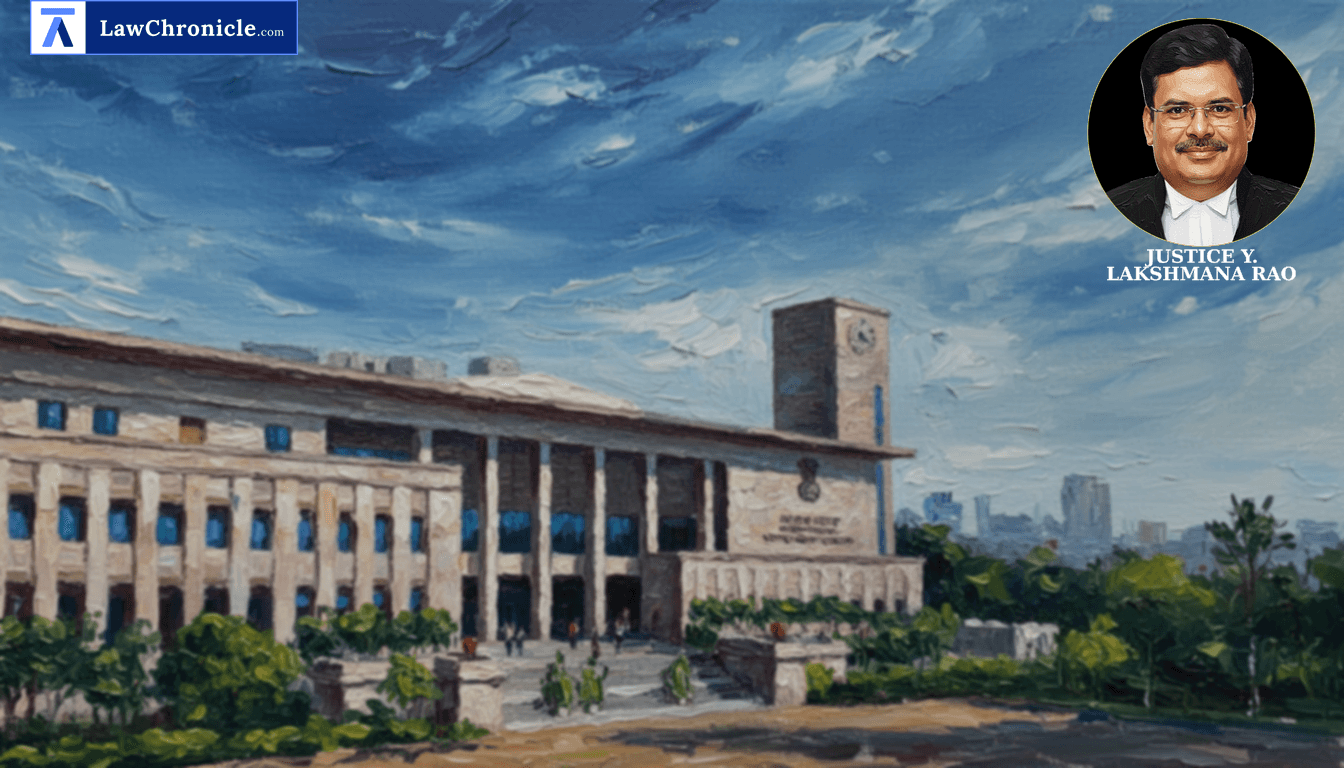
The High Court of Andhra Pradesh reaffirmed the stringent nature of bail provisions under narcotics law, dismissing a plea involving the seizure of 112 kilograms of Ganja. In a significant ruling, the court highlighted that the societal impact of drug trafficking necessitates a strict adherence to legislative mandates over individual liberty in cases involving commercial quantities.
In a proceeding presided over by the Honourable Dr. Justice Y. Lakshmana Rao, the court heard the bail application of two individuals accused of transporting a massive consignment of narcotics in an auto-rickshaw. The court emphasized the rigorous requirements of Section 37 of the Narcotic Drugs and Psychotropic Substances Act, 1985, which acts as a barrier to bail unless the court is satisfied of the accused's innocence.
Judicial Scrutiny of Section 37 Conditions
The court observed that the mandatory conditions for bail in commercial quantity cases are not mere formalities. It noted that the petitioners failed to provide reasonable grounds to believe they were not involved in the commission of the offence. The Court, in its reasoning, observed: "Section 37 imposes additional, overriding restrictions on the grant of bail, beyond those under Section 439 CrPC, through its non obstante clause. It prohibits bail unless two mandatory conditions are met: the prosecution is given an opportunity to oppose, and the court is satisfied that there are reasonable grounds to believe the accused is not guilty. If either condition is not fulfilled, the bar against granting bail applies."
Impact of Drug Trafficking on Society
While deliberating on the gravity of the offence, the court drew upon established precedents from the Supreme Court. Referring to Union of India v. Ram Samujh ( "(1999) 9 SCC 429": 1999 CaseBase(SC) 1254), the bench noted that narcotics offences destroy numerous vulnerable lives and pose a continuous hazard to society. Similarly, the court cited Durand Didier v. State (UT of Goa) to emphasize that Parliament intended strong measures to combat the 'alarming social problem' of drug addiction among adolescents.
Background:
The dispute originated from an incident in 2021 where Parawada Police intercepted an auto-rickshaw containing 112 kgs of Ganja. While the occupants fled the scene, the prosecution identified the first petitioner as the owner of the vehicle and the second petitioner as an accomplice who aided the transportation. The petitioners were eventually arrested on March 31, 2026.
Counsel for the petitioners argued that there was no nexus between them and the alleged offence, claiming the first petitioner was not the vehicle owner at the relevant time and that they were falsely implicated based on incorrect police information. However, the Assistant Public Prosecutor vehemently opposed the bail, stating that the investigation was still ongoing and material witnesses were yet to be examined.
Aligning with the principles laid down in State of Kerala v. Rajesh, the court held that the term 'reasonable grounds' requires more than mere prima facie satisfaction; it demands substantial causes to believe the accused is not guilty. Finding no such merit in the present case, the court dismissed the petition.
Case Details:
Case No.: CRIMINAL PETITION NO: 4667/2026
NeutralCitation: 2026:APHC:23872
Case Title: PANGI RAMBABU AND ANOTHER v. THE STATE OF ANDHRA PRADESH
Appearances:
For the Petitioner(s): GOLLAPALLI MAHESWARA RAO
For the Respondent(s): PUBLIC PROSECUTOR
Source: 2026 CaseBase(AP) 193
Similar Articles


 Breaking News


