


Himachal Pradesh HC: Section 37 NDPS Act Rigors Apply Even to Pillion Riders
 Copy Link
 Share
 Save
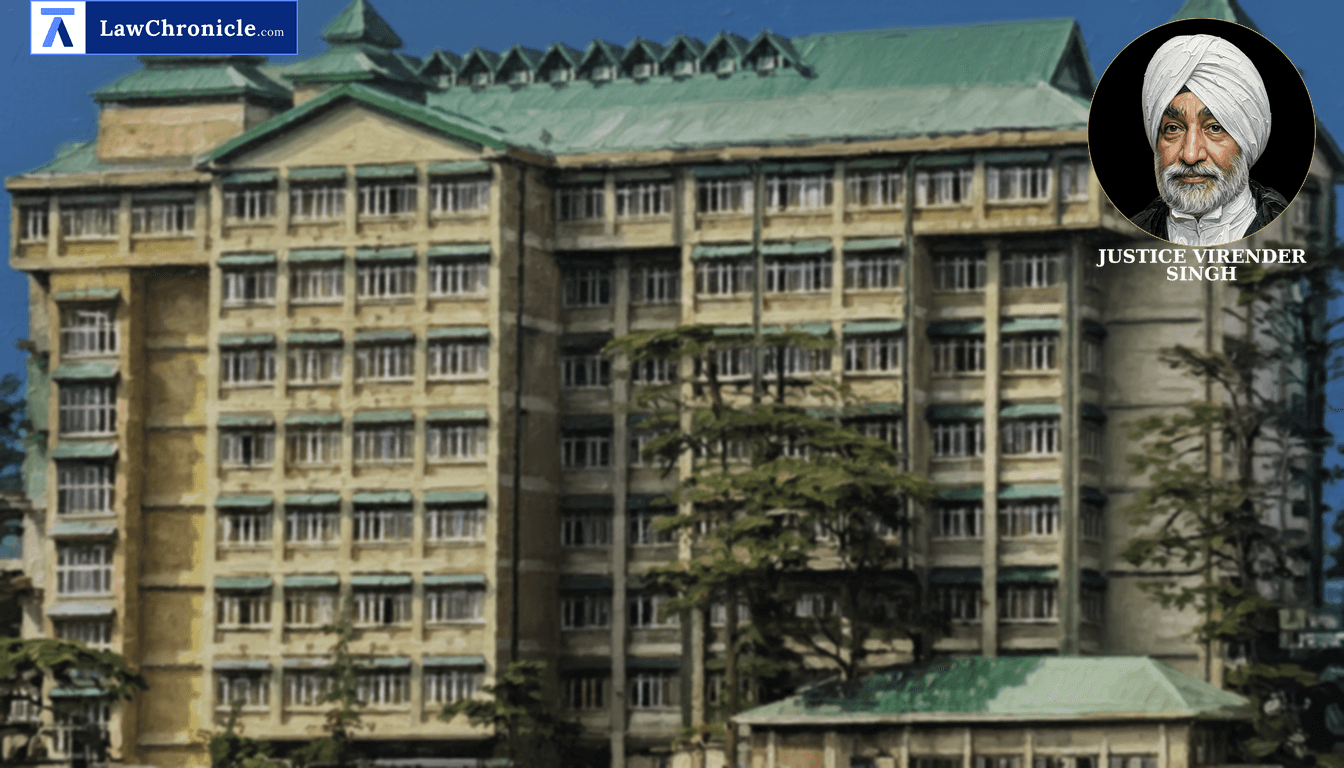
The High Court of Himachal Pradesh has reinforced the strict standards for bail in drug trafficking cases, ruling that being a pillion rider does not automatically absolve an accused of 'conscious possession' when commercial quantities of contraband are recovered from a co-accused sibling. In a decisive stance against drug abuse, the Court held that the mandatory twin conditions of the Narcotic Drugs and Psychotropic Substances Act must be strictly satisfied, treating the statutory provisions literally rather than liberally to prevent the frustration of the Act's preamble.
Justice Virender Singh presided over the matter, evaluating a bail application filed under Section 483 of the Bharatiya Nagarik Suraksha Sanhita. The applicant sought release during the pendency of a trial concerning the alleged recovery of 1.254 kilograms of Charas, a commercial quantity that triggers stringent legal barriers against the grant of bail.
Strict Interpretation of Section 37 of the NDPS Act
The Court emphasized that once a recovery falls within the 'commercial quantity' category as per Central Government notifications, the rigors of Section 37 of the Narcotic Drugs and Psychotropic Substances Act immediately apply. The Court observed that the legislature enacted this statute specifically to curb the menace of drug abuse through stringent punishments and specific bail conditions that exist in addition to general criminal procedure.
The Court has following directions:
"The bail application is dismissed. Any of the observations, made herein above, shall not be taken as an expression of opinion, on the merits of the case, as these observations, are confined, only, to the disposal of the present bail application."
Rejection of the 'Conscious Possession' Defense
The applicant’s counsel argued that the contraband was recovered from the rucksack of the pillion rider (his brother) and not from the applicant's exclusive possession. However, the Court found this argument devoid of merit, noting that the brothers were traveling together at an odd hour (9:10 p.m.) in a different state from their residence.
The Court, in its reasoning, observed: "Once, it has been held that the contraband allegedly recovered from the possession of the accused (applicant) falls in the category of ‘commercial quantity’, as per the Notification issued by the Central Government, then, the rigors of Section 37 of the NDPS Act come into play... findings have to be recorded by the Court, about the fact that accused is not guilty of such offence, and while on bail, he will not commit any offence."
Citing the precedent in Narcotics Control Bureau versus Kashif ( "Criminal Appeal No. 5544 of 2024, Neutral Citation No. 2024 INSC 1045": 2024 CaseBase(SC) 891), which followed Mohit Aggarwal’s case, the Court reiterated that the recording of findings as mandated in Section 37 is a sine qua non for granting bail. The Court noted that negation of bail is the rule and its grant is an exception in cases involving minimum sentences of ten years.
Key Takeaways:
Mandatory Twin Conditions: Courts must record a finding of innocence and that the accused is unlikely to commit any offence while on bail before granting bail in commercial quantity cases.
Joint Possession Liability: Traveling with a family member carrying contraband at unusual hours can establish a prima facie case of joint conscious possession.
Literal Statutory Interpretation: Provisions of the NDPS Act must be interpreted literally to uphold the scheme and purpose of the Act, rather than taking a liberal view that might favor the accused.
Trial Progress Negates Delay Claims: A bail plea based on 'undue delay' is unlikely to succeed if the prosecution has already examined a substantial portion of its witnesses.
Ratio Decidendi:
The satisfaction of the twin conditions under Section 37(b)(ii) of the Narcotic Drugs and Psychotropic Substances Act is a mandatory prerequisite for bail in cases involving commercial quantities. These conditions are cumulative, not alternative, and procedural irregularities under Section 52A do not automatically entitle an accused to bail or vitiate the trial unless serious prejudice is proven.
Background:
The case originated on January 2, 2025, when police officials acting on secret information intercepted a motorcycle at Majra Chowk. The applicant and his brother were found in possession of 1.254 kg of Charas. While the applicant claimed innocence and argued that the trial would be prolonged, the State opposed the bail citing the gravity of the offense. The High Court noted that 13 out of 27 witnesses had already been examined, indicating a steady trial pace. Finding no grounds to believe the applicant was not guilty, the Court dismissed the application.
Case Details:
Case No.: Cr. MP (M) No. : 1069 of 2026
NeutralCitation: 2026:HHC:27641
Case Title: Sujeet v. State of Himachal Pradesh
Appearances:
For the Petitioner(s): Mr. K.S. Gill, Advocate
For the Respondent(s): Mr. Tejasvi Sharma, Mr. Mohinder Zharaick and Mr. H.S. Rawat, Additional Advocates General with Mr. Rohit Sharma, Deputy Advocate General.
Source: 2026 CaseBase(HP) 21
Similar Articles


 Breaking News


