


Andhra Pradesh HC: Registered Gift Deeds Cannot Be Unilaterally Revoked Without Court Intervention
 Copy Link
 Share
 Save
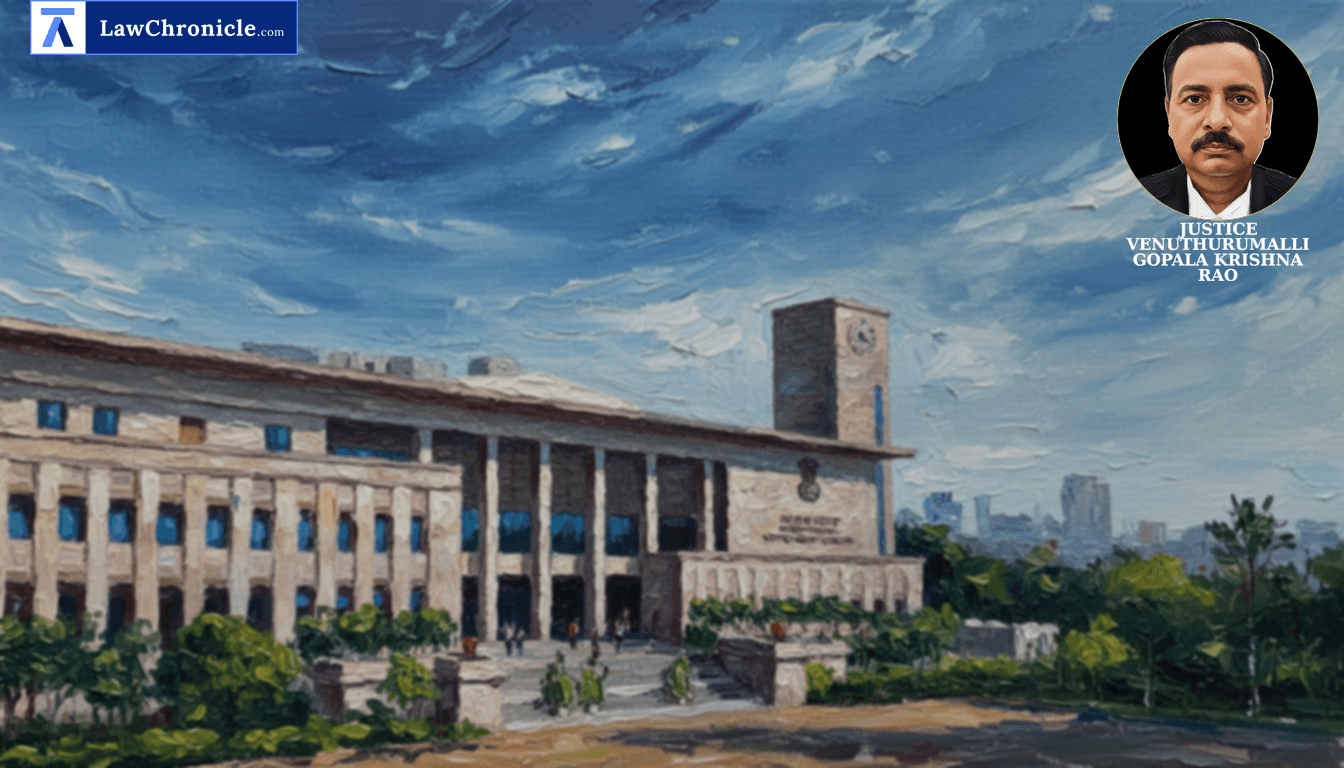
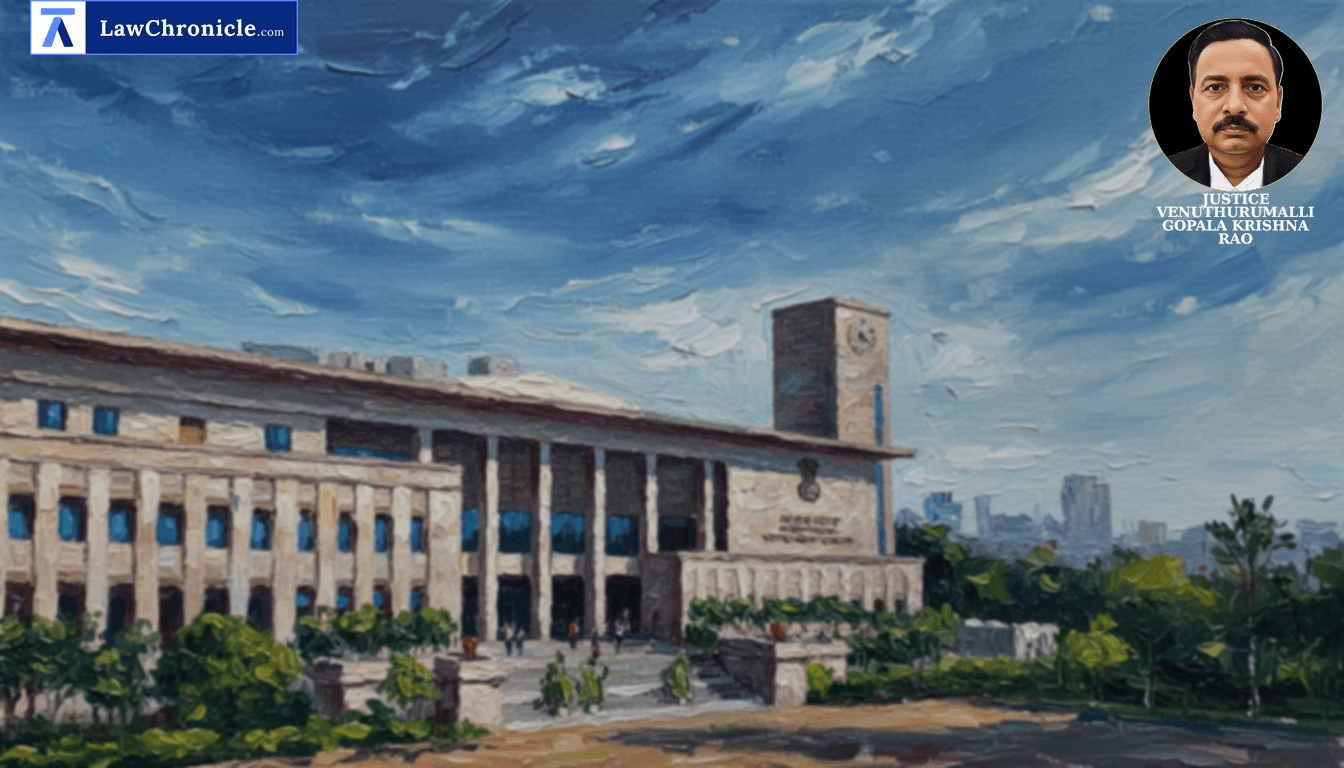
The Andhra Pradesh High Court clarified that once a gift of immovable property is completed and accepted, the donor cannot unilaterally revoke it through a registered deed of revocation without approaching a competent civil court.
A single-judge bench of Justice V. Gopala Krishna Rao heard an appeal challenging a trial court's dismissal of a partition suit. The Court meticulously analyzed the nature of the property and the validity of subsequent gift and revocation deeds, ultimately holding that the properties in question were the self-acquired assets of the father and that his attempt to cancel registered gifts via the Sub-Registrar was legally non-est.
The Requirement of Judicial Intervention for Revocation
The Court emphasized that under Section 126 of the Transfer of Property Act, a validly executed gift is irrevocable unless specific conditions are met, and any cancellation must be sought through a decree of a Court under Section 31 of the Specific Relief Act.
The Court, in its reasoning, observed: "The law is very clear that when the donor executed a gift settlement deed duly registered before Sub-Register, the same is accepted by the donee, if the donor wants to cancel the said gift settlement deed, he has to approach the civil Court for cancellation, questioning the alleged fraud played by the defendant No.2 but not by way of execution of revocation deeds before the Sub-Registrar... both the revocation deeds as well as the registration thereof was wholly void and non-est and meaningless transactions."
Self-Acquired Property and the Burden of Proof
The Court also addressed the classification of the suit properties. Following the principles laid down in Angadi Chandranna Vs. Shankar and others ( "2025 (5) ALD 73 (SC)": 2025 CaseBase(SC) 502) and R.Deivanai Ammal (deceased by LR) and another Vs. G.Meenakshi Ammal and others, the Court noted that there is no presumption of property being joint family property solely due to the existence of a joint Hindu family. Since the plaintiff admitted during cross-examination that his father purchased the items with his own earnings, the claim of 'ancestral property' failed.
The Court has following directions:
"In the result, the appeal suit is dismissed. Considering the facts and circumstances of the case, each party do bear their own costs in the appeal. As a sequel, miscellaneous petitions, if any, pending in the Appeal shall stand closed."
Background:
The dispute arose when the appellant (plaintiff) filed a suit for partition against his parents (Defendant Nos. 1 and 2) and sisters, claiming the schedule properties were ancestral coparcenary properties. The father (D1) initially supported the plaintiff but later revealed he had executed gift deeds in favor of his wife (D2) and daughter (D4).
The plaintiff contended that even if such gifts existed, D1 had subsequently executed registered revocation deeds (Ex.A-10 and Ex.A-11) to cancel them. However, the respondents argued that the properties were self-acquired by D1, and once the gift deeds (Ex.B-13 and Ex.B-14) were registered and accepted by D2, D1 lost the authority to unilaterally revoke them.
The High Court relied on K.Bala Krishnan vs. K.Kamalam and Thota Ganga Laxmi and another vs. Government of Andhra Pradesh and others to reiterate that a Sub-Registrar has no power to recall a registration or evaluate title irregularities after a document is registered. It also noted that Yanala Malleshwari vs. Smt Ananthula Sayamma had been overruled by Thota Ganga Laxmi and another vs. Government of Andhra Pradesh and others, confirming that unilateral cancellations of sale or gift deeds are void. Consequently, the High Court upheld the trial court's decision, dismissing the appeal and confirming that the properties were not liable for partition as they were validly gifted self-acquired assets.
Case Details:
Case No.: APPEAL SUIT NO: 1776/2001
NeutralCitation: 2026:APHC:24262
Case Title: Davuluri Venkateswara Rao vs. Davuluri Veeraiah Died and Others
Appearances:
For the Petitioner(s): Sri GHANTA SRIDHAR, Advocate
For the Respondent(s): Sri N SRIRAM MURTHY, Sri SREEKANTH REDDY AMBATI, Sri PAVAN KUMAR SHARMA, Advocates
Source: 2026 CaseBase(AP) 206
Similar Articles
 Breaking News


