


Appeal Without Certified Copy of Order Is Incompetent Appeal: SC
 Copy Link
 Share
 Save
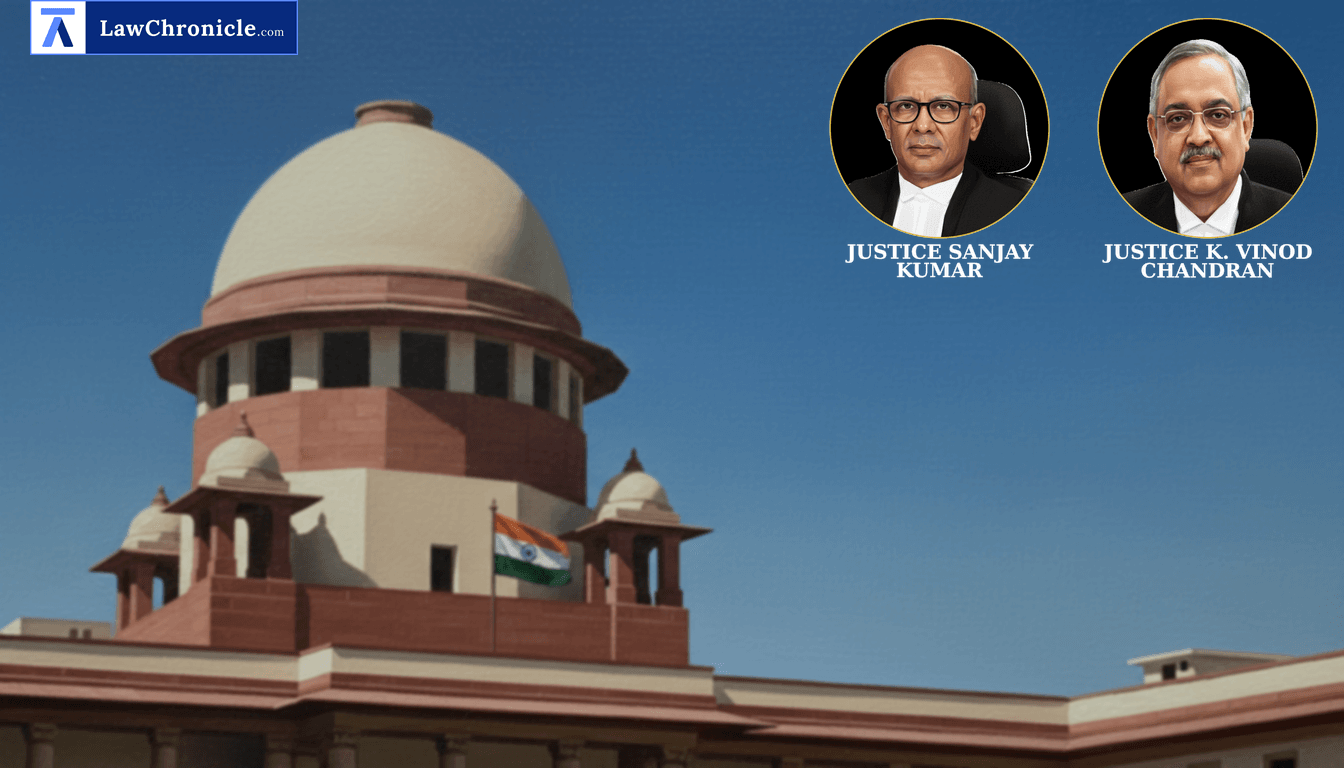
The Supreme Court of India has reiterated that the mandatory requirement of filing a certified copy of the impugned order under the insolvency laws is not a mere technicality but a measure of a litigant's diligence, rendering an appeal filed without such a copy or an exemption application 'incurably tainted.'
A bench comprising Justice Sanjay Kumar and Justice K. Vinod Chandran set aside an order of the National Company Law Appellate Tribunal (NCLAT), Chennai, which had previously condoned a 150-day delay in refiling an appeal. The Court emphasized that given the strict timelines of the Insolvency and Bankruptcy Code, 2016, the NCLAT should not have extended indulgence to a respondent who failed to even apply for the certified copy until months after the limitation period had expired.
NCLAT’s Failure to Verify Institution Norms
The Court observed that while delay in refiling is typically treated with less rigor than delay in initial filing, the appeal in question was "defective beyond redemption." The Registry of the NCLAT had noted multiple defects, including the absence of a certified copy of the NCLT Kochi Bench order. Despite these glaring omissions, the NCLAT had condoned the delay by treating it as a matter exclusively between the Tribunal and the appellant. The Supreme Court, however, found this approach flawed, noting that the appeal did not satisfy the essential requirements of the law.
The Court, in its reasoning, observed: "In effect, the appeal, as filed and refiled, was not a merely defective appeal, wherein the defects could be cured, but was a wholly incompetent appeal that did not satisfy the essentials to pass muster, in terms of the requirements prescribed under the Code and the NCLAT Rules. However, the NCLAT totally lost sight of these vital aspects while considering the two applications filed by respondent No. 1 seeking condonation of delay in the filing and the refiling of the appeal."
The Requirement of Diligence under Section 61
Referring to the precedent in V. Nagarajan vs. SKS Ispat and Power Limited and others, the Court noted that a party wishing to appeal is expected to apply for a certified copy before the limitation period expires. This act serves as an indicator of the party's diligence. In the present case, the respondent applied for the certified copy only in April 2025, long after the appeal was purportedly refiled in March 2025. The Court further noted that no application for exemption from filing the certified copy was made under Rule 14 or 15 of the National Company Law Appellate Tribunal Rules, 2016.
Background:
The dispute originated from an order passed by the NCLT, Kochi, on August 14, 2024, which approved a resolution plan submitted by the appellant, Angelwoods Apartment Allottees Association, for the corporate debtor Samson and Sons Builders and Developers Pvt. Ltd. Respondent No. 1, asserting herself as a financial creditor and being the mother of a suspended director of the corporate debtor, challenged this approval.
Respondent No. 1 e-filed the appeal on the very last day of the permissible 45-day window under Section 61(2) of the Insolvency and Bankruptcy Code, 2016. However, the filing was riddled with defects. Despite the Registry's notification, the respondent took 150 days to refile the appeal, and even then, failed to include the certified copy of the impugned order or an exemption application. Relying on Ebix Singapore Private Limited vs. Committee of Creditors of Educomp Solutions Limited and another ( "(2022) 2 SCC 401": 2021 CaseBase(SC) 1541) regarding the sanctity of strict timelines in insolvency proceedings, the Supreme Court concluded that such an appeal was "wholly incompetent" and should have been rejected at the threshold.
Case Details:
Case No.: Civil Appeal Nos. 14439-14440 of 2025
NeutralCitation: 2026 INSC 479
Case Title: Angelwoods Apartment Allottees Association v. M Lalitha and another
Source: 2026 CaseBase(SC) 395
Similar Articles



 Breaking News


