


No Condonation of Re-Filing Delay Beyond 28 Days Under IBC: SC
 Copy Link
 Share
 Save
Statutory timelines under the insolvency regime are non-negotiable jurisdictional bars that cannot be bypassed by filing defective appeals to save limitation. The Supreme Court has shut the door on litigants attempting to circumvent the 60-day outer limit of the Insolvency and Bankruptcy Code, 2016 by failing to cure procedural defects within the stipulated 28-day window.
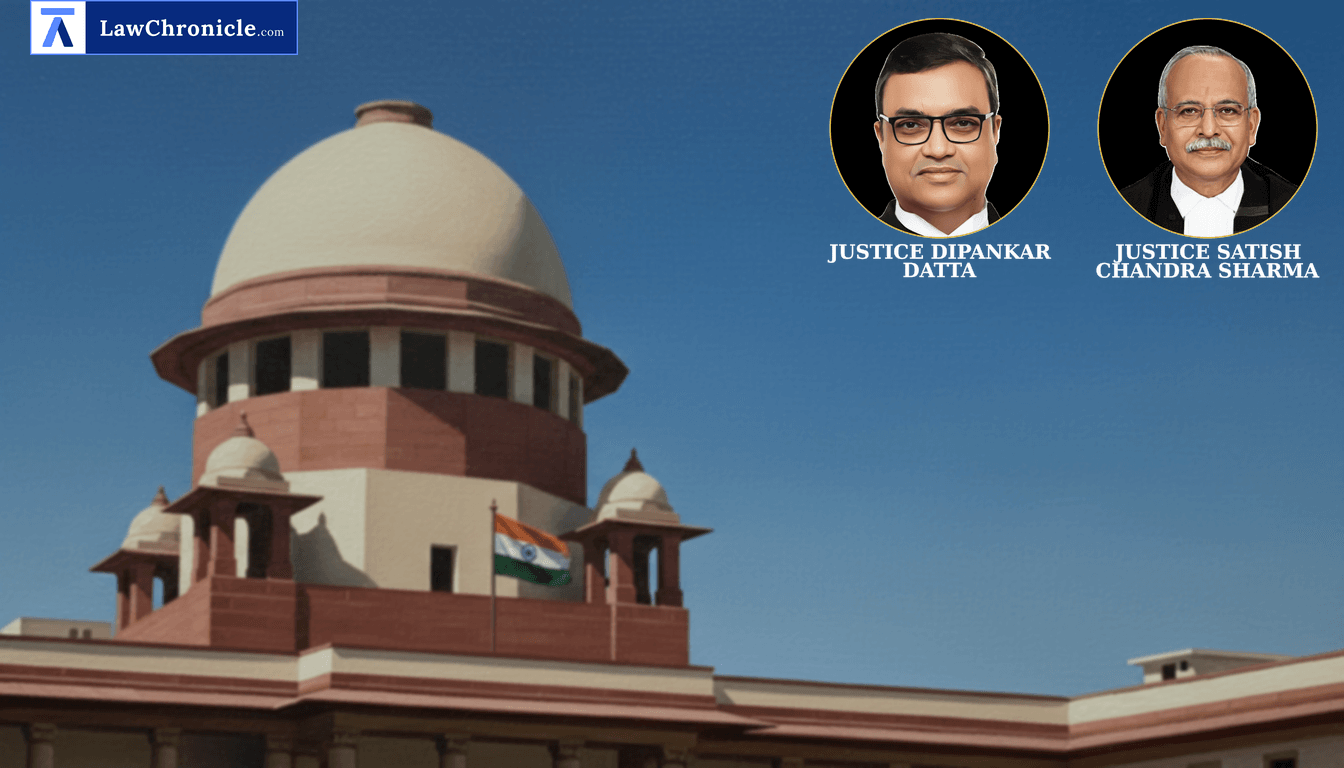
In a decisive ruling aimed at preserving the time-bound essence of insolvency proceedings, a bench comprising Justice Dipankar Datta and Justice Satish Chandra Sharma clarified that once the statutory windows for filing and re-filing are closed, the right to appeal stands extinguished. The Court emphasized that the Supreme Court Rules, 2013, while permitting discretionary condonation in general civil and criminal matters, cannot override the express mandates of the Insolvency and Bankruptcy Code, 2016.
Strict Adherence to IBC Timelines is Mandatory
The Court observed that the scheme of limitation under the Insolvency and Bankruptcy Code, 2016 is a strict and time-bound one, where the concept of condonation of delay beyond expressly contemplated periods is 'alien.' Relying on the precedent set in Mobilox Innovations (P) Ltd. v. Kirusa Software (P) Ltd. ( "(2018) 1 SCC 353": 2017 CaseBase(SC) 220), the Bench noted that strict adherence to timelines is the essence of both the triggering and the insolvency resolution process. The Bench further noted that even though the standards for examining a prayer for condoning a re-filing delay are generally less rigorous than a filing delay, this standard does not apply to Section 62 of the Insolvency and Bankruptcy Code, 2016.
The Court, in its reasoning, observed: "Consequently, no litigant can be permitted to subvert the statutory scheme by seeking condonation of re-filing delay beyond the period of 28 (twenty-eight) days after having initially lodged a defective appeal. Once the window of 60 (sixty) days prescribed by the IBC, followed by the window of 28 (twenty-eight) days in re-filing the appeal upon curing of defects permitted by the SCR is shut, the right to appeal stands extinguished."
The Jurisdictional Bar on Re-filing Beyond 28 Days
Addressing the interplay between the Insolvency and Bankruptcy Code, 2016 and the Supreme Court Rules, 2013, the Court clarified that while Order VIII Rule 6 of the Supreme Court Rules, 2013 allows for curing defects within 28 days, this period acts as a hard limit for appeals under Section 62 of the Insolvency and Bankruptcy Code, 2016. The Court held that an appeal under the Insolvency and Bankruptcy Code, 2016 does not remain alive after the 28-day period allowable for curing defects, and the litigation stands frozen if defects are not cured within that time.
Regarding the dismissal of the appeal, the Court has the following directions:
"Be that as it may, the defective appeal stands dismissed as time-barred having been filed beyond the maximum period condonable in terms of the IBC. Connected applications too stand dismissed."
Background:
The appellant, acting as the liquidator of a corporate debtor, challenged an order passed by the National Company Law Appellate Tribunal, Principal Bench at New Delhi [NCLAT] in Comp. App. (AT) (Ins) No.2316 of 2024. The appeal was filed under Section 62 of the Insolvency and Bankruptcy Code, 2016 after a 7-day delay (within the 15-day grace period). However, the appeal was marked defective by the Registry. The appellant took an additional 82 days to re-file the appeal after curing the defects, significantly exceeding the 28-day limit prescribed by the Supreme Court Rules, 2013.
The appellant argued that as a neutral officer of the court, the delay should be viewed liberally, citing a previous instance in CA Ramchandra Dallaram Choudhary v. Adani Infrastructure & Developers (P) Ltd. where the Court had condoned a re-filing delay between the same parties. The Court rejected this, noting that the previous order specifically stated it was not to be treated as a precedent. Furthermore, the Court highlighted that the explanation for the 82-day delay attributed to an 'internal oversight' and a communication gap after an officer left the position did not constitute 'sufficient cause.'
Key Takeaways:
Hard Cap on Appeal Rights
Providing a defect-free appeal within the statutory window is a prerequisite for exercising the right of appeal under the IBC; failure to do so results in the permanent loss of that right.
Superiority of IBC over Procedural Rules
In instances of a clash between the Insolvency and Bankruptcy Code, 2016 and the Supreme Court Rules, 2013, the former prevails as it is a complete code for insolvency matters.
Neutral Officers Not Exempt
Liquidators and other statutory officers are held to the same strict timeline standards as private litigants, with no special immunity for administrative lapses.
End of Serial Condonations
Securing a 'liberal' condonation at one stage of litigation does not entitle a party to similar indulgence at subsequent appellate stages.
Ratio Decidendi:
Section 62 of the Insolvency and Bankruptcy Code, 2016 provides an absolute jurisdictional bar to condoning delay beyond the 45+15 day limit. Any appeal filed within this window must have its defects cured within the 28-day period stipulated by the Supreme Court Rules, 2013; failure to cure defects within this specific timeframe renders the appeal non-est and incapable of being revived through a re-filing condonation application, as the IBC mandates a strictly time-bound resolution process that overrides general procedural leniency.
Case Details:
Case No.: Civil Appeal No. …………./2026 @ D.No.5988/2026
NeutralCitation: 2026 INSC 629
Case Title: CA RAMCHANDRA DALLARAM CHOUDHARY VS ADANI INFRASTRUCTURE AND DEVELOPERS PRIVATE LIMITED
Appearances:
For the Petitioner(s): Mr. Fernandes, Senior Counsel
Source: 2026 CaseBase(SC) 625
Similar Articles

 Breaking News


