


Appellant's Late Challenge To Impleadment Is Barred By Res Judicata; Execution and Possession Directions Follow
 Copy Link
 Share
 Save
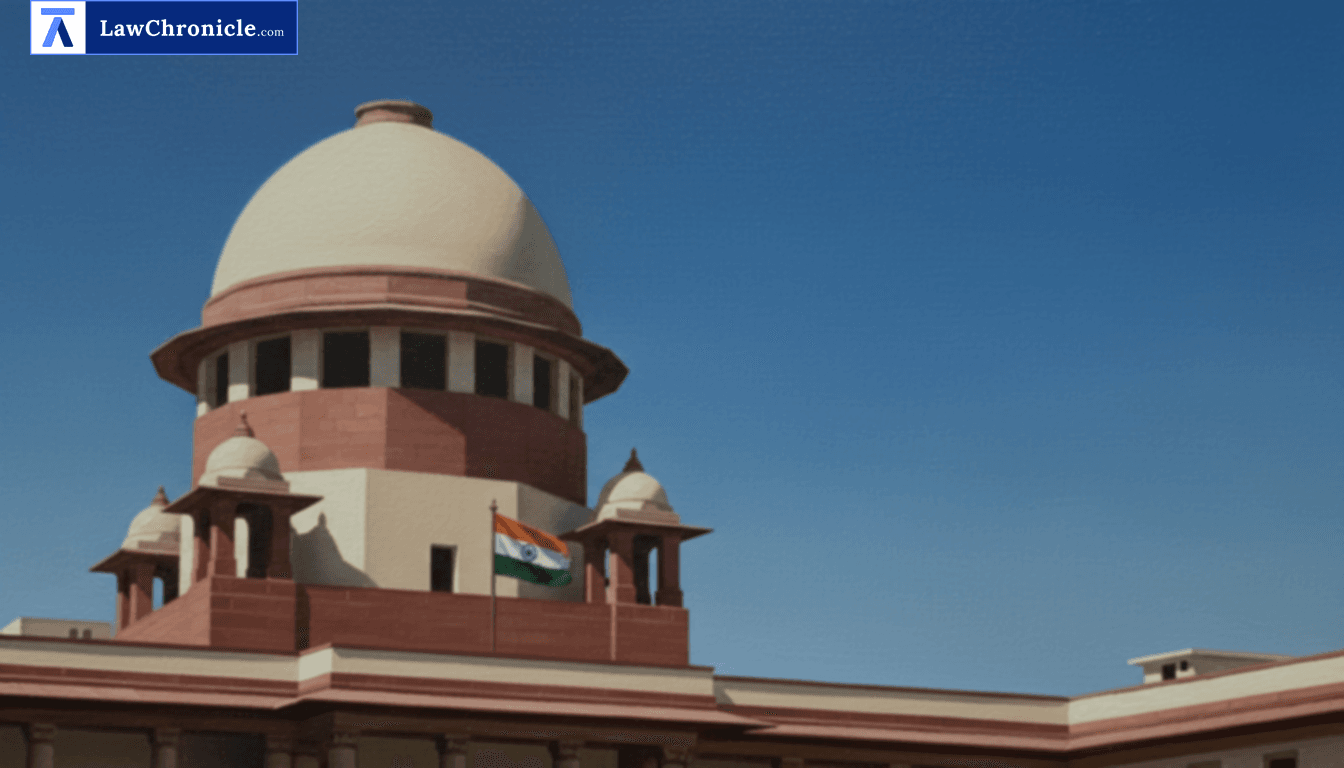
A Bench of Justices J.B. Pardiwala and R. Mahadevan heard an appeal by Sulthan Said Ibrahim against the High Court of Kerala’s order dated 29.11.2021 which dismissed his petition seeking deletion of his name from the array of parties in execution proceedings arising out of a decree for specific performance. The challenge concerned whether an application under Order I Rule 10 CPC could be entertained after the appellant had been impleaded as a legal heir under Order XXII and after prior interlocutory proceedings.
The Court affirmed the concurrent findings of the Trial Court and the High Court and dismissed the appeal. It held that the impleadment of the appellant as a legal heir had attained finality and that his belated application under Order I Rule 10 was barred by the principle of res judicata; his claim to protected tenancy and exclusive possession failed on the evidence. The Court ordered payment of costs of Rs. 25,000 and directed the executing court to ensure vacant and peaceful possession be handed over to the decree-holder within two months, “if necessary, with the aid of police.” The Court, in its reasoning, observed: “The principle of res judicata is based on the need of giving a finality to judicial decisions. What it says is that once a res is judicata, it shall not be adjudged again. Primarily it applies as between past litigation and future litigation. When a matter — whether on a question of fact or a question of law — has been decided between two parties in one suit or proceeding and the decision is final, either because no appeal was taken to a higher court or because the appeal was dismissed, or no appeal lies, neither party will be allowed in a future suit or proceeding between the same parties to canvass the matter again. This principle of res judicata is embodied in relation to suits in Section 11 of the Code of Civil Procedure; but even where Section 11 does not apply, the principle of res judicata has been applied by courts for the purpose of achieving finality in litigation.”
Background The dispute arose from an agreement to sell dated 14.06.1996 for a tiled-roofed shop and land in Palakkad, Kerala for Rs. 6,00,000 with a balance of Rs. 1,50,000 payable within three months. The plaintiff obtained an ex parte decree in 1998 and, after restoration and trial, secured a final decree for specific performance on 17.03.2003. Appeals and an SLP were dismissed, and execution proceedings under Order XXI were instituted. The original defendant died in 2008 and legal heirs were impleaded under Order XXII; the appellant was one such impleaded person and also a witness to the 1996 agreement.
During execution, several interlocutory applications followed, including an application by some legal heirs under Section 28 of the Specific Relief Act seeking rescission, which was dismissed. In July 2012 the appellant filed I.A. No. 2348/2012 under Order I Rule 10 seeking deletion from the party array on the ground that he was a tenant and not a legal heir. The Trial Court rejected the plea as a belated attempt to delay execution, observing that “This petition, is yet another ruse adopted by the respondents to delay the execution of a sale deed pursuant to the decree,” and the High Court affirmed that the application was barred by res judicata and that the appellant’s tenancy claim lacked merit.
On appeal to the Supreme Court the appellant contended that impleadment under Order XXII was not res judicata, that his tenancy rights under the Kerala Buildings (Lease and Rent Control) Act, 1965 required adjudication before eviction, and that representation under Mohammedan law precluded his impleadment as a legal heir. The Court rejected these contentions: it held that the appellant had been served and had entered appearance without timely objection, that Order I Rule 10 could not be used to reopen an issue already determined in earlier stages of the same proceedings, and that there was insufficient evidence of continuing tenancy or exclusive possession. The Court noted that a sale deed had since been executed in favour of the decree-holder and directed the executing court to secure vacant possession within two months; the appeal was dismissed with costs.
Case Details: Case No.: Civil Appeal No. 7108 of 2025 (SLP (C) No. 4307 of 2022) Case Title: Sulthan Said Ibrahim v. Prakasan & Ors. Appearances: For the Petitioner(s): Mr. V. Chitambaresh, Senior Counsel For the Respondent(s): Mr. Mukund P. Unny, Advocate
Similar Articles
 Breaking News


