


Appellate Courts Cannot Conduct Mini-Trials While Reviewing Injunctions: SC
 Copy Link
 Share
 Save
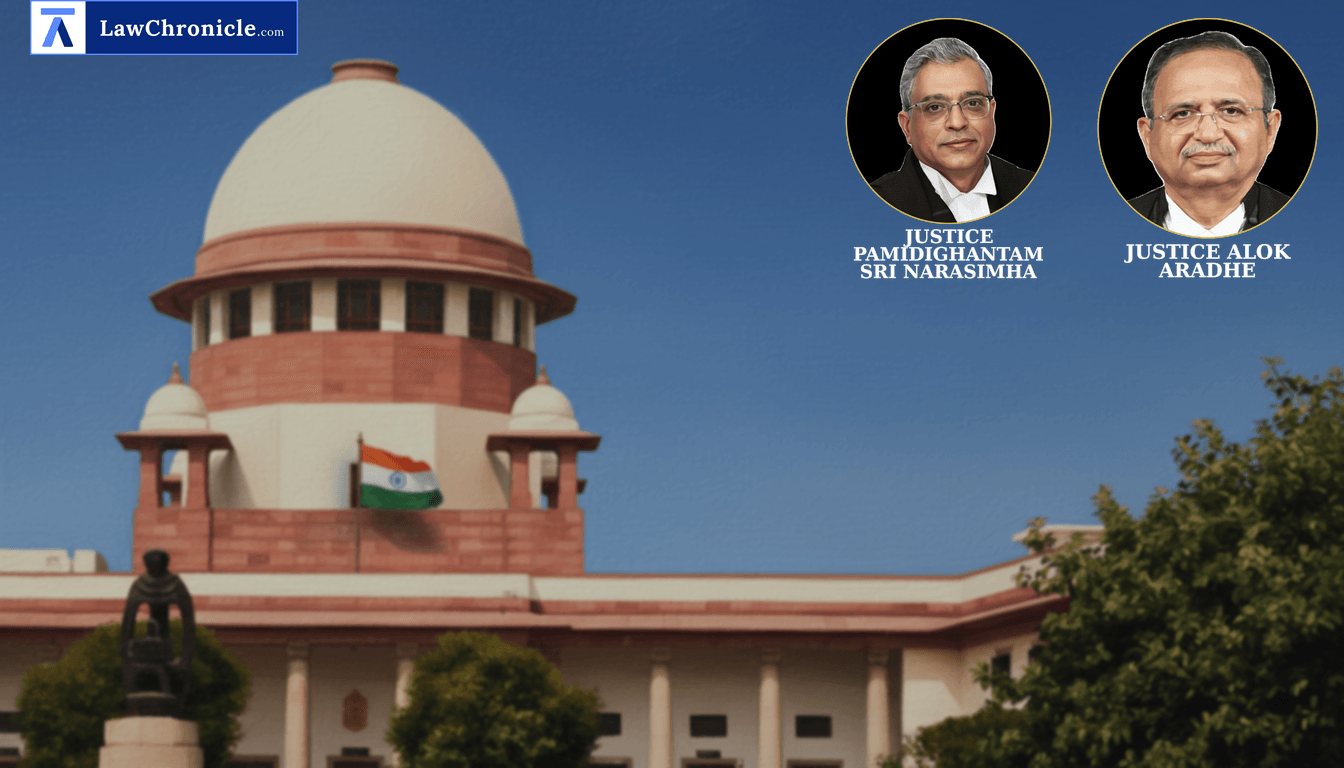
Expressing strong disquiet over appellate courts entering upon the final merits of disputes at the interlocutory stage, the Supreme Court has barred courts from conducting mini-trials while deciding temporary injunction applications. Preserving the subject matter of litigation takes precedence over resolving complex factual and legal questions before full-fledged evidence is led at trial.
A Bench of Justice Pamidighantam Sri Narasimha and Justice Alok Aradhe set aside a Division Bench judgment of the High Court of Delhi that had interfered with a Single Judge's discretionary order granting a temporary injunction under Order XLIII Rule 1(r) of the Code of Civil Procedure, 1908.
Key Takeaways
- End to Interlocutory Mini-Trials: Courts deciding temporary injunctions must restrict themselves to the 'trinity test' without expressing definitive findings on the ultimate merits.
- Restoration of Appellate Restraint: Appellate courts cannot substitute their view for that of trial judges under Order XLIII Rule 1(r) of the Code of Civil Procedure, 1908 unless the lower court's discretion was exercised arbitrarily or perversely.
- Preservation of Subject Matter: Interlocutory orders function primarily as holding operations to prevent final decrees from becoming meaningless.
- Protection of Family Assets: Where control over asset-holding family entities is under a cloud of alleged undue influence, third-party rights and alienation must be frozen pending trial.
Court Observations and Directions
The Supreme Court disapproved of the practice of writing lengthy, merits-laden orders at the interlocutory stage or in appeals against them. The Bench stressed that an interlocutory injunction is a holding operation meant to protect the plaintiff against irremediable injury.
Referring to established legal standards under Section 36 and Section 37(1) of the Specific Relief Act, 1963, Section 94(c) and Section 151 of the Code of Civil Procedure, 1908, the Court evaluated the governing principles established in Manohar Lal Chopra v. Rai Bahadur Rao Raja Seth Hiralal ( "AIR 1962 SC 527": 1961 CaseBase(SC) 179), North London Railway Co. v. Great Northern Railway Co., and Gujarat Bottling Co. Ltd. & Ors. v. Coca Cola Co. & Ors. ( "(1995) 5 SCC 545": 1995 CaseBase(SC) 79). It further relied upon classic tests regarding preservation of status quo laid down in American Cyanamid Co. v. Ethicon Ltd., Zenit Mataplast Pvt. Ltd. v. State of Maharashtra & Ors., and American Cynamid Co. and Ethicon Ltd..
On the standard of prima facie case, the Court observed that it requires only a serious, bona fide question to be tried rather than proof of title, aligning with principles in Martin Burn Ltd. v. R.N. Banerjee ( "AIR 1958 SC 79": 1957 CaseBase(SC) 54), Dalpat Kumar v. Prahlad Singh, Anand Prasad Agarwalla v. Tarkeshwar Prasad & Ors. ( "(2001) 5 SCC 568": 2001 CaseBase(SC) 1302), Ramakant Ambalal Choksi v. Harish Ambalal Choksi & Ors. ( "(2024) 11 SCC 351": 2024 CaseBase(SC) 763), and State of Kerala v. Union of India ( "(2024) 7 SCC 183": 2024 CaseBase(SC) 68). Assessing balance of convenience and irreparable injury, the Court referenced Shiv Kumar Chadha v. Municipal Corporation of Delhi & Ors. and Seema Arshad Zaheer & Ors. v. Municipal Corpn. of Greater Mumbai & Ors. ( "(2006) 5 SCC 282": 2006 CaseBase(SC) 115). Reaffirming the strict standard of appellate review governed by Wander Ltd. & Anr. vs. Antox India P. Ltd. ( "1990 Supp. SCC 727": 1990 CaseBase(SC) 836) and reaffirmed in Shyam Sel and Power Limited v. Shyam Steel Industries Limited ( "(2023) 1 SCC 634": 2022 CaseBase(SC) 1099), the Court noted that appellate courts must not undertake fresh reconsiderations of discretionary orders.
Warning against prematurely adjudicating complex issues under Section 14 of the Hindu Succession Act, 1956 or Section 89 of the Companies Act, 2013, the Bench cited Colgate Palmolive (India) Ltd. v. Hindustan Lever Ltd. ( "(1999) 7 SCC 1": 1999 CaseBase(SC) 207) to emphasize judicial reluctance to decide difficult legal or factual questions at preliminary stages.
The Court, in its reasoning, observed: "...the interlocutory stage is not the occasion to resolve conflicts of evidence on affidavit or to decide difficult questions of law calling for mature consideration... The scope of examination on an application under Order XXXIX – and, equally, of an appeal against an order made on such an application – is confined to the limited and threshold question whether the plaintiff has shown a serious dispute meriting investigation at trial; it does not extend to an examination of the final effect, probative value or ultimate merits of the documents annexed to the pleadings, which is the trial court's task, to be undertaken after evidence and not before."
The Court has following directions:
"(a) The interim injunction granted by the learned Single Judge by order dated 29.07.2022, in the terms set out in paragraph 9 above, shall stand restored and shall continue in operation until further orders of the learned Single Judge in the suit.
(b) This order proceeds upon a prima facie appraisal of a serious dispute requiring investigation at trial. It shall not be read as any expression of opinion on the true construction of the Will dated 26.03.2004, the validity of the Will dated 04.10.2008, the plea of intestacy, the applicability of Section 14 of the 1956 Act or of Section 89 of the Companies Act, 2013, the plea of undue influence or fraud, or the plea of self-acquisition - all of which shall be decided by the trial court on evidence, uninfluenced by any observation in this judgment.
(c) The observations of the Division Bench on the merits of these questions, recorded in the impugned judgment, shall similarly stand effaced and shall not bind or influence the trial court.
(d) The appellants shall continue to be bound by, and shall renew if required, the undertaking as to damages furnished before the learned Single Judge.
(e) The learned Single Judge shall take up and dispose of CS(OS) No.589 of 2021 as expeditiously as possible, preferably within a period of eight months."
Ratio
An appellate court reviewing an order under Order XLIII Rule 1(r) of the Code of Civil Procedure, 1908 cannot substitute its own discretion or conduct a mini-trial on the final merits of documents and pleadings. The scope of interlocutory review is strictly confined to determining whether a serious, bona fide dispute exists meriting trial, and whether the discretionary order below was arbitrary, capricious, perverse, or contrary to settled principles governing the grant of temporary injunctions.
Background
The dispute arose from the estate of late Devinder Singh Chaudhary, who established various asset-holding companies, partnerships, and trusts. Following his death in 2009, competing claims emerged regarding a 2004 Will, a 2008 Will, and an assertion of intestacy. Between December 2018 and June 2019, the deceased's elderly widow (the original plaintiff) executed various gift deeds and share transfer agreements in favour of her granddaughter and her husband, transferring substantial stakes in corporate entities including Industrial Cables (India) Ltd., Amba Promoters & Developers Pvt. Ltd., and Ruchi Towers LLP.
In 2021, the widow instituted CS (OS) No. 589 of 2021 before the Delhi High Court, alleging that the transfers were procured through undue influence and fraudulent means while she was elderly and in poor health. She moved an application under Order XXXIX Rules 1 and 2 of the Code of Civil Procedure, 1908.
By order dated 29.07.2022, a Single Judge granted a temporary injunction, holding that a prima facie case of undue influence and limited beneficial interest under Section 14 of the Hindu Succession Act, 1956 was made out, and restrained the defendants from creating third-party interests in the family entities and properties. On appeal under Order XLIII Rule 1(r) of the Code of Civil Procedure, 1908, a Division Bench set aside the Single Judge's order after examining the specific clauses of the Will, delay, and compliance with Section 89 of the Companies Act, 2013.
Reversing the Division Bench, the Supreme Court held that the High Court erred in undertaking a mini-trial and interfering with a well-reasoned discretionary order of the Single Judge, thereby restoring the interim injunction.
Case Details:
Case No.: Civil Appeal Nos. of 2026 (@ SLP (C) Nos. 12592–12597 of 2026)
Neutral Citation: 2026 INSC 843
Case Title: Shruti Manav Sharma & Anr. v. Sunanina Singh & Ors.
Appearances:
For the Petitioner(s): Mr. Kapil Sibal, Senior Advocate
For the Respondent(s): Mr. Mukul Rohatgi, Senior Advocate
Source: 2026 CaseBase(SC) 780
Similar Articles

 Breaking News


