


Manipur HC forbids Reappreciation of Facts in Injunction Appeals
 Copy Link
 Share
 Save
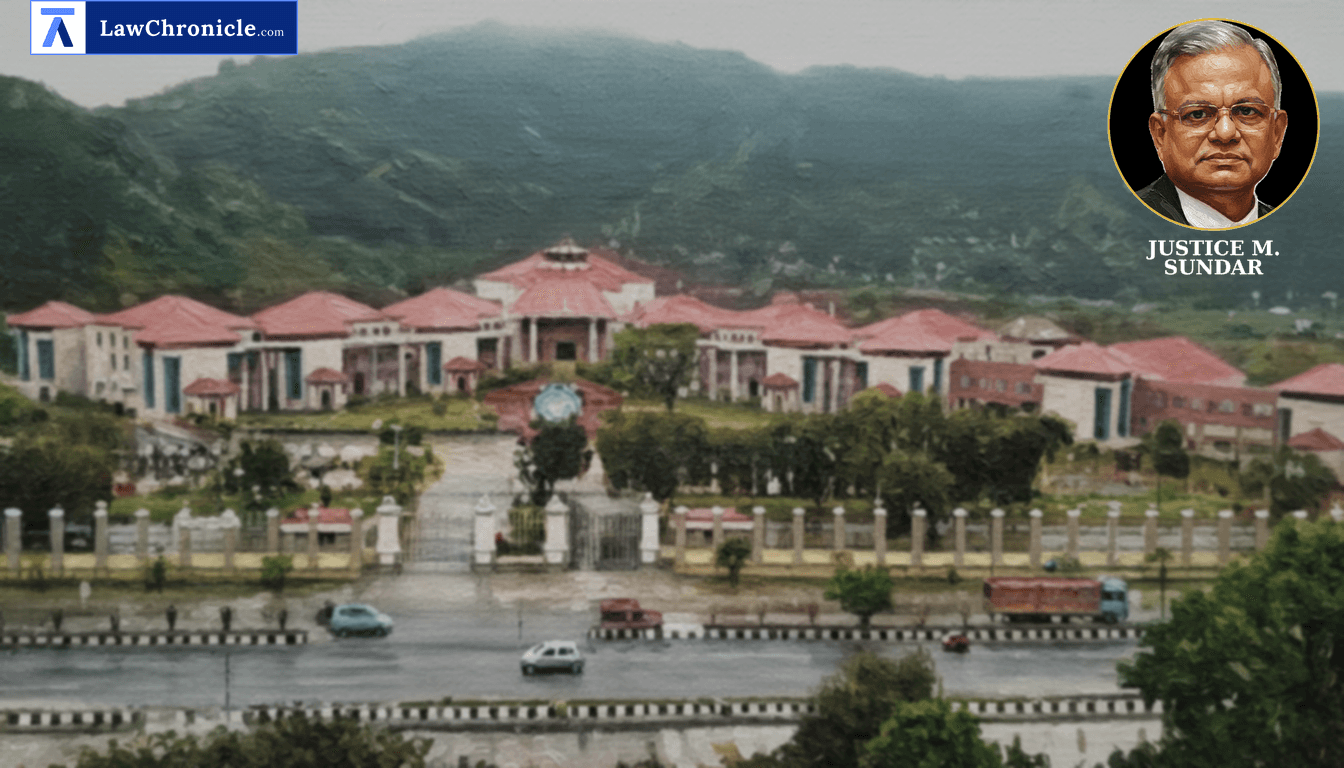
Rejecting a revision petition under Article 227 of the Constitution against an order affirming interim relief for a common pathway, Chief Justice M. Sundar underscored the strict boundaries governing appellate interference with discretionary orders in civil suits. The Court emphasized why an appellate court exercising powers under Order XLIII Rule 1(r) of the Code of Civil Procedure, 1908 cannot act as a court of re-appreciation of facts. Touching upon the exceptions, the Manipur High Court touched upon the trial court's discretionary order granting or refusing an injunction, which may be demonstrably arbitrary, capricious, perverse, or rooted in a misapplication of settled legal principles.
Key Takeaways
Restraint in Interlocutory Appeals: First Appellate Courts must refrain from re-evaluating evidence unless the lower court's discretion suffers from perversity or arbitrariness.
Prima Facie Determination: Interim directions securing a common pathway remain justified when supported by revenue records and cardinal principles of injunction.
Trial Expediency Urged: Co-owners and family litigants involved in property disputes should prioritize expeditious trial completion over prolonged interlocutory litigation.
Reappreciation of Facts
The High Court highlighted that the limited scope of the injunction, confined specifically to a common pathway, justified the lower courts' findings. The Manipur High Court held that both the trial court and the first appellate court had meticulously evaluated the three cardinal principles governing the grant of interim relief: prima facie case, balance of convenience, and irreparable legal injury.
The Manipur HC reasoned that "The First Appellate Court adopted the approach that a First Appellate Court hearing an appeal against an order of injunction, does not sit as a Court of re-appreciation of facts unless it comes to light that the discretion exercised by Trial Court is arbitrary, capricious, perverse or based on misapplication of settled principles of law. In the considered view of this Court, there can be no two ways about this approach of the First Appellate Court in the light of settled principles..."
Dismissing the civil revision petition, the Court clarified that the trial court must proceed with the main suit independently.
Ratio
In appeals preferred under Order XLIII Rule 1(r) of the Code of Civil Procedure, 1908 challenging interlocutory injunction orders, the appellate jurisdiction is strictly supervisory and limited to correcting arbitrary, capricious, or legally unsustainable exercise of discretion by the trial court, prohibiting fresh re-appreciation of factual details.
Background
The dispute originated from a civil suit filed on January 7, 2022, before the Trial Court seeking a declaration of half-share rights, perpetual injunction, and invalidation of orders rendered by jurisdictional revenue authorities regarding a parcel of land admeasuring 0.50 acres. The respondents filed a written statement along with a counter-claim asserting their half-share and rights over a 7 ft. wide common pathway.
While the Trial Court initially ordered status quo, it subsequently reviewed its order upon noting that revenue proceedings had concluded in favor of the respondents. Consequently, the Trial Court granted an interim injunction under Order XXXIX Rules 1 & 2 of the Code of Civil Procedure, 1908 restricted strictly to the common pathway. The First Appellate Court, invoking Order XLIII Rule 1(r) of the Code of Civil Procedure, 1908, affirmed the injunction. Aggrieved, the petitioners invoked the supervisory jurisdiction of the High Court under Article 227 of the Constitution, which was ultimately dismissed.
Case Details:
Case No.: CRP(CRP.Art.227) No. 11 of 2026
Neutral Citation: 2026:MNHC:153-FB
Case Title: Oinam Ibomcha Singh (died) represented by legal heirs & Ors. v. Oinam Ramesh Singh (died) represented by legal heirs & Ors.
Appearances:
For the Petitioner(s): Mr. Th. Mahira, Advocate.
Source: 2026 CaseBase(MAN) 2
Similar Articles


 Breaking News


