


Arbitral Award Set Aside Where Claims Were Ex facie Time‑Barred, Delhi High Court Upholds District Court Order
 Copy Link
 Share
 Save
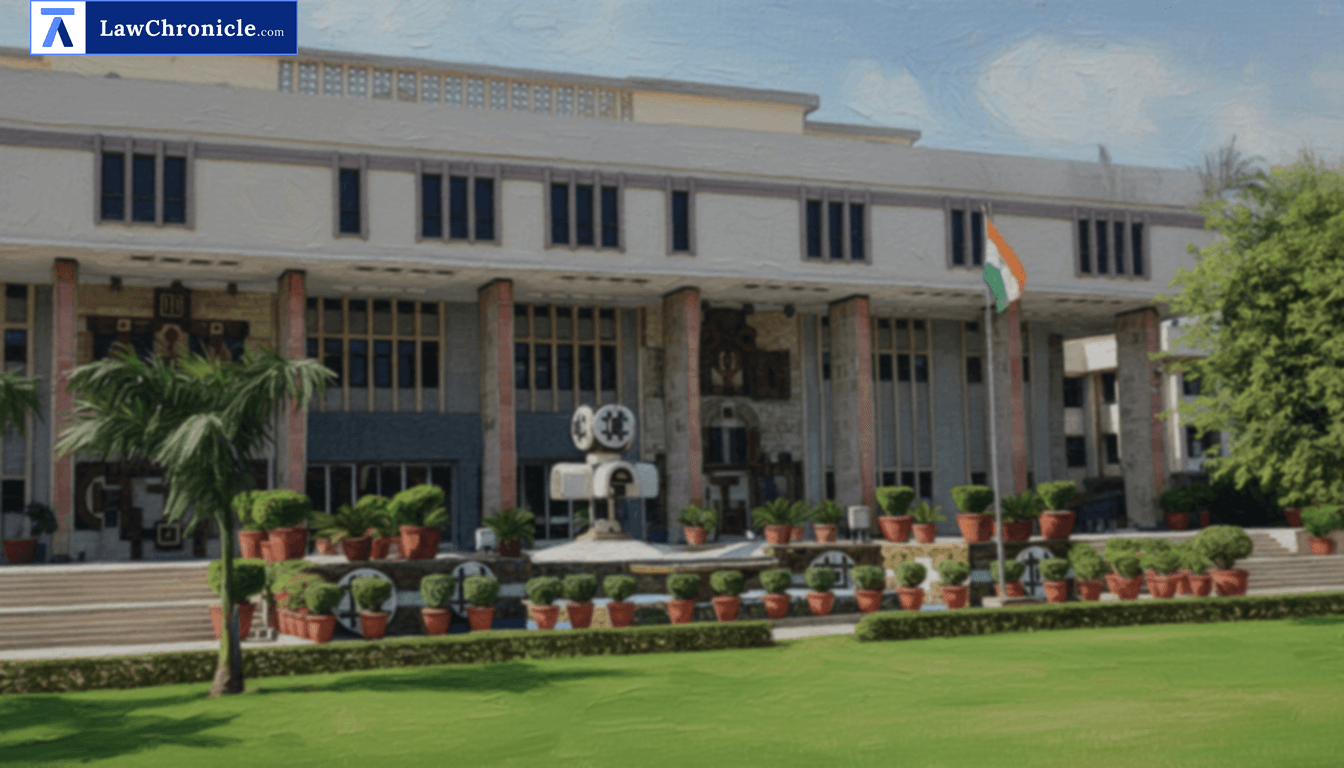
A bench of Justice Anil Khetarpal and Justice Amit Mahajan heard an appeal under Section 37 of the Arbitration and Conciliation Act challenging a District Judge’s order that set aside an arbitral award on the ground that the claims were barred by limitation. The appeal arose from ARBTN‑248/18 in which the respondent had succeeded in its Section 34 petition impugning the Award dated 13.07.2018 passed by the sole arbitrator.
The High Court dismissed the appeal and upheld the Impugned Order, holding that the District Judge did not exceed the narrow jurisdiction conferred by Section 34 in finding that the claim was ex facie time‑barred. The Court observed that “limitation is not a mere technical defence. It is founded on public policy.” The Court, in its reasoning, observed: “Moreover, an award granting relief on claims that are demonstrably barred by limitation would suffer from patent illegality within the meaning of Section 34(2A) of the A&C Act. In such circumstances, the Court under Section 34 is justified in setting aside the award, not by reappreciating evidence, but by enforcing a statutory bar.” The High Court emphasised that where relevant dates were admitted and the bar of limitation was evident on the face of the record, the award suffered from patent illegality and was amenable to being set aside.
Background
The dispute arose out of a contract for construction of a zonal office building, awarded to the appellant by the respondent in January 2006. The appellant asserted completion on 30.06.2008 and presented its final bill on 08.09.2008 for Rs.25,72,035.87/-, of which Rs.4,98,849/- was paid on 07.11.2008 while about Rs.20.73 lakh was withheld. Correspondence between the parties in March and August 2009 and July 2011 recorded the respondent’s position that payment had been made as per its understanding and that no further amount or interest was payable, and the respondent disputed the contention of completion. A demand notice by the Commissioner of Central Excise and Service Tax issued in April 2011 raised separate tax demands.
The appellant initiated arbitration in 2015 after issuing notices; an earlier ex parte award of 01.12.2016 was set aside by the High Court of Punjab & Haryana and a sole arbitrator was appointed who rendered the Award dated 13.07.2018 in favour of the appellant for around Rs.39 lakh with interest. The respondent filed a Section 34 petition before the District Judge, who allowed it and set aside the Award on the ground that the cause of action accrued on 07.11.2008 and the arbitration invoked in 2015 was beyond the three‑year limitation period under Article 18 of the Limitation Act as made applicable by Section 43 of the A&C Act.
Before the High Court, the appellant argued waiver of limitation by failure to raise it at earlier stages and contended that limitation involved mixed questions of fact and law unsuited to interference. The respondent maintained that the cause of action crystallised in 2008 and that limitation went to the root of the jurisdiction. The High Court reviewed precedents on the restricted scope of interference under Sections 34 and 37, held that limitation could not be waived by omission and that where dates and communications were admitted the computation of limitation was a legal exercise. It found that the District Judge confined his examination to the statutory bar and did not re‑appreciate evidence or substitute views on merits.
The High Court concluded that the Impugned Order did not suffer from perversity, patent illegality, or excess of jurisdiction and therefore warranted no interference. The appeal was dismissed and pending applications were disposed of; there was no order as to costs.
Case Details:
Case No.: FAO (COMM) 185/2024 & CM APPL. 54337/2024
Case Title: Deepak Builders and Engineers Limited v. M/s Engineering Projects (India) Ltd.
Appearances:
For the Petitioner(s): Mr. Varun Chugh & Mr. Mayank Kaushik, Advs.
For the Respondent(s): Mr. Debarshi Bhadra, Adv.
Source: 2026 CaseBase(DEL) 75
Similar Articles
 Breaking News


