


Arbitrator's Plausible View on Fixed-Price Contracts Bars Over-Run Claims: Delhi HC
 Copy Link
 Share
 Save
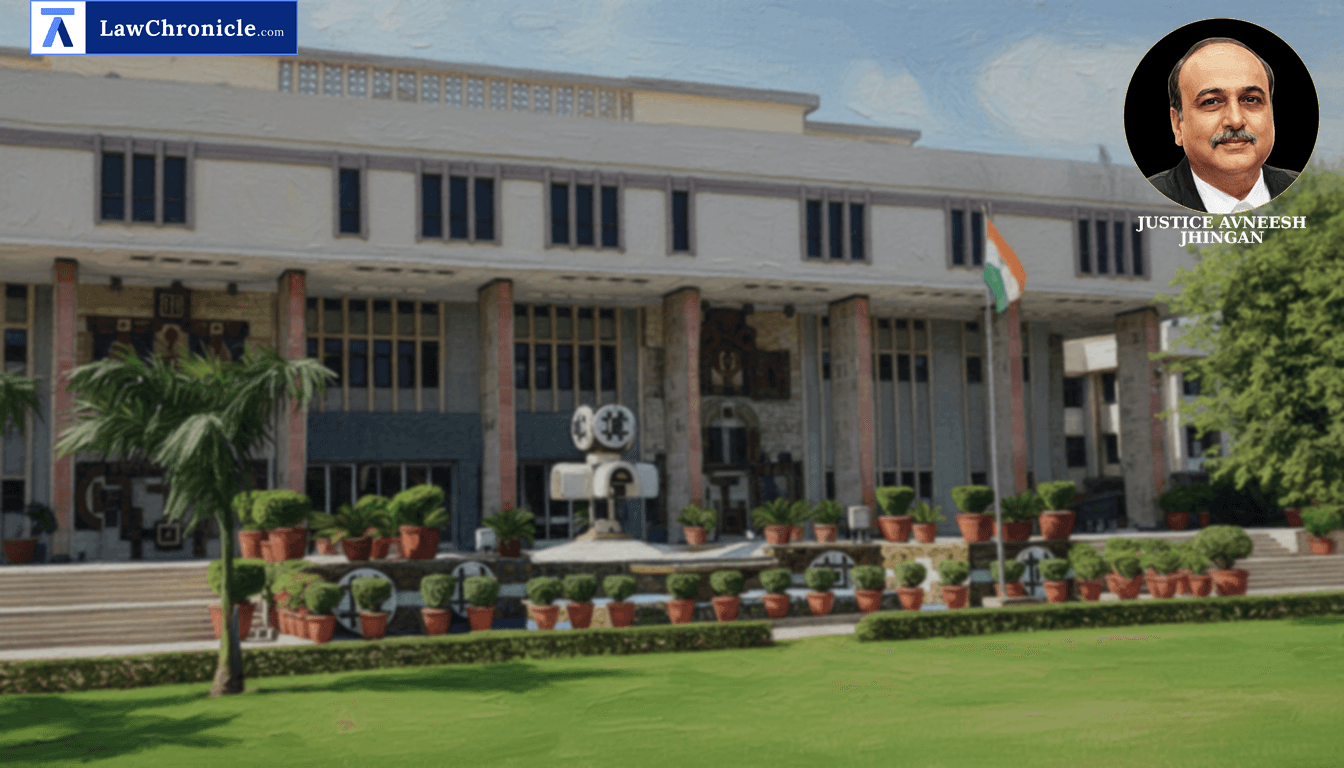
In a significant ruling, the Delhi High Court has reaffirmed the sanctity of the arbitrator's role in interpreting commercial contracts, holding that as long as the view taken is plausible, the court will not interfere with an award even if an alternative interpretation exists. The decision underscores that variations in quantity do not automatically transform a set-based fixed-price contract into a component-based pricing model.
Justice Avneesh Jhingan presided over the matter, considering a challenge against an arbitral award that had rejected claims for additional payments arising from increased component supplies in a railway project. The Court emphasized the limited scope of judicial intervention under Section 34 of the Arbitration and Conciliation Act, 1996, noting that courts do not sit in appeal over the factual or legal findings of an arbitral tribunal.
Court Upholds Arbitrator’s Interpretation of Contractual Terms
The Court observed that the arbitrator’s conclusion that the supply of fastening sets was at a fixed cost was a plausible one based on the tender documents, Letter of Acceptance (LOA), and the Bill of Quantities (BOQ). The petitioner’s attempt to use Section 27 of the General Conditions of Contract to claim fresh rates was rejected because the total variation in quantities did not exceed the 25% threshold required for renegotiation.
Furthermore, the Court highlighted that the petitioner had supplied the materials before obtaining the necessary design approvals from the Delhi Metro Rail Corporation (DMRC). The Court, in its reasoning, observed: "The arbitrator was right in holding that Clause 27 of the GCC and Stipulation No. 6 of the TS deal with different situations and there was no need to go into the priority ranking inter se the two clauses. The case set up by the petitioner for getting out of the rigours of Stipulation No. 6 of the TS by contending that acceptance of the supplies by the respondent tantamounted to acceptance of the design was contrary to Stipulation No. 6 of the TS."
The Principle of Non-Interference in Arbitral Awards
Citing a series of Supreme Court precedents, including Prakash Atlanta (JV) v. National Highways Authority of India ( "2026 INSC 76": 2026 CaseBase(SC) 66) and Ramesh Kumar Jain v. Bharat Aluminium Company Limited (BALCO) ( "2025 INSC 1457": 2025 CaseBase(SC) 1417), the Court reiterated that an award cannot be set aside merely because it is erroneous in law or involves a re-appraisal of evidence. The Court noted: "The interpretation of the clauses of the contract falls within the exclusive domain of the arbitrator. The award cannot be interfered with for every legal or factual error unless it is vitiated by perversity."
Background:
The dispute originated from a 2015 contract for the supply of Ballastless Track Fastening sets for the Delhi MRTS Project Phase-III. While the original order was for 1,86,500 sets, a variation order increased this to 1,98,715 sets. The petitioner argued that the change in track curvature required a '4-bolt system' instead of a '2-bolt system', leading to a significant increase in the number of components like anchor bolts, nuts, and springs.
While the respondent paid for the additional sets at the agreed rate, the petitioner sought extra payment for the increased individual components within those sets. The arbitrator rejected these claims, relying on Stipulation No. 6 of the Technical Specifications, which stated that accepted rates would remain unchanged regardless of the design approved by the client. The High Court, while dismissing the petition, relied on Patel Engineering Ltd. v. North Eastern Electric Power Corporation Ltd. ( "(2020) 7 SCC 167": 2020 CaseBase(SC) 1412), Associate Builders v. Delhi Development Authority ( "(2015) 3 SCC 49": 2014 CaseBase(SC) 661), Dyna Technologies Pvt. Ltd. v. Crompton Greaves Ltd. ( "(2019) 20 SCC 1": 2019 CaseBase(SC) 2340), and Ssangyong Engineering & Construction Co. Ltd. v. National Highways Authority of India ( "(2019) 15 SCC 131": 2019 CaseBase(SC) 226) to emphasize that patent illegality only arises when an arbitrator's view is one that no reasonable person would arrive at.
Case Details:
Case No.: O.M.P. (COMM) 414/2023
Case Title: PANDROL RAHEE TECHNOLOGIES PVT LTD THROUGH AUTHORIZED REPRESENTATIV VARUN BHOJAK vs. IRCON INTERNATIONAL LTD THROUGH ITS CHAIRMAN MR SUNIL KUMAR CHAUDHURY
Appearances:
For the Petitioner(s): Mr. Naveen R. Nath, Sr. Adv with Mr. Nishant Das, Mr. Atul Kumar, Ms. Disha Gupta, Ms. Aatrayi Das, Ms. Sakshi Nand, Ms. Jyoti Jha and Mr. Aditya Rana, Advs.
For the Respondent(s): Mr. Suman K. Doval, Mr. Ramesh Wangnoo & Mr. Lakshay Chaudhary, Advs.
Source: 2026 CaseBase(DEL) 348
Similar Articles

 Breaking News


