


Calcutta HC: Unqualified Extensions and Revised Contracts Bar Subsequent Damage Claims
 Copy Link
 Share
 Save
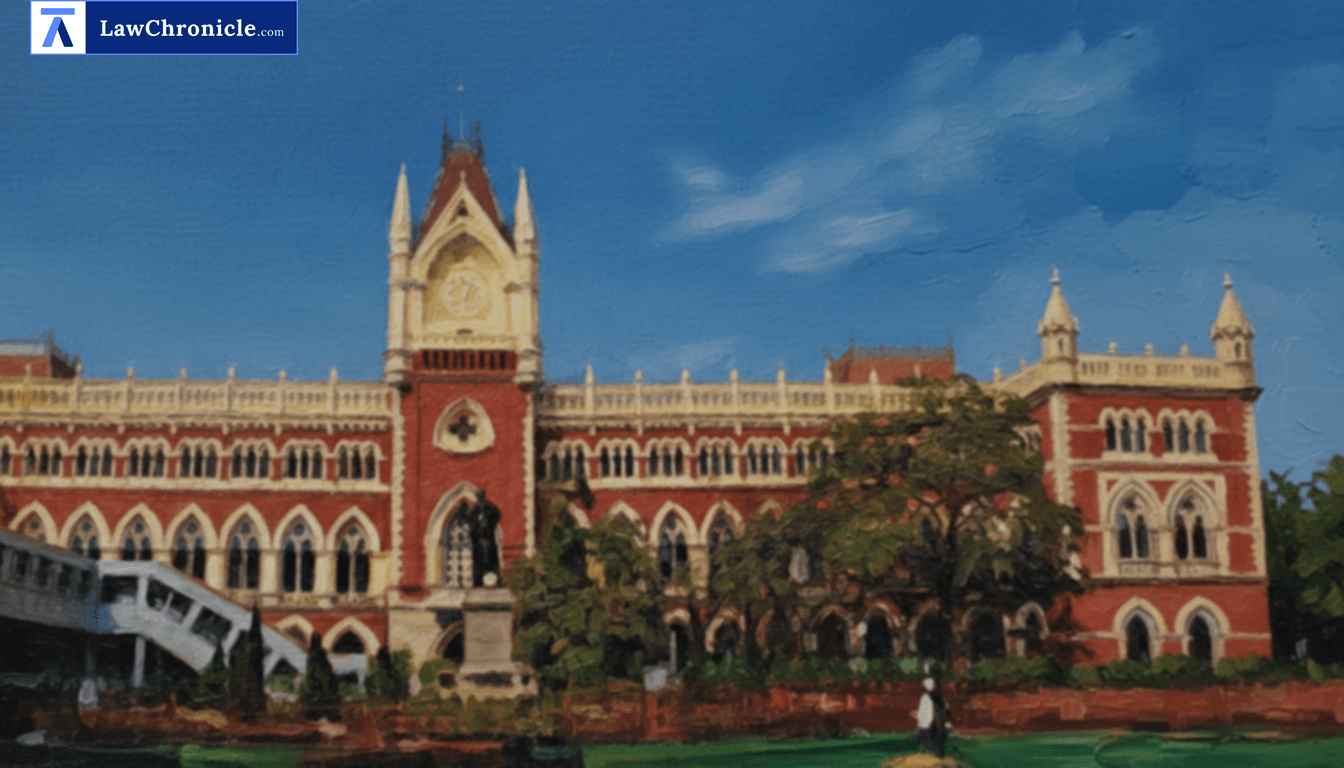
Acceptance of contract extensions without reserving the right to claim damages, coupled with the negotiation of revised contract prices, precludes a contractor from later seeking compensation for delays. The Calcutta High Court has reaffirmed that arbitral awards interpreting such contractual conduct as a waiver of damage claims are legally sound and do not warrant judicial interference under the Arbitration and Conciliation Act, 1996.
Justice Debangsu Basak and Justice Md. Shabbar Rashidi, sitting in the Commercial Appellate Division, heard an appeal challenging a Single Judge's refusal to set aside an arbitral award. The dispute involved a major metro railway construction project where the appellant sought additional costs following delays and changes in project alignment, which the Arbitral Tribunal had largely rejected.
The Plausibility of Arbitrator's Interpretation
The Court emphasized that the scope of interference in arbitral awards is narrow, particularly when the arbitrator’s view is a 'plausible' one based on the contract and evidence. In this case, the appellant had sought and received multiple extensions of time for phase 1 of the work without any reservation of rights to claim damages or additional establishment costs.
Furthermore, the parties had negotiated a revised contract price, increasing the value from Rs. 908.63 crores to Rs. 1279.81 crores to accommodate changes in alignment. The Court noted that the appellant, having participated in the negotiation and accepted the revised pricing within the extended period, could not subsequently turn around to claim damages for the same period.
Judicial Restraint Under Section 34 and 37
Invoking the principles laid down in OPG Power Generation Private Limited vs. Enexio Power Cooling Solutions India Private Limited and Another ( "2025 Volume 2 Supreme Court Cases 417": 2024 CaseBase(SC) 550) and Ssangyong Engineering and Construction Company Limited vs. National Highways Authority of India (NHAI), the Court reiterated that an interpretation of a contract by an arbitrator must be respected unless it is so unreasonable that no prudent person could adopt it. The Court found no patent illegality in the tribunal's decision to deny claims related to unrecovered establishment costs and interest on retention money.
The Court, in its reasoning, observed: "The modified price of the contract had been arrived at after negotiation. In any event, the appellant after having accepted the modified price cannot be allowed to turn around to claim damages. The view of the Arbitral Tribunal as recorded in the award on such aspect therefore cannot be said to be perverse or not a plausible view."
Regarding the rejection of Claim No. 3, which concerned loss of interest on retention sums, the Court found the tribunal's rationale regarding the mutual conversion of cash retention to bank guarantees to be a reasonable factual finding.
Key Takeaways:
Finality of Negotiated Revisions
Contractors who accept revised contract values after negotiations regarding work variations are likely barred from asserting historical damage claims for the same period.
Impact of Unqualified Extensions
Requesting or accepting project deadline extensions without explicitly reserving the right to claim compensation can be interpreted as a waiver of such rights under Arbitration and Conciliation Act, 1996.
Strict Threshold for Patent Illegality
An arbitrator's interpretation of a contract is final unless it is proven to be 'perverse' or 'irrational'; mere existence of an alternative view is insufficient for the High Court to intervene.
Ratio Decidendi:
A party to a contract who accepts an extension of time and a revised contract price through negotiation, without reserving a right to claim damages, is estopped from subsequently claiming compensation for delays occurring prior to such revision. Courts exercising power under Section 34 or 37 of the Arbitration and Conciliation Act, 1996 cannot substitute their own interpretation for a 'plausible view' taken by an Arbitral Tribunal.
Background:
The appellant entered into a contract with Kolkata Metro Rail Corporation Ltd. in 2010 for underground metro construction. Delays occurred due to site handover issues, traffic restrictions, and a significant change in the tunnel's alignment. While the original contract was valued at approx. Rs. 815 crores, it was eventually revised to over Rs. 1,279 crores. The appellant sought four extensions of time between 2013 and 2018.
Following the completion of phase 1, the appellant raised claims totaling over Rs. 208 crores, primarily for additional establishment costs and interest on withheld retention money. The Arbitral Tribunal allowed claims regarding overhead reduction and interest on mobilization advances but rejected the largest claim for establishment costs. Citing Delhi Metro Rail Corporation Limited vs. Delhi Airport metro Express Private Limited, K. N. Sathyapalan vs. State of Kerala and Another, and Assam State Electricity board and Others vs. Buildworth Private Limited, the appellant argued the award suffered from patent illegality. However, the High Court upheld the findings of the Arbitral Tribunal and the Single Judge, emphasizing that the tribunal had correctly applied Clauses 2.2 and 8.3 of the General Conditions of Contract.
Case Details:
Case No.: APOT/103/2026
Case Title: ITD-ITD CEM JOINT VENTURE Vs. KOLKATA METRO RAIL CORPORATION LTD.
Appearances:
For the Petitioner(s): Mr. Jishnu Saha, Sr. Adv.; Mr. Anal Kumar Ghosh, Adv.; Ms. Hashnuhana Chakraborty, Adv.; Ms. Neelina Chatterjee, Adv.; Ms. Ahana Bhattacharyya, Adv.
For the Respondent(s): Mr. Sakya Sen, Sr. Adv.; Ms. Sreya Basu, Adv.; Mr. Sunil Gupta, Adv.; Mr. Ankit Dey, Adv.; Mr. Atri Mandal, Adv.
Source: 2026 CaseBase(CAL) 37
Similar Articles


 Breaking News


