


Billing Errors By Hospitals Not Criminal Offences: SC Quashes Proceedings Against Narayana Health
 Copy Link
 Share
 Save
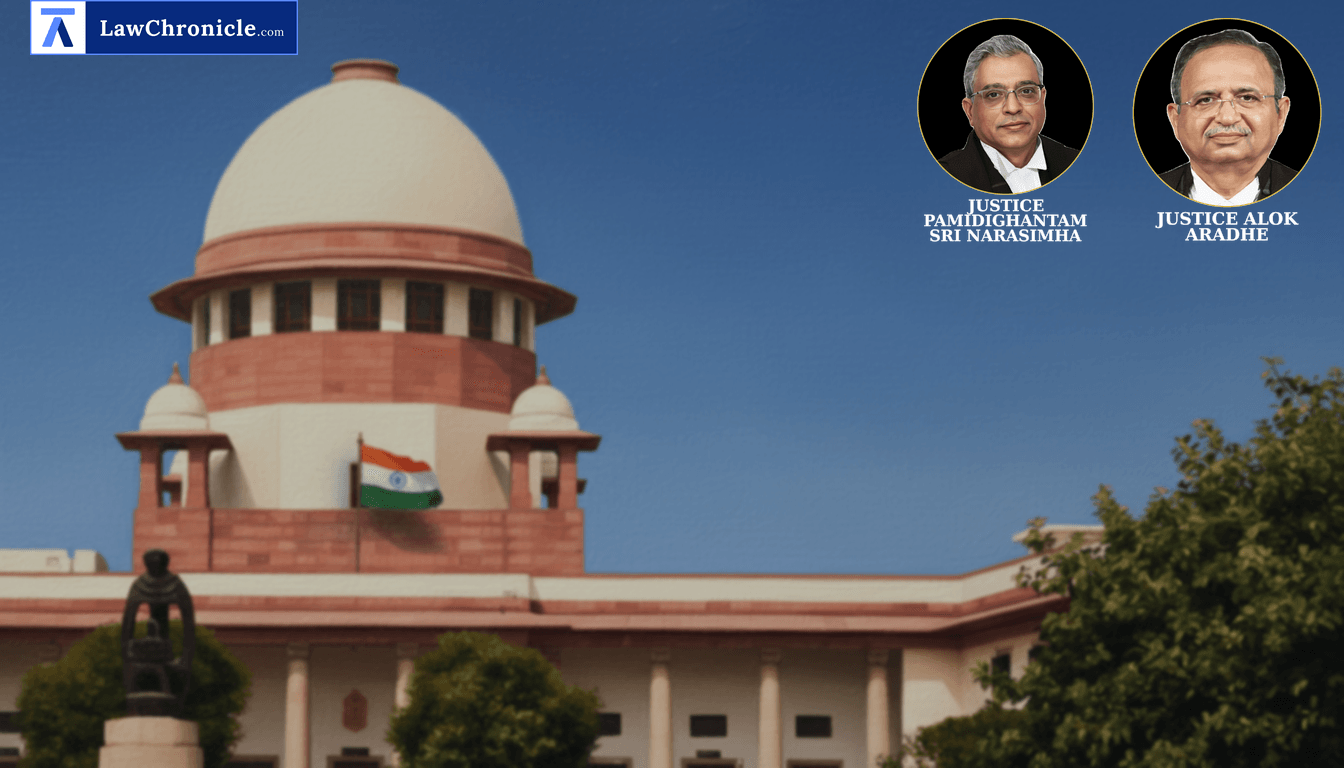
The Supreme Court ruled that inadvertent billing discrepancies and delays in providing medical records do not constitute criminal offences like cheating or breach of trust, especially when the hospital offers a refund.
A bench comprising Justice Pamidighantam Sri Narasimha and Justice Alok Aradhe set aside a High Court order that had remanded a criminal complaint for reconsideration, holding that the allegations failed to satisfy the essential ingredients of the penal provisions invoked.
Analysis of Criminal Allegations in Medical Disputes
The Court examined whether the inclusion of an unperformed diagnostic test in a hospital bill could attract criminal liability under the Indian Penal Code, 1860. While the complainant alleged offences under Sections 406, 420, and 120B of the Indian Penal Code, 1860, the bench observed that the dispute was essentially civil or regulatory in nature.
The Court, in its reasoning, observed: "The discrepancy in billing appears to be more of an inadvertence, than a case of dishonest intention on the part of the hospital. We are of the opinion that the allegation of cheating is completely misplaced... in the absence of entrustment, dishonest misappropriation, or violation of a fiduciary obligation, foundational ingredients of the offence of criminal breach of trust as enshrined in Section 405, IPC are not satisfied."
Regarding the charges of criminal conspiracy under Section 120B, the Court noted that since the foundational offences of cheating and breach of trust were not disclosed, the incidental allegation of conspiracy could not stand independently. The Court also criticized the High Court for suo motu suggesting an offence under Section 504 of the Indian Penal Code, 1860 without proper basis.
Regulatory Framework and Hospital Obligations
The bench emphasized that grievances regarding billing practices and medical records are governed by specific statutes like the West Bengal Clinical Establishments (Registration, Regulation and Transparency) Act, 2017. The Court clarified that while these issues might constitute service deficiencies, they do not automatically translate into criminal acts under Section 34 of the said Act.
Background:
The matter originated from a complaint filed by a man whose mother underwent surgery at Narayana Multispecialty Hospital. After discharge, the complainant noticed a charge of Rs. 2,500/- for an HRCT test that was never conducted. Although the hospital admitted the error and offered a refund via email, the complainant initiated criminal proceedings against the corporate entity, its Chairman, and staff.
The Judicial Magistrate issued process, which was challenged before the High Court. Relying on the principles laid down in State of Haryana v. Bhajan Lal ( "1992 Supp (1) SCC 335": 1990 CaseBase(SC) 91), the Supreme Court found that the allegations, even if accepted at face value, did not constitute a cognizable offence. The bench further cited Sadhupati Nageswara Rao v. State of Andhra Pradesh ( "(2012) 8 SCC 547": 2012 CaseBase(SC) 51) and Prof. RK Vijayasarathy v. Sudha Seetharam ( "(2019) 16 SCC 739": 2019 CaseBase(SC) 1819) regarding the requirements for criminal breach of trust, and State (NCT of Delhi) v. Navjot Sandhu ( "(2005) 11 SCC 600": 2005 CaseBase(SC) 372) regarding the nature of criminal conspiracy.
Ultimately, the Supreme Court allowed the appeal, quashing the complaint while leaving it open for the complainant to pursue civil or statutory remedies under the West Bengal Clinical Establishments (Registration, Regulation and Transparency) Act, 2017 or the Indian Medical Council (Professional Conduct, Etiquette and Ethics) Regulations, 2002.
Case Details:
Case No.: Criminal Appeal Nos. of 2026 (Arising out of SLP (Crl.) Nos. 10379-10380 of 2023)
NeutralCitation: 2026 INSC 481
Case Title: Narayana Health & Ors. v. The State of West Bengal & Ors.
Appearances:
For the Petitioner(s): Mr. Nidhesh Gupta, Senior Advocate
For the Respondent(s): Mr. Gagan Gupta, Senior Advocate (Amicus Curiae); Mr. Abhinay Sharma, Advocate on Record; Ms. Kirti Vyas, Advocate; Mr. Kartik Rajpurohit, Advocate
Source: 2026 CaseBase(SC) 409
Similar Articles

 Breaking News


