


Bombay HC: Time Limit for Filing Evidence Affidavit Under Trade Marks Rules Is Directory
 Copy Link
 Share
 Save
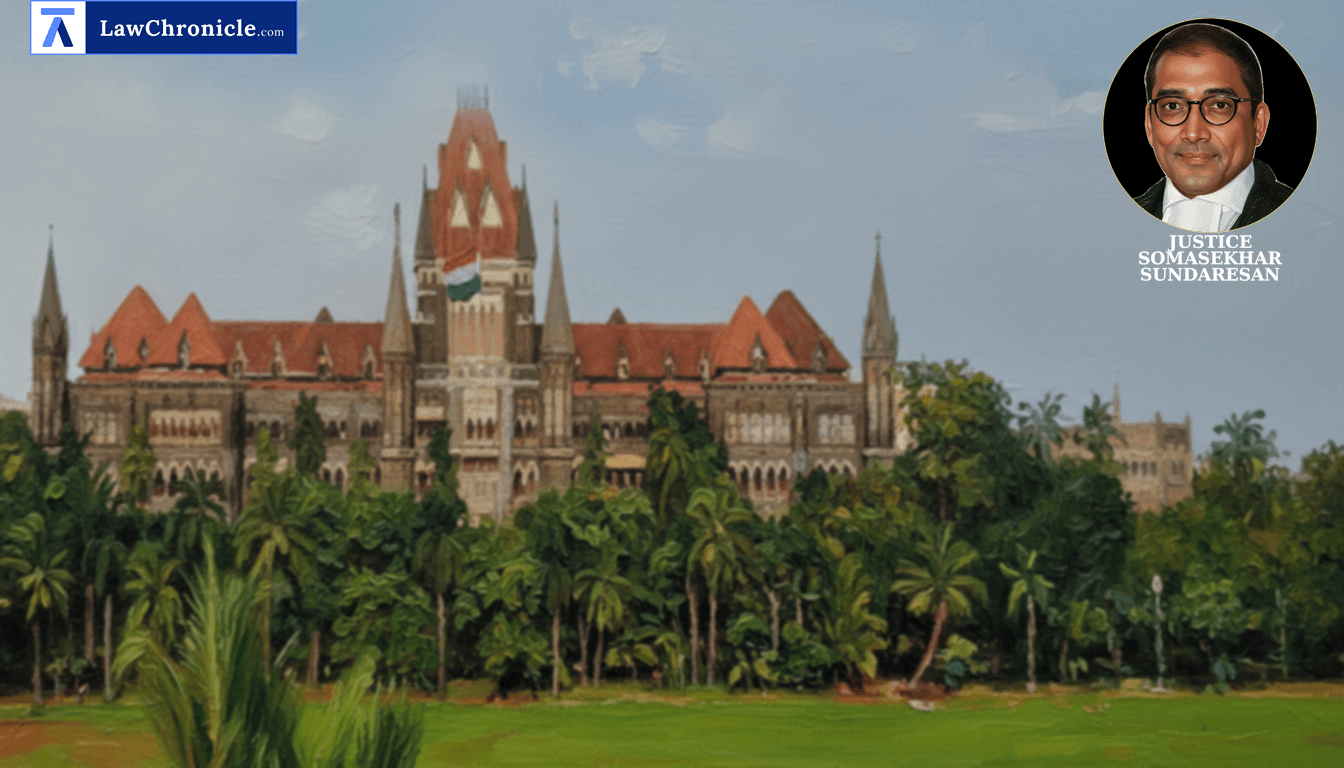
The Bombay High Court has clarified that the time limit for filing an affidavit of evidence in trademark rectification and opposition proceedings is directory in nature. The court emphasized that procedural laws should serve as a 'handmaid to justice' rather than a 'tyrant' that curtails substantive rights.
A single-judge bench of Justice Somasekhar Sundaresan heard a statutory appeal challenging an order of the Registrar of Trade Marks that had allowed a delay of over three years in filing an evidence affidavit. The core legal question was whether the two-month deadline stipulated under Rule 45 of the Trade Marks Rules, 2017 is a mandatory limitation that, if missed, results in the automatic abandonment of the proceedings.
The Rationale: Procedural Efficiency vs. Substantive Justice
The Court observed that while the rules provide for a 'deemed abandonment' if deadlines are missed, such fictions must be interpreted within the broader scheme of the Trade Marks Act, 1999. The bench noted that Section 131 of the Trade Marks Act, 1999 explicitly grants the Registrar discretionary power to extend time for any act, provided the time is not expressly stipulated in the Act itself.
The Court, in its reasoning, observed: "Procedural provisions and that too in subordinate legislation must serve as a servant of justice delivery flowing from the parent statute and cannot be a “tyrant” ruling and curtailing the substantive rights created in the parent statute."
Interpretation of Rule 45 and Section 131
The Court analyzed the interplay between Rule 45 and Rule 48, noting that Rule 48 allows the Registrar to admit further evidence at any stage. It reasoned that it would be 'absurd' to hold that a missed deadline under Rule 45 kills the prospect of filing evidence if that same evidence could be admitted later under the Registrar's discretionary powers.
The Court has the following directions:
"The Commercial Miscellaneous Petition is dismissed and the Impugned Order is upheld. All actions required to be taken pursuant to this order shall be taken upon receipt of a downloaded copy as available on this Court’s website."
Background: A Long-Standing Family Dispute
The dispute involved two factions of a family following a split in 2014, both claiming rights to the name "Black Diamond Motors." The Registrant had secured registration in 2009, while the Rectification Applicant sought to cancel it in 2019. During the proceedings, the Rectification Applicant filed documents without an affidavit in 2020 and finally moved an interlocutory application with the required Evidence Affidavit in 2024. The Registrar allowed the application, leading to the present appeal.
The Petitioner argued that the Trade Marks Rules, 2017 introduced a conscious legislative departure from the Trade Marks Rules, 2002, making deadlines mandatory. They relied on decisions like Sun Pharma Laboratories Ltd. v. Dabur India Ltd. and Mahesh Gupta v. Registrar of Trademarks from the Delhi High Court. However, the High Court disagreed, finding that these cases did not fully examine the wider scheme of the 2017 Rules, including the impact of Rule 48. Instead, the Court found resonance with the logic in Sahil Kohli v. Registrar of Trade Mark and the principles regarding the extension of mandates in Rohan Builders (India) (P) Ltd. v. Berger Paints (India) Ltd.. Ultimately, the Court concluded that an order allowing an extension of time is a ministerial act and, per Section 131(2) of the Trade Marks Act, 1999, is not even appealable.
Case Details:
Case No.: COMMERCIAL MISCELLANEOUS PETITION NO. 23 OF 2026
Case Title: Black Diamond Motors Pvt. Ltd. v. Registrar of Trade Marks, Mumbai & Anr.
Appearances:
For the Petitioner(s): Mr. Hiren Kamod, a/w Thomas George & Neeti Nihal, Tanvi Sinha, Navankur Pathak, Bargavi Bharadwaj, i/b Saikrishna & Associates
For the Respondent(s): Mr. Atul Singh a/w Arzoo Gupta & Mitika Agarwal, i/b Nidhi Bangera, for Respondent No. 2
Source: 2026 CaseBase(BOM) 237
Similar Articles
 Breaking News


