


Bombay HC: Registrar of Trade Marks Is a 'Court' for Transfer of Proceedings Under Section 24 CPC
 Copy Link
 Share
 Save
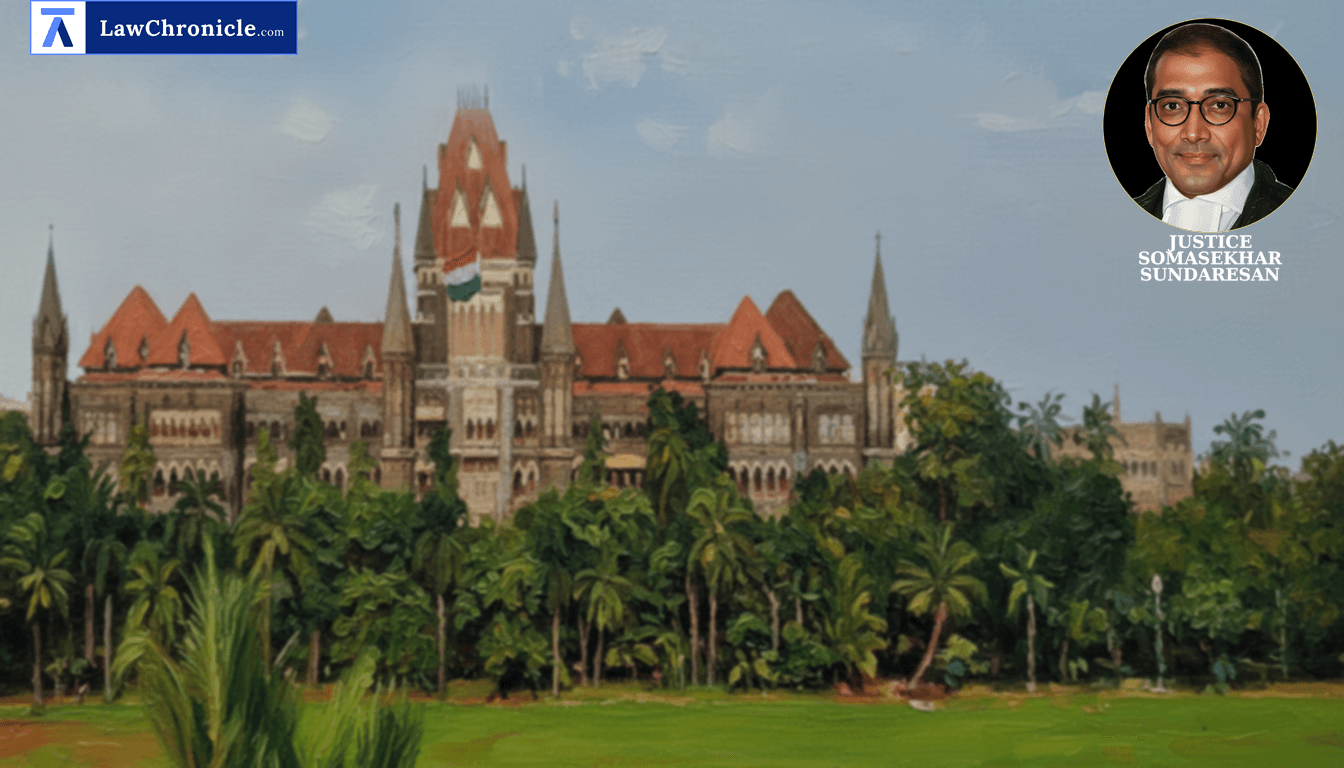
The Bombay High Court has affirmed its inherent power to transfer rectification proceedings from the Registrar of Trade Marks to itself, ensuring efficient adjudication of inter-connected disputes.
Justice Somasekhar Sundaresan, presiding over the matter, addressed whether the Registrar of Trade Marks can be considered a 'Court' subordinate to the High Court for the purposes of transfer under the Code of Civil Procedure, 1908. The issue arose in a dispute between educational trusts over the use of 'ITM' marks, where the Court found that fragmenting proceedings across different forums could lead to chaotic and divergent outcomes.
The Rationale: Registrar as a Subordinate Court
The Court clarified that despite not being a conventional Civil Court, the Registrar possesses significant 'trappings of a court' under the Trade Marks Act, 1999. These include the power to receive evidence, administer oaths, and issue orders executable as decrees. Furthermore, the Court highlighted the statutory appeal mechanism under Section 91 of the Trade Marks Act, 1999 as a decisive factor in establishing subordination.
The Court, in its reasoning, observed: "As a tribunal with serious trappings of a Court of the first instance, read with the High Court being the Appellate Court before which the statutory right to appeal from its decisions may be exercised, the Registrar, in my judgement can truly be regarded as a subordinate Court for purposes of Section 24 of the CPC."
Overcoming Procedural Hurdles and Precedents
Responding to arguments that the Registrar is not a 'Civil Court' based on decisions like Promoshirt SM SA v. Armassuisse and Anglo French Drug Co. (Eastern) Private Ltd. v. R.D. Tinaikar, the Court noted that those rulings were context-specific (relating to second appeals or legal practitioners) and did not establish a universal rule. The Court instead relied on the principle of forum conveniens and the Supreme Court’s approach in Bhagwati Devi v. I.S. Goel, where the Motor Accident Claims Tribunal was treated as a Civil Court for transfer purposes.
Addressing the absence of specific Intellectual Property Division rules in Bombay unlike the Delhi High Court the Court held that the lack of procedural rules cannot denude the Court of its substantive statutory or inherent powers. It cited Delhi Science Forum v. Union of India ( "(1996) 2 SCC 405": 1996 CaseBase(SC) 474) to emphasize that power granted by statute remains exercisable even without framed rules.
The Court has the following directions:
"The Registrar is directed to transmit to the Registry of this Court the complete records of the three ITM Rectifications Applications within a period of six weeks from the date of upload of this order. Once the files are received, the Registry shall convert them into Commercial Miscellaneous Petitions and tag them with the Suit and the 17 Samata Rectification Applications. All the aforesaid tagged proceedings are stood over to August 18, 2026."
Background:
The dispute involved the Institute for Technology and Management Trust (ITM) and Samata Lok Sansthan Trust. While a commercial suit and 17 rectification applications were already pending before the High Court, three of ITM’s rectification proceedings remained before the Registrar. ITM sought the transfer of these three proceedings to the High Court to ensure a composite adjudication.
Samata opposed the transfer, arguing that the Registrar is not a 'Court' under Section 24 of the Code of Civil Procedure, 1908 and that the application should have been filed on the Appellate Side rather than as an interim application in a commercial suit. However, the Court dismissed these objections, noting that Chapter XLV of the Original Side Rules, read with Section 8 of the General Clauses Act, 1897, allows such applications under the Trade Marks Act, 1999 to be heard on the Original Side.
The Court ultimately found that the consolidation of these proceedings was necessary for the ends of justice, invoking both Section 24 and the inherent powers under Section 151 of the Code of Civil Procedure, 1908. Relying on the approach in Jumeira Beach Resort LLC v. Designarch Infrastructure Pvt Ltd and distinguishing Nahar Industrial Enterprises Ltd v. Hongkong & Shanghai Banking Corp ( "(2009) 8 SCC 646": 2009 CaseBase(SC) 25), the Court allowed the transfer application.
Case Details:
Case No.: INTERIM APPLICATION NO. 3128 OF 2025 IN COMMERCIAL IP SUIT NO. 102 OF 2015
Case Title: Institute For Technology And Management Trust And Anr. Versus Putch Venkata Ramana & Ors
Appearances:
For the Petitioner(s): Mr. Hiren Kamod a/w Mr. Nishad Nadkarni, Mr. Aasif Navodia, Ms. Khushboo Jhunjhunwala, Ms. Jaanvi Chopra, Ms. Rakshita Singh i/b Khaitan and Co.
For the Respondent(s): Mr. Aseem Naphade, Counsel a/w Bharati Aindley, Shashank Sardesai, Anoushka Goyal, Aniket Bomble
Source: 2026 CaseBase(BOM) 259
Similar Articles
 Breaking News


