


Bombay High Court Rebukes Cantonment Board for Blocking Residential Development on Defence Land
 Copy Link
 Share
 Save
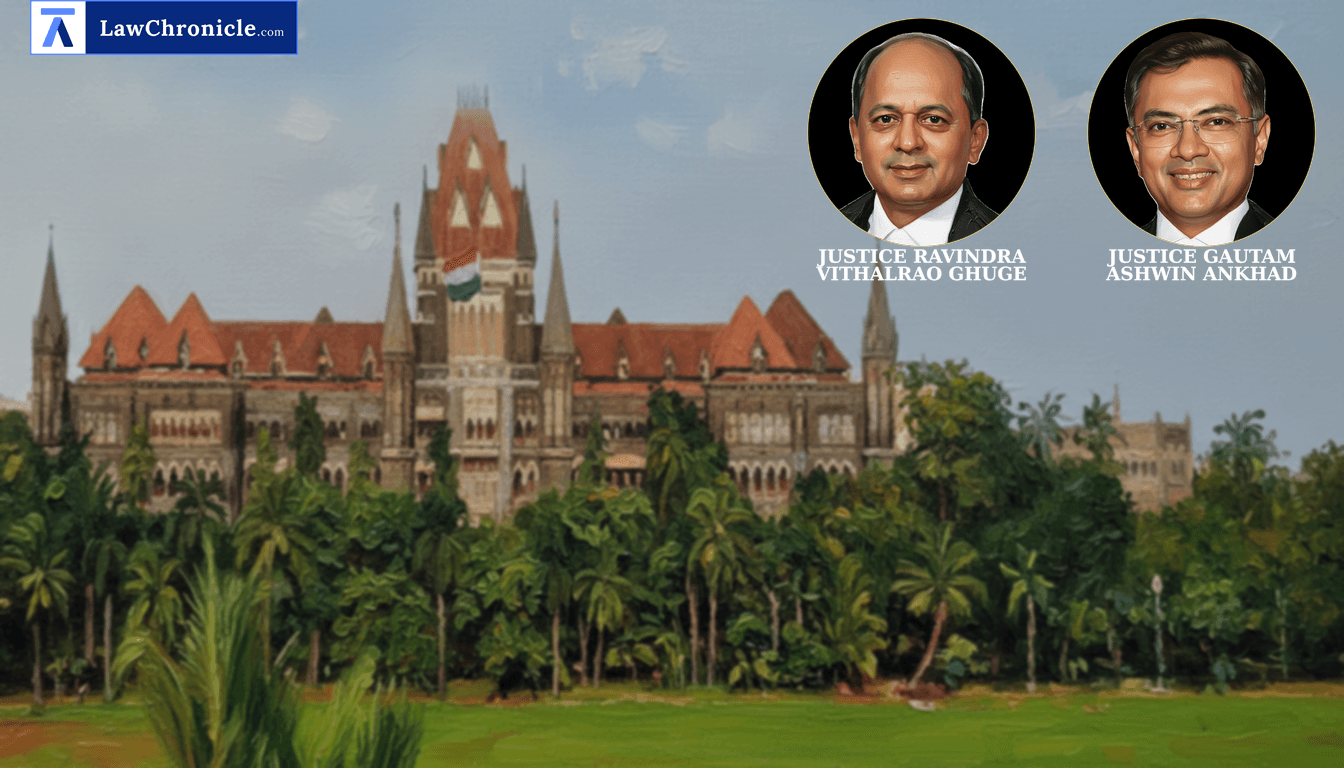
The Bombay High Court has quashed the Pune Cantonment Board's refusal to grant building permissions to lessees of defence land. The High Court ruled that vague apprehensions regarding future strategic requirements cannot extinguish subsisting contractual and statutory rights to residential construction. The Bench held that the State cannot convert regulatory power into a total prohibition on residential use solely based on potential policy shifts that may occur upon the expiry of a lease years later.
Acting Chief Justice Ravindra V. Ghuge and Justice Gautam A. Ankhad presided over the challenge against the Cantonments Act, 2006 and the decisions of the Defence Estate Office. The Bench scrutinized the rejection orders issued by the Chief Executive Officer of the Pune Cantonment Board, which were primarily based on objections from the Local Military Authority regarding future land requirements for Officers' Married Accommodation.
Key Takeaways
Contractual Rights Prevail Over Apprehensions
Substantive leasehold rights cannot be defeated by general assertions of future land scarcity or strategic requirements without concrete, immediate projects.
Equality in Administrative Action
The State must provide a rational basis for differential treatment; denying one lessee permission while granting it to another in the same layout is discriminatory.
Safeguarding Sovereign Resumption
Building permissions granted during the subsistence of a lease do not automatically create an entitlement to lease renewal or higher compensation upon expiry.
Individual Undertakings as Legal Safeguards
Judicial enforcement of specific undertakings regarding non-commercial use and waiver of compensation can sufficiently mitigate administrative risks for the State.
Rejection Based on Future Speculation Invalid
The Bombay High Court noted that the petitioners held valid building leases under the Cantonment Land Administration Rules, 1937, which specifically allowed for dwelling houses. The authorities had rejected the plans citing the lease's upcoming expiry in 2033 and potential financial loss to the exchequer due to compensation claims. However, the Court observed that these were speculative concerns that did not align with the current legal standing of the lessees.
The Bombay High Court stated that the objection proceeds upon a purported apprehension that the construction may make future resumption difficult, or rather impossible. The Court found that such an apprehension cannot by itself justify defeating a subsisting contractual and statutory right.
Ratio
Administrative authorities cannot exercise regulatory powers to prohibit activity permitted under a subsisting lease based on anticipated policy changes or future land requirements that lack immediate operational implementation. A general assertion of future requirement cannot be treated as an immediate operational necessity to extinguish a lessee's right to enjoy the premises in accordance with the permissible residential use defined in the lease deed and Cantonments Act, 2006.
Background
The dispute involved two plots, 5-A and 5-B, at Queens Garden, Pune Cantonment, forming part of a larger 1944 lease. The petitioners sought to build residential bungalows, but the Pune Cantonment Board rejected the plans in 2025, citing objections from the Cantonments Act, 2006 management. The authorities argued that Pune is land-deficient and the property is zoned for Officers' Married Accommodation. They further relied on the precedent of Chief Executive Officer v. Surendra Kumar Vakil & Ors. ( "(1999) 3 SCC 555": 1999 CaseBase(SC) 787) to argue that occupants of old grant properties have limited rights.
However, the petitioners pointed out that Plot 5-D in the same layout had been granted permission. They also cited Whirlpool Corporation v. Registrar of Trademarks, Mumbai & Ors. ( "(1998) 8 SCC 1": 1998 CaseBase(SC) 253) regarding the maintainability of writ petitions when fundamental rights are at stake. The Bombay High Court found the differential treatment between the plots to be arbitrary and allowed the petitions, subject to strict undertakings by the owners to not claim equity or compensation in 2033.
Case Details:
Case No.: WRIT PETITION NO. 9218 OF 2025 and 9220 OF 2025
Neutral Citation: 2026:BHC-AS:36510-DB
Case Title: Nikhil Vithal Jhaveri & Anr. v. Chief Executive Officer, Pune Cantonment Board & Ors.
Appearances:
For the Petitioner(s): Dr. Birendra Saraf, Senior Advocate; Mr. Bhushan Deshmukh, Mr. Abinash Pradhan, Ms. Garima Agrawal and Mr. Yash Dedhia i/b. Wadia Ghandy & Co.
For the Respondent(s): Mr. K. J. Presswalla with Mr. Tushad Kakalia and Mr. Sandeep Goyal i/b. Mulla & Mulla & Craigie Blunt & Caroe for R1; Mr. A. S. Khandeparkar, Senior Advocate with Ms. Shehnaz V. Bharucha and Mr. Mohamedali M. Chunawalla for R2-R4.
Source: 2026 CaseBase(BOM) 5638
Similar Articles




 Breaking News


