


Gauhati HC: Writ Petition Against Demolition Order Not Maintainable Without Exhausting Statutory Remedy
 Copy Link
 Share
 Save
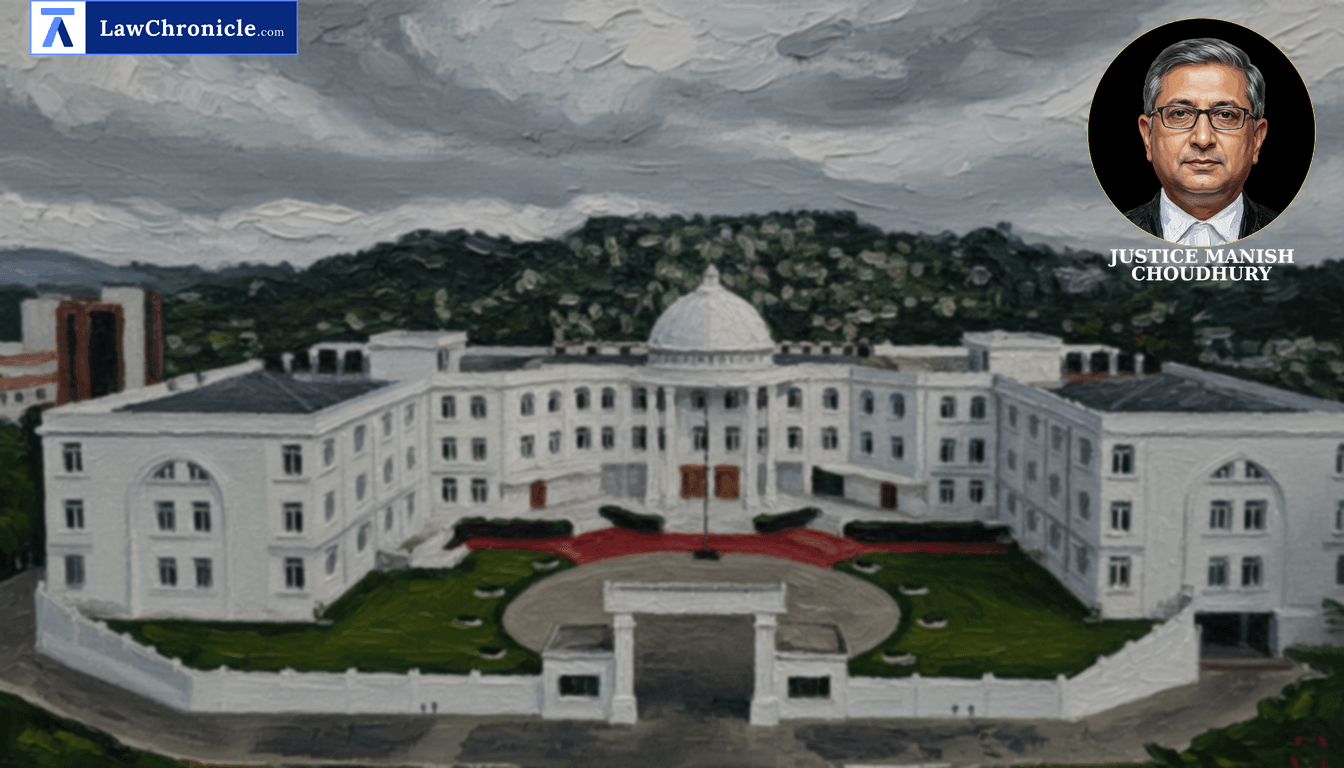
The Gauhati High Court has refused to interfere with a demolition order issued against unauthorized constructions, affirming that petitioners must exhaust statutory appeal remedies before invoking writ jurisdiction. By directing the parties to the designated Appellate Authority, the Court emphasized the necessity of adhering to the specialized dispute resolution mechanisms provided under urban development legislations.
Justice Manish Choudhury heard the challenge directed against a demolition schedule intended to remove an unauthorized brick boundary wall and house in the Dharapur area of Guwahati. The Court observed that the challenge was misplaced as it targeted a consequential implementation order rather than the primary demolition directive issued months earlier.
Court Upholds Exhaustion of Alternative Remedies
The Court noted that the petitioners had primarily assailed a communication dated June 18, 2026, which merely scheduled the date for demolition. However, this order was a direct consequence of an earlier substantive order dated November 19, 2025, passed under Section 88 of the Guwahati Metropolitan Development Authority Act, 1985. The Court held that without challenging the root order, the consequential process could not be stalled through a writ under Article 226 of the Constitution of India.
The Court has the following directions:
"the writ petition is not entertained, reserving the liberty to the petitioners to avail the statutory remedy under the provisions of the GMDA Act by filing an appeal before the Appellate Authority within a period of one month from today."
In its reasoning, the Court observed: "In the considered view of this court, without there being any challenge to the original Order dated 19.11.2025, a challenge to the impugned Order dated 18.06.2026, being only a consequential order for stopping the process of demolition is not to be interfered with."
Background: The Unauthorized Construction Dispute
The dispute arose when the Guwahati Metropolitan Development Authority (GMDA) identified a brick boundary wall and a house at Dharapur as being in violation of Building Bye-Laws and Section 24 and Section 25 of the Guwahati Metropolitan Development Authority Act, 1985. A stop-construction notice was first issued on July 2, 2025. Although the petitioners replied to the show-cause notice, they failed to produce a valid planning permit.
Following a hearing on August 6, 2025, the respondent authority passed the original demolition order on November 19, 2025. The petitioners failed to challenge this order within the one-month limitation period prescribed under the Act. Instead, they approached the High Court only when a specific date for the physical demolition was scheduled in June 2026. The Court highlighted that the State Government, via a 1996 notification, has designated the District & Sessions Judge, Kamrup, Guwahati as the Appellate Authority under Section 71(2) of the Guwahati Metropolitan Development Authority Act, 1985.
Key Takeaways:
Primacy of Statutory Remedies
High Courts will generally not exercise writ jurisdiction when an efficacious alternative remedy, such as a statutory appeal, is available to the aggrieved party.
Consequential Orders Cannot Stand Alone
A challenge to a subsequent administrative action (like a demolition schedule) is likely to fail if the underlying substantive order (the demolition directive) remains unchallenged.
Appellate Authority's Condonation Power
Specialized tribunals and appellate bodies under the Guwahati Metropolitan Development Authority Act, 1985 possess civil court powers, including the discretion to condone delays in filing appeals for sufficient reasons.
Ratio Decidendi:
A writ petition challenging a consequential administrative order is not maintainable when the original substantive order providing the legal basis for such action has not been impugned, especially when a specialized statutory appellate forum exists to adjudicate the merits of the dispute.
Case Details:
Case No.: WP(C)/3459/2026
NeutralCitation: 2026:GAU-AS:9390
Case Title: Bimal Baishya and 4 Ors vs. The State of Assam and 6 Ors
Appearances:
For the Petitioner(s): Mr. A K Azad, Ms S Devi
For the Respondent(s): Mr. S. Bora (SC, GMDA), Mr. B.P. Bora (For R-6)
Source: 2026 CaseBase(GAU) 6
Similar Articles



 Breaking News


