


Calcutta HC: Prior Withdrawal of Civil Suit Without Liberty Does Not Bar Section 11 Arbitration Petition
 Copy Link
 Share
 Save
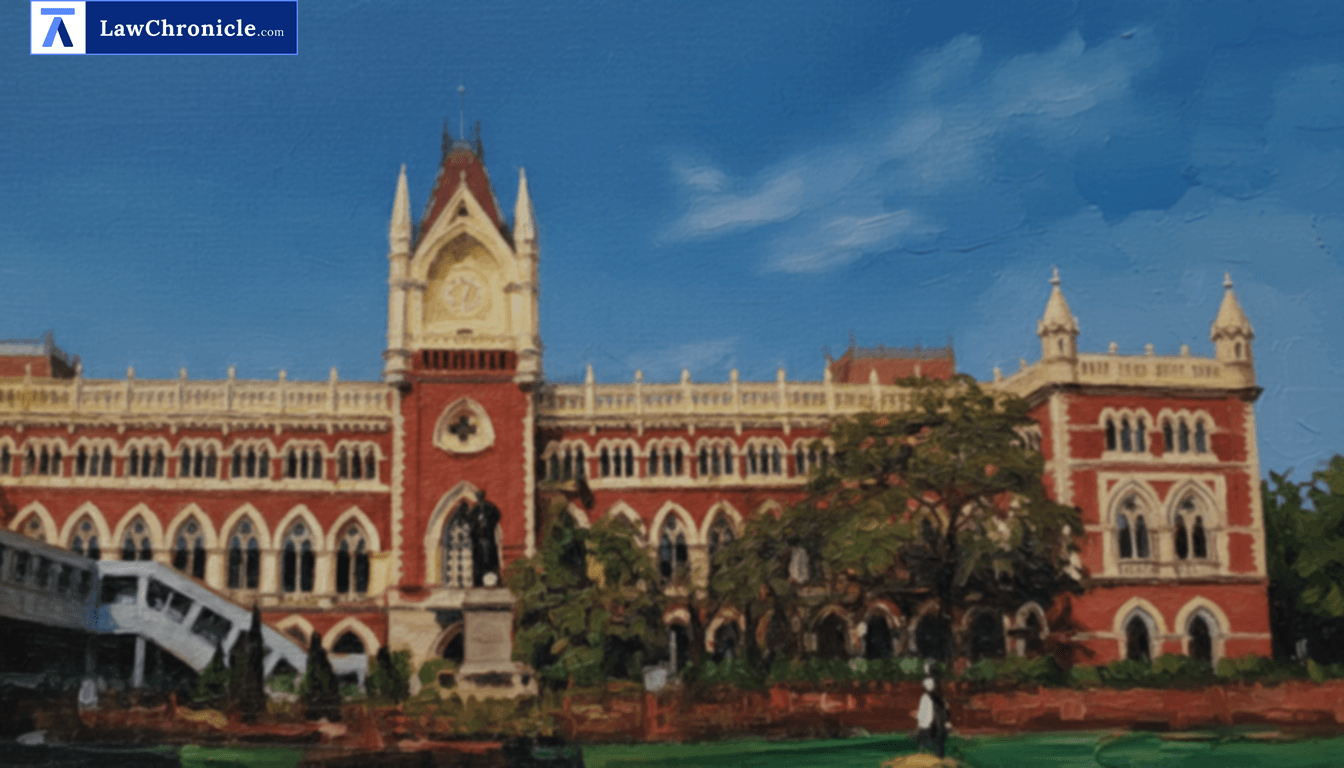
The Calcutta High Court has clarified that the unconditional withdrawal of a civil suit does not extinguish the right to seek the constitution of an arbitral tribunal, ruling that the contractual dispute resolution mechanism survives independent of abandoned civil litigation.
In a significant verdict, Justice Gaurang Kanth has held that the principles of Order XXIII Rule 1 of the Code of Civil Procedure, 1908, which prevent a party from re-litigating a cause of action after an unconditional withdrawal, do not operate as an automatic bar against applications filed under Section 11(6) of the Arbitration and Conciliation Act, 1996.
The Independence of Arbitration Agreements
The Bench was hearing a petition where the respondent-developer argued that since the petitioner had previously withdrawn a civil suit regarding the same development agreement without seeking liberty to file afresh, they were precluded from invoking arbitration. Rejecting this contention, Justice Kanth emphasized the fundamental distinction between the nature, object, and relief of a civil suit and a Section 11 application.
The Court, in its reasoning, observed: "The withdrawal of the suit may furnish a defence before the Tribunal regarding the maintainability of any particular claim, but cannot extinguish the arbitration agreement itself. At this stage, this Court is merely called upon to constitute an Arbitral Tribunal for adjudication of the disputes between the parties. It would, therefore, be premature for this Court to examine whether the claim which the petitioner intends to pursue before the Tribunal would be barred by principles of res judicata, or otherwise."
Distinguishing Procedural Bars in Arbitration
The respondent relied on the Supreme Court's decision in HPCL Bio-Fuels Ltd. v. Shahaji Bhanudas Bhad to argue that the abandonment of a prior proceeding operates as a bar. However, the High Court distinguished this precedent, noting that in HPCL Bio-Fuels Ltd. v. Shahaji Bhanudas Bhad, the party had withdrawn a prior Section 11 application itself, whereas here, the withdrawn proceeding was a civil suit.
Referring to Naihati Jute Mills Ltd. v. Khyaliram Jagannath and National Agricultural Cooperative Marketing Federation of India Ltd. v. Gains Trading Ltd., the Court reiterated the settled legal principle that an arbitration agreement is a collateral and severable covenant which survives even if the underlying contract is alleged to be frustrated or breached. The Court noted that whether the developer was justified in constructing a G+2 building instead of the agreed G+4 structure is a matter for the merits of the case, which falls squarely within the domain of the Arbitral Tribunal.
Directions Issued by the Court
Finding that the jurisdictional requirements of Section 11(6) were satisfied as the respondent failed to appoint an arbitrator despite notice, the Court has following directions:
"Accordingly, Mr. Rohit Das, Adv. (Mob No. 9831916012) is appointed as the Nominee Arbitrator on behalf of the respondents to adjudicate the disputes which have arisen between the parties out of the development agreement dated 27.06.2019, subject to disclosure in terms of Section 12 of the Arbitration and Conciliation Act, 1996. Mr. Jyoti Prakash Chatterjee, Advocate, and Mr. Rohit Das, Advocate are requested to hold a meeting at the earliest and appoint the Presiding Arbitrator, and thereby constitute the Arbitral Tribunal for adjudication of the disputes between the parties. The remuneration of the Arbitral Tribunal shall be governed by the Fourth Schedule to the Arbitration and Conciliation Act, 1996, or such remuneration as may be fixed by the Learned Arbitrators in consultation with the parties. All questions relating to arbitrability of the dispute, admissibility of the claims, limitation and other issues are kept open to be urged before this learned Sole Arbitrator. The parties are directed to appear before the Learned Arbitrators within four weeks from the date of communication of this order."
Key Takeaways:
Survival of Arbitration Clauses
An arbitration clause is independent of the main contract and is not extinguished by the withdrawal of civil proceedings related to the same subject matter.
Limited Scope of Section 11
At the stage of appointing an arbitrator, the Court’s role is limited to verifying the existence of the agreement and the failure of the appointment procedure, not the ultimate maintainability of claims.
Order XXIII Rule 1 Limits
Procedural bars under the Code of Civil Procedure, 1908 regarding suit withdrawal do not automatically disqualify a party from invoking a contractual arbitration mechanism.
Ratio Decidendi:
The unconditional withdrawal of a civil suit seeking declaratory and injunctive relief does not bar a subsequent application under Section 11(6) of the Arbitration and Conciliation Act, 1996 for the constitution of an Arbitral Tribunal, as the arbitration agreement constitutes a collateral covenant that survives independent of the abandoned civil litigation.
Background:
The dispute arose from a 2019 development agreement where the petitioner, a co-owner of a property in Howrah, alleged that the respondent-developer failed to pay the full 'owner's allocation' and constructed a G+2 building instead of a G+4 building as promised. The petitioner initially filed a Title Suit in 2024 but withdrew it unconditionally in March 2025. Subsequently, the petitioner invoked the arbitration clause and approached the High Court when the respondent failed to nominate an arbitrator. The respondent contended that the suit's withdrawal barred the petition and that the contract stood frustrated due to the inability to get sanctions for a G+4 building. The High Court allowed the petition, holding these issues to be matters for the Arbitral Tribunal to decide.
Case Details:
Case No.: AP 79 OF 2025
NeutralCitation: 2026:CHC-OS:297
Case Title: Lipika Ghosh vs. M/S Great Island Development Company And Ors
Appearances:
For the Petitioner(s): Mr. Abhilash Chatterjee, Adv.; Ms. Najmee Parveen, Adv.
For the Respondent(s): Mr. Supriyo Das, Adv.; Mr. Aman Baid, Adv.; Mr. Avishek Chatterjee, Adv.
Source: 2026 CaseBase(CAL) 29
Similar Articles

 Breaking News


