


Allegations of Forgery Don't Automatically Bar Section 11 Referral: Bombay HC
 Copy Link
 Share
 Save
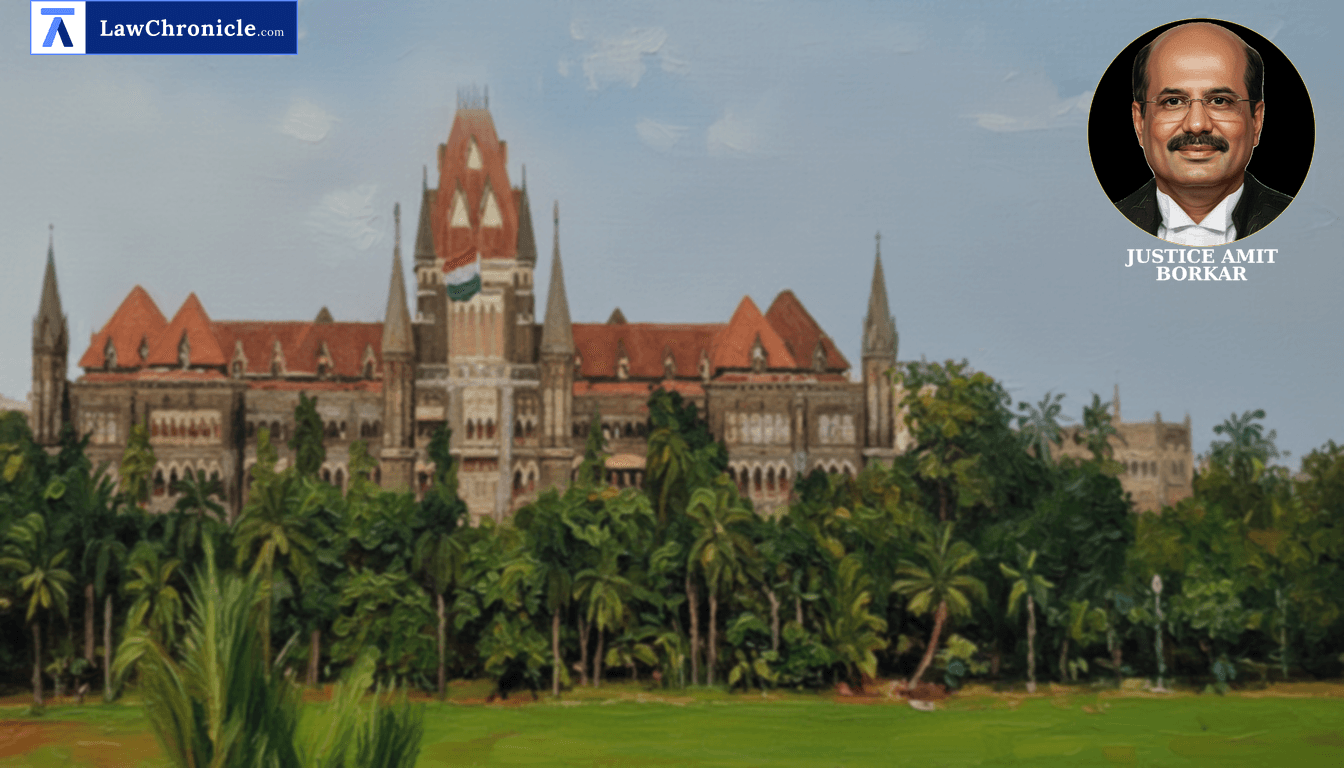
In a decisive check against tactics aimed at delaying arbitration, the High Court has held that mere allegations of forgery and fraud cannot automatically oust the jurisdiction of a referral court under Section 11 of the Arbitration and Conciliation Act, 1996. The Court ruled that unless the non-existence of an arbitration agreement is demonstrably clear at the threshold, evidentiary disputes surrounding document execution must be left to the decision of the Arbitral Tribunal.
A single judge bench of Justice Amit Borkar was hearing an application filed under Section 11(6) read with Section 11(12)(a) of the Arbitration and Conciliation Act, 1996 seeking the appointment of a Sole Arbitrator to resolve redevelopment disputes arising out of a Development Agreement. The Respondents resisted referral, alleging that the underlying agreement was forged, insufficiently stamped, and executed without the consent of a non-signatory property owner.
Key Takeaways
Prima Facie Examination Prevails: Section 11 referral courts are restricted to examining the prima facie existence of an arbitration clause without conducting full-fledged evidentiary trials.
Fraud Allegations Not an Automatic Bar: Raising claims of document fabrication or forgery does not automatically halt reference to arbitration if surrounding independent documents support the transaction.
Competence of Tribunal Under Section 16: Objections concerning non-signatories, title disputes, and non-stamping fall within the jurisdiction of the Arbitral Tribunal under Section 16 of the Arbitration and Conciliation Act, 1996.
The Court analyzed the legal standards governing jurisdictional challenges at the pre-referral stage and emphasized that arbitration is rooted in consent. Referring to judicial precedents including Rajia Begum and Ajay Madhusudhan Patel, the Court addressed the extent of judicial inquiry permissible under Section 11.
The Court, in its reasoning, observed: "Therefore, objections pertaining to existence and validity on the basis of evidence must be left to the Arbitral Tribunal since it can 'rule' on its own jurisdiction."
The Court issued the following directions:
"(i) The Arbitration Application is allowed;
(ii) Mr. Ranjeev Carvalho, Advocate of this Court... is hereby appointed as the Sole Arbitrator to adjudicate the disputes arising between the Applicant and the Respondent No.1 out of or in connection with the Development Agreement dated 18 December 2024;
(iii) The learned Sole Arbitrator shall, before entering upon the merits of the disputes, be at liberty to consider and decide all objections raised by the Respondents concerning the existence, execution, genuineness, validity and enforceability of the Development Agreement and the arbitration agreement contained therein, in accordance with law;
(iv) The question whether Respondent No.2, being a non-signatory to the Development Agreement, is bound by the arbitration agreement and whether the disputes raised against Respondent No.2 are capable of being referred to arbitration, is left open. Respondent No.2 shall be at liberty to raise all such objections before the learned Sole Arbitrator, including the effect of the Gift Deed dated 23 January 2024 and her alleged independent rights in Shop Nos.1 and 2 of Patkar House;
(v) All questions relating to the alleged forgery or fabrication of the Development Agreement, the Gift Deed dated 23 January 2024, the registered Will dated 11 April 2025 and the rights of the parties are expressly kept open for consideration by the learned Sole Arbitrator in accordance with law;
(vi) It is clarified that the observations made in this order are confined to the limited examination required at the stage of Section 11 of the Arbitration and Conciliation Act, 1996 and shall not be treated as findings on the merits of the disputes;"
Ratio
Where independent corroborative material prima facie supports the existence of an underlying transaction, disputed issues of forgery, non-execution, stamping, and non-signatory impleadment fall within the domain of the Arbitral Tribunal to be decided under Section 16 of the Arbitration and Conciliation Act, 1996.
Background
The Applicant executed a Development Agreement dated 18 December 2024 with his parents for the redevelopment of 'Patkar House'. Following his father's demise, the Applicant alleged that Respondent No. 1 executed a Gift Deed in favour of Respondent No. 2 in breach of contractual restrictions. When Respondent No. 2 attempted to interfere with possession, the Applicant issued an invocation notice under Section 21 of the Arbitration and Conciliation Act, 1996. The Respondents opposed arbitration, contending that the Development Agreement was forged, unregistered, insufficiently stamped, and that the deceased co-owner was bedridden and lacked understanding of English. Relying on Rajia Begum, they contended that forgery strikes at jurisdictional validity, rendering the dispute non-arbitrable. Furthermore, Respondent No. 2 claimed independent title over two ground-floor shops via an earlier 2024 Gift Deed, arguing that as a non-signatory, disputes involving her rights could not be referred to arbitration under principles highlighted in Ajay Madhusudhan Patel.
Rejecting the plea for a complete trial at the Section 11 stage, the High Court noted that the Applicant relied on independent registered documents, such as a subsequent registered Will referencing the redevelopment, establishing a prima facie case. The Court held that complex evidentiary questions regarding execution, forgery, stamping, and non-signatory status must be left to the Arbitral Tribunal under Section 16 of the Arbitration and Conciliation Act, 1996. The application was accordingly allowed, appointing a Sole Arbitrator.
Case Details:
Case No.: COMM ARBITRATION APPLICATION (L) NO.23278 OF 2026
Neutral Citation: 2026:BHC-OS:19040
Case Title: Kiran Narendra Patkar v. Milan Narendra Patkar & Anr.
Appearances:
For the Petitioner(s): Dr. Abhinav Chandrachud with Mr. Shubham Choudhari and Mr. Somnath Kale i/by Mr. Nikhil Adkine
For the Respondent(s): Mr. Aloukik R. Pai
Source: 2026 CaseBase(BOM) 4693
Similar Articles
 Breaking News


