


Can Advocates Invoke Writ Jurisdiction to Recover Professional Fee? Allahabad HC Answers
 Copy Link
 Share
 Save
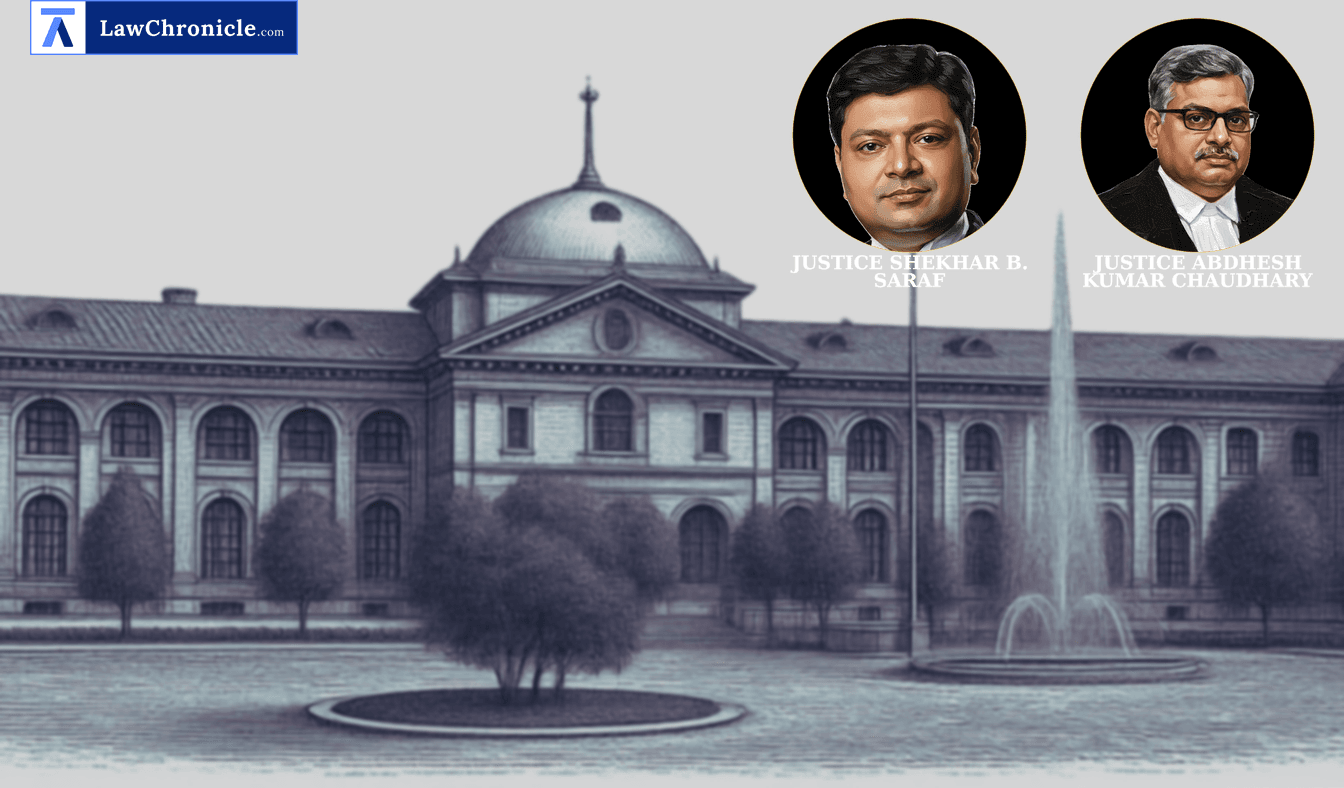
The Allahabad High Court has barred Advocates seeking to bypass civil courts for the recovery of unpaid professional fees from the State, ruling that such claims arising from contractual engagements involve complex factual disputes that cannot be adjudicated under extraordinary writ jurisdiction. A bench comprising Justice Shekhar B. Saraf and Justice Abdhesh Kumar Chaudhary dismissed a batch of review applications, affirming that the non-payment of legal fees does not constitute a violation of fundamental rights or 'forced labour', thereby relegating lawyers to the rigours of civil trials for fee disputes.
The Bench heard four review applications filed by an Advocate-in-person against a previous judgment dated August 14, 2026. The original judgment had dismissed his writ petitions for the recovery of approximately Rs. 4.80 Crores in professional fees from the Basic Education Department, holding that a writ petition is not the appropriate remedy for enforcing contractual fee obligations.
Key Takeaways
Writ Remedy Barred for Fee Recovery
Professional fee disputes between an Advocate and the State are essentially contractual and cannot be resolved through Article 226 petitions.
Civil Court Exclusive Jurisdiction
Complex questions of fact regarding the quantum of fees and validity of claims must be settled via evidence and cross-examination in a regular civil trial.
No Fundamental Right to Fees
Disputes over the release of professional fees under a voluntary engagement do not attract the protections of Article 21 or Article 23(1) of the Constitution.
Limited Scope of Review
Review jurisdiction cannot be used as an 'appeal in disguise' to re-argue merits or challenge the judicial interpretation of precedents.
Court Observations and Directions
The Allahabad High Court clarified that administrative actions, such as the forwarding of fee bills by a Zila Basic Shiksha Adhikari, do not amount to a legal admission of liability. It clarified that the petitioner's reliance on government orders merely established a range of fees rather than a fixed, admitted debt. The Bench observed that "A Review Petition has a limited purpose and cannot be allowed to be 'an appeal in disguise.' Under the guise of review, the petitioner cannot be permitted to reagitate and reargue the questions which have already been addressed and decided. An error on the face of record must be such an error which, mere looking at the record should strike and it should not require any long-drawn process of reasoning on the points where there may conceivably be two opinions."
Addressing the petitioner's claim regarding constitutional violations, the Allahabad High Court noted that “The petitioner accepted a professional engagement as Special Counsel, and a dispute over the quantum or release of fees under that engagement is a contractual or service-conditions claim, not forced labour under Article 23(1).”
Ratio
A writ petition under Constitution of India, 1950 is not maintainable for the recovery of professional fees by an Advocate as the engagement is contractual in nature. Such claims involving disputed questions of fact regarding quantum and entitlement must be adjudicated by a competent Civil Court where parties can lead evidence. Non-payment of professional fees does not constitute a violation of Article 21 or Article 23 of the Constitution of India, 1950.
Background
The dispute arose when the petitioner, who was empaneled as a Special Counsel for the Basic Shiksha Parishad in 2009, sought the payment of outstanding bills for representing the department in numerous special appeals. He claimed the maximum fee of Rs. 5,00,000 per case based on Government Orders dated 23.04.2009 and 02.03.2011. The State contested the claim, arguing that the fees were never specifically agreed upon, the claims were stale/time-barred, and that the Government Orders only provided a range for negotiation.
The Allahabad High Court had previously dismissed the writ petitions on August 14, 2026, citing the existence of complex factual disputes. In the present review, the petitioner argued that the court ignored his written submissions and failed to consider that fundamental rights cannot be enforced by a Civil Court. The Bench, relying on the principles laid down in Sanjay Kumar Agarwal v. State Tax Officer (1) & Anr ( "(2024) 2 SCC 362": 2023 CaseBase(SC) 393), held that there was no error apparent on the face of the record. The Allahabad High Court also referred to the definition of 'per incuriam' as discussed in A.R. Antulay v. R.S. Nayak ( "(1988) 2 SCC 602": 1988 CaseBase(SC) 463) and Punjab Land Development and Reclamation Corporation v. Presiding Officer to reject the petitioner's contention that the original judgment ignored binding precedents. Under Code of Civil Procedure, 1908, the court found no grounds to interfere with its previous decision.
Case Details:
Case No.: CIVIL MISC REVIEW APPLICATION No. - 120 of 2026
Case Title: Jyotinjay Verma Versus State Of U.P. Thru. Its Secy. Basic Education Lko. And 6 Others
Appearances:
For the Petitioner(s): Jyotinjay Verma (In Person)
For the Respondent(s): Shivam Sharma (Counsel for Opposite Party)
Source: 2026 CaseBase(ALL) 1472
 Breaking News


