


Petitioners Must Exhaust Alternative Remedies Before Seeking Parole via Writ: Rajasthan HC
 Copy Link
 Share
 Save
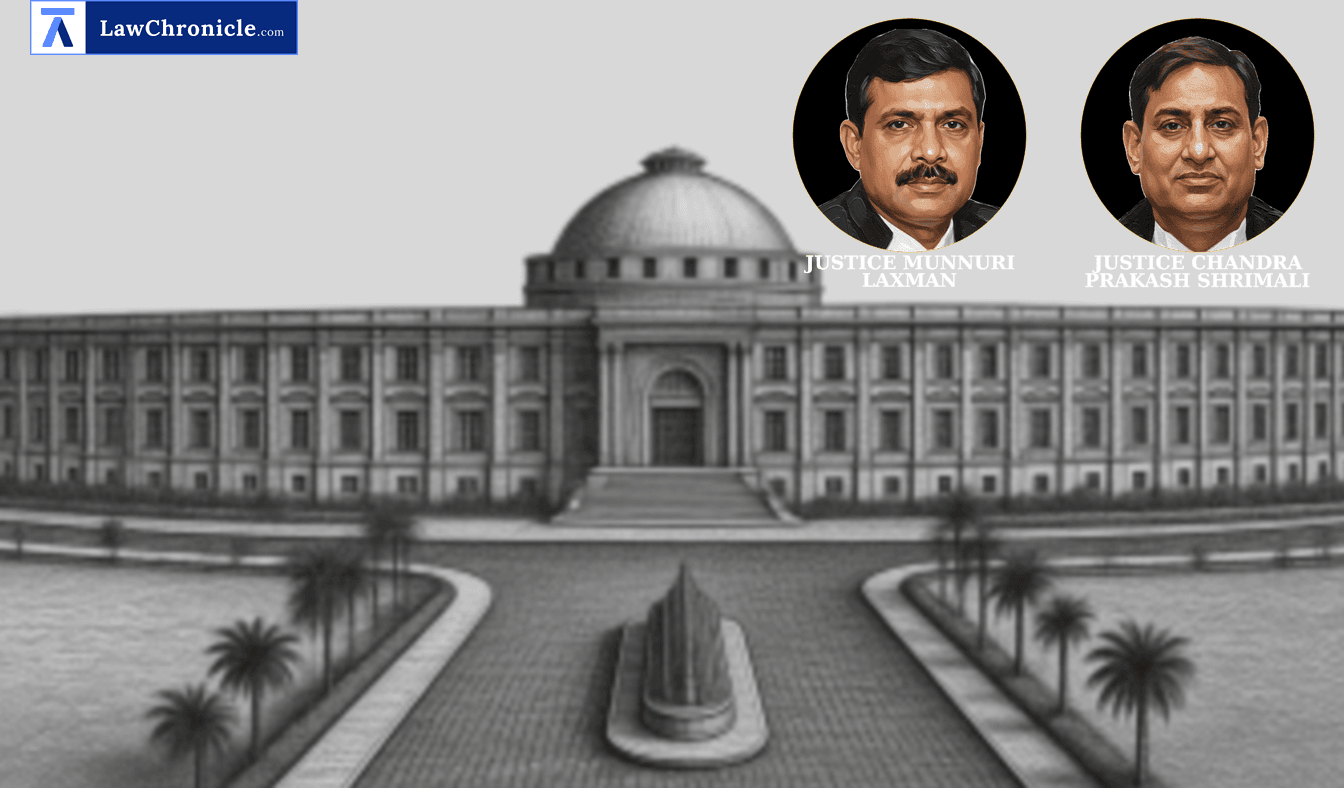
The Rajasthan High Court has slammed the brakes on the practice of prisoners bypassing statutory procedures to seek emergent parole, ruling that discretionary powers under the writ jurisdiction cannot be invoked while an efficacious alternative remedy remains unexhausted. In a firm clarification of the Rajasthan Prisoners (Release on Parole) Rules, 2021, the court emphasized that designated administrative authorities like Jail Superintendents and District Magistrates must be the first port of call for such grievances.
A division bench comprising Justice Munnuri Laxman and Justice Chandra Prakash Shrimali heard the petition challenging the non-release of a prisoner on emergent grounds. The Bench was called upon to decide whether it should exercise its extraordinary jurisdiction under Constitution of India when the petitioner had not yet approached the competent authorities defined under the state's parole rules.
Key Takeaways
Adherence to Statutory Hierarchy
Prisoners cannot leapfrog directly to the High Court for parole without first submitting applications to the Superintendent or District Magistrate as per the 2021 Rules.
Alternative Remedy Bar
Availability of a specific administrative mechanism for emergent parole acts as a procedural bar for the maintainability of writ petitions seeking identical relief.
Jurisdictional Discipline
While the High Court possesses wide powers under Article 226, it will generally decline to entertain matters where the law provides a designated authority for fact-finding and initial adjudication.
Court Observations and Directions
The Rajasthan High Court noted that Rule 11 of the Rajasthan Prisoners (Release on Parole) Rules, 2021 provides a comprehensive framework for emergent parole in cases of humanitarian consideration, such as the illness or death of close relatives. The bench observed that the petitioner had approached the court directly on the grounds of his mother's neurological condition without moving the administrative machinery. Rajasthan High Court observed that “A glance at the above Rule makes it clear that the designated authorities have been created under the Rules to consider applications for emergent parole, and the petitioner, without exhausting the remedy available, has directly approached this Court seeking the relief. In view of the existence of an alternative remedy available under the law, the present writ petition is liable to be dismissed.”
Ratio
The existence of an alternative and efficacious remedy under the Rajasthan Prisoners (Release on Parole) Rules, 2021, precludes the direct maintainability of a writ petition under Article 226 of the Constitution of India for the grant of emergent parole, unless the petitioner first exhausts the administrative remedies before the designated authorities.
Background
The petitioner, currently serving a sentence at Central Jail Jodhpur having completed nine years of incarceration, sought release for 15 days on emergent parole. The prayer was grounded on the medical condition of his mother, who was reportedly suffering from migraine, supported by a neurologist's report. The petitioner’s counsel argued that despite not approaching the competent authority under the Rajasthan Prisoners (Release on Parole) Rules, 2021, the Court possessed the inherent power under Constitution of India to grant relief.
However, the State contested the maintainability of the petition, pointing to the specific provisions of Rule 11 which designate the Superintendent of Jail (for up to 7 days) and the Inspector General of Prisons or District Magistrate (for up to 15 days) as the competent authorities. Finding that the petitioner had bypassed these statutory channels, the Rajasthan High Court dismissed the petition, directing the litigant to follow the prescribed legal procedure.
Case Details:
Case No.: D.B. Criminal Writ Petition No. 3209/2026
Neutral Citation: 2026:RJ-JD:56504-DB
Case Title: Shrawan Deora v. State Of Rajasthan & Ors.
Appearances:
For the Petitioner(s): Mr. Kalu Ram Bhati
For the Respondent(s): Mr. K.S. Kumpawat for Mr. Deepak Choudhary, GA-cum-AAG
Source: 2026 CaseBase(RAJ) 33565
 Breaking News


