Can Concluded Auction Sale be Cancelled for Higher Bid Expectancy? Allahabad HC Answers
 Copy Link
 Share
 Save
Can Auction Sale be Cancelled? In a stern rebuke to administrative arbitrariness, the Allahabad High Court has ruled that a public authority cannot repeatedly cancel valid auctions and discard the highest bids simply in the speculative hope of fetching a higher price in the future. The Bench held that such actions constitute a colourable exercise of power and violate the constitutional mandate of non-arbitrariness, emphasizing that once a competitive process is completed above the reserve price, it carries a legal sanctity that cannot be set at naught without material evidence of fraud or collusion.
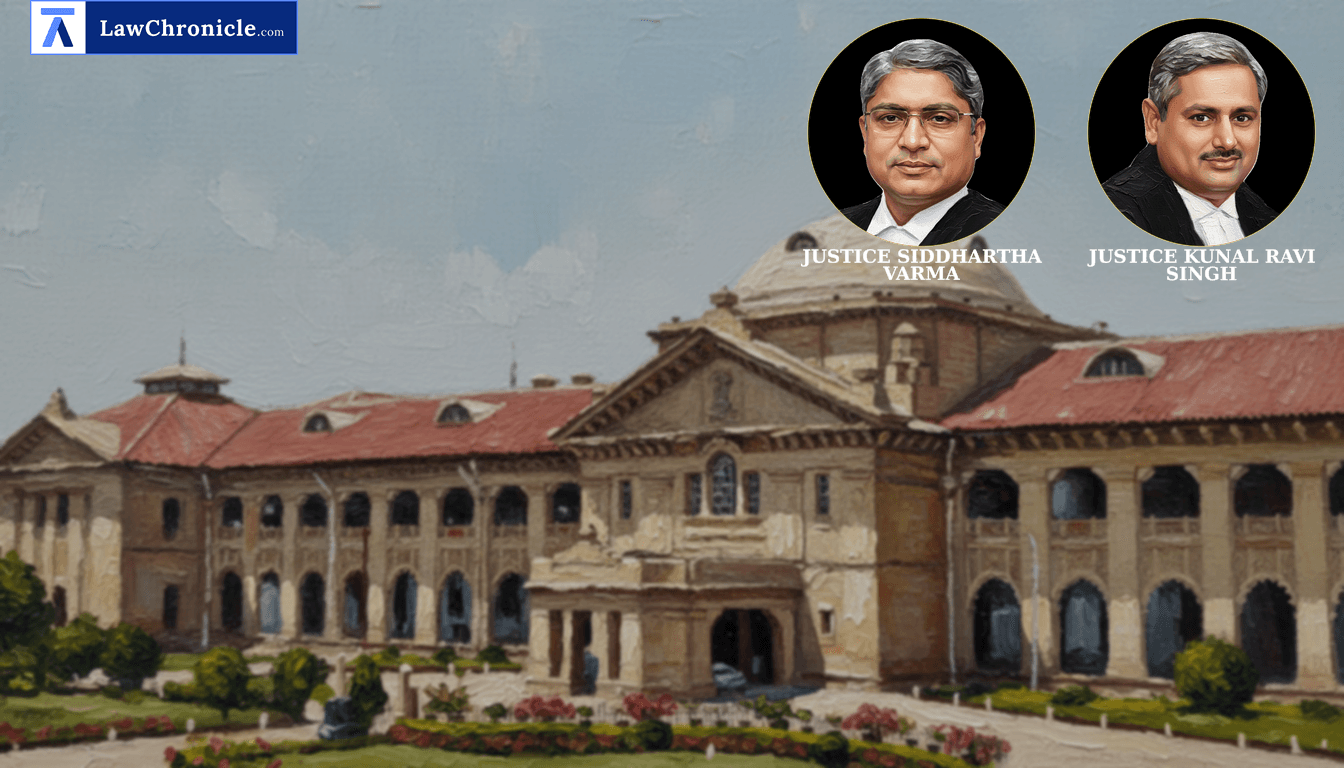
A division bench comprising Justice Siddhartha Varma and Justice Kunal Ravi Singh delivered this landmark ruling while hearing a writ petition challenging the Ghaziabad Development Authority's (GDA) decision to reject a successful bid for a commercial/residential plot in Kaushambi Yojana. The petitioner, despite being the highest bidder in a transparent physical auction, was informed of the cancellation via a brief email without any assigned reasons.
Key Takeaways
Sanctity of Auction Process
Public authorities must respect the finality of auction proceedings; discarding a highest bid solely for 'better prospects' without any procedural infirmity is legally unsustainable.
Judicial Review of Tender Decisions
While a reserve price is only a threshold and not a promise of allotment, the exercise of the power to reject bids is subject to judicial scrutiny regarding relevance and non-arbitrariness.
Doctrine of Lis Pendens in Writs
Any third-party rights created by an authority during the pendency of a writ petition, especially when they have notice of the litigation, are hit by the doctrine of Transfer of Property Act, 1882.
Restitution of Innocent Purchasers
Subsequent allottees who enter into transactions in good faith during litigation are entitled to full restitution including interest if the prior auction is restored by the court.
Court Rejects GDA’s 'Speculative Windfall' Logic
The Allahabad High Court examined the original records and discovered that the GDA had auctioned the same plot four times in three months, rejecting bids significantly higher than the reserve price simply because they were lower than a previously rejected bid. The bench observed that the authority kept the reserve price constant while expecting a 'bid war' to erupt, a practice the court termed a "complete fallacy."
Regarding the lack of reasons in the cancellation order, the Allahabad High Court noted that while this alone could be grounds for remand, the records clearly showed a systematic endeavor to cancel bids in the hope of achieving a bigger price. Relying on the principle in Golden Foods Products India Vs. State of U.P. and others ( "2026 INSC 22": 2026 CaseBase(SC) 63), the court noted that the decision to discard the highest bid must have a rational nexus to the reason, and mere expectancy of a higher price does not constitute a valid reason.
The Allahabad High Court observed that "An auction process has a sanctity attached to it and only for valid reasons that the highest bid can be discarded in an auction which is otherwise held in accordance with law. If a valid bid has been made which is above the reserve price, there should be a rationale or reason for not accepting it... Merely because the authority conducting the auction expected a higher bid than what the highest bidder had bid cannot be a reason to discard the highest bid."
Application of Section 52 Transfer of Property Act
The GDA argued that the petition was not maintainable as the subsequent highest bidder from a later auction had not been impleaded. However, the Court found that the GDA proceeded with the subsequent auction despite having formal notice of the pending writ petition. The Court held that any such alienation is hit by the doctrine of lis pendens under Section 52 of the Transfer of Property Act, 1882.
Citing Usha Sinha Vs. Dina Ram ( "(2008) 7 SCC 144": 2008 CaseBase(SC) 253) and Singhara Singh Vs. Daljit Singh ( "2024 INSC 770": 2024 CaseBase(SC) 860), the bench clarified that a subsequent allottee is bound by the decision in the pending proceeding. However, following the ratio in Delhi Development Authority Vs. Corporation Bank & Ors ( "2025 INSC 1161": 2025 CaseBase(SC) 424), the Allahabad High Court ensured that the subsequent purchaser, being an innocent actor, received restitution.
Ratio
The court declared that the power to accept or reject the highest bid in a public auction is not absolute and must be exercised consistently with the constitutional requirement of non-arbitrariness. Expectation of a higher bid in the future is not a lawful or sufficient reason to discard a highest bid that is above the reserve price in a validly conducted auction. Furthermore, any subsequent allotment made by an authority during the pendency of a legal challenge to a previous auction, particularly when the authority has notice of such challenge, is subject to the doctrine of lis pendens.
Background
The dispute arose when the GDA advertised Plot No. A-252 in Kaushambi Yojana for auction on October 15, 2025. The petitioner bid ₹1,11,000/- per sq. mtr. against a reserve price of ₹93,000/-. Despite being the highest bidder, his bid was rejected via a cryptic e-mail. The GDA then conducted a fourth auction on December 29, 2025, which fetched ₹2,06,000/- per sq. mtr. The petitioner challenged the cancellation of his October bid as a colourable exercise of power. The Court relied on M/s Dhanlaxmi Merchandise Pvt. Ltd vs. State of Madhya Pradesh and others ( "2026 INSC 1125": 2026 CaseBase(SC) 8261) to establish that while a bidder has no indefeasible right to the award, the court can examine if the materials supported the authority's conclusion. Finding no evidence of fraud or collusion, the Allahabad High Court set aside the cancellation and restored the petitioner's bid.
Case Details:
Case No.: WRIT – C No. - 44444 of 2025
Case Title: Amit Kumar Versus Ghaziabad Development Authority (Gda) And 2 Others
Appearances:
For the Petitioner(s): Anuj Srivastava, Pranshu Gupta, Advocates
For the Respondent(s): C.S.C., Tejasvi Misra, Advocates
Source: 2026 CaseBase(ALL) 1360
 Breaking News