


Pendente Lite Purchasers Cannot Invoke Section 19(b) Protection: Himachal Pradesh HC
 Copy Link
 Share
 Save
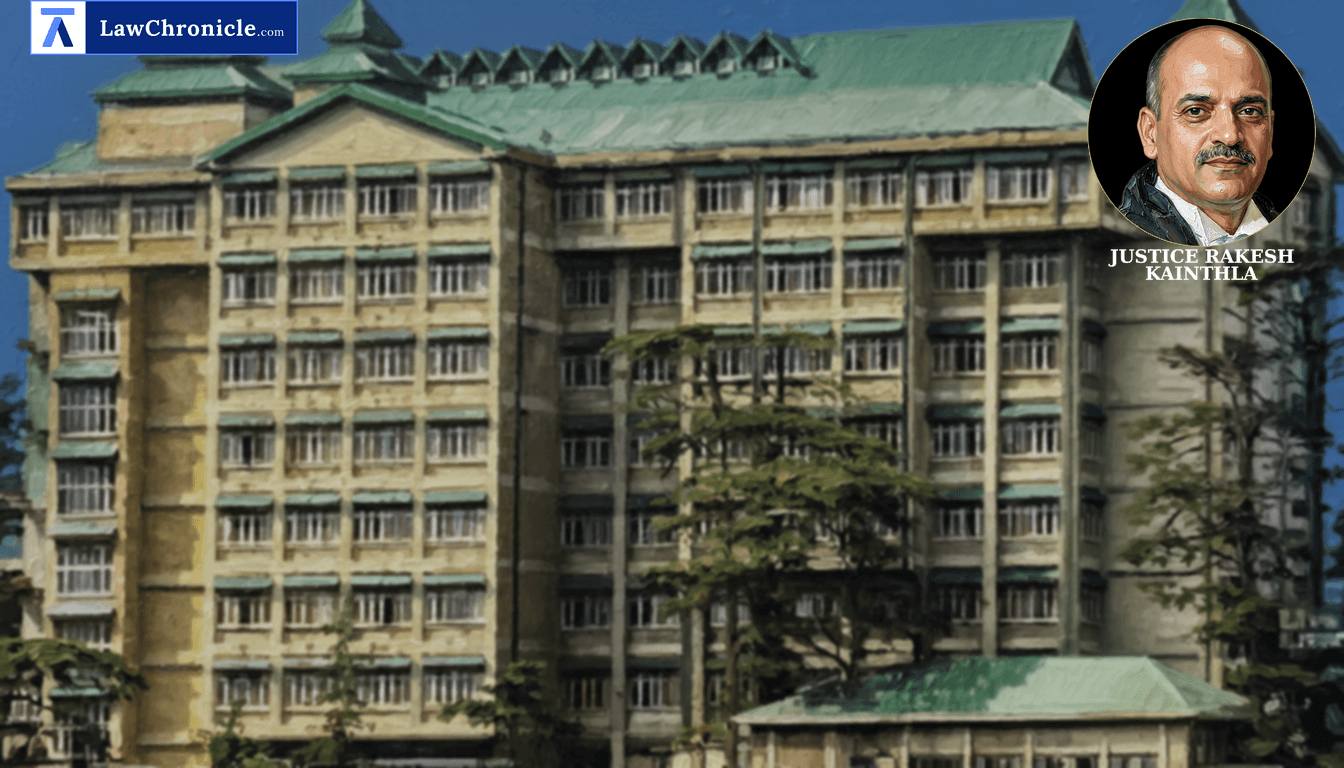
The doctrine of lis pendens acts as an absolute bar to the 'bona fide purchaser' defense, ensuring that litigants cannot systematically defeat court decrees by transferring disputed properties mid-litigation. In a significant reaffirmation of procedural finality, the High Court has ruled that transferees who acquire property after the institution of a suit are bound by the eventual decree as if they were original parties, regardless of notice or impleadment.
Justice Rakesh Kainthla, sitting as a single-judge bench, dismissed a regular second appeal challenging the execution of a specific performance decree. The Court examined the interplay between the Transfer of Property Act, 1882 and the Specific Relief Act, 1963, ultimately holding that the protective umbrella of 'good faith' purchase does not extend to transactions hit by Section 52 of the Transfer of Property Act, 1882.
Key Takeaways
Supremacy of Lis Pendens
The doctrine of lis pendens under Section 52 of the Transfer of Property Act, 1882 overrides the plea of a bona fide purchaser for value without notice provided under Section 19(b) of the Specific Relief Act, 1963 for any transfer occurring after suit institution.
Automatic Binding Effect
A purchaser pendente lite is bound by the result of the litigation even if they are not formally impleaded as a party to the suit, as they are deemed to step into the shoes of the judgment-debtor.
Execution Safeguards
Order XXI Rule 102 of the Code of Civil Procedure, 1908 specifically excludes pendente lite transferees from seeking remedies against dispossession, preventing judgment-debtors from creating an infinite loop of obstructions.
Timing of Institution
The doctrine kicks in the moment a plaint is presented/instituted in court, even before notice is issued to the defendants or if the petition is lying in a defective state in the Registry.
Court’s Rationale on Section 52 and Transferee Rights
The Court observed that the sale deeds in question were executed on the same day as the suit's institution and subsequently during its pendency. Relying on Siddamsetty Infra Projects Pvt. Ltd. v. Katta Sujatha Reddy, the Court noted that "pendency" is defined to commence from the "date of institution" until the "disposal." The Court emphasized that allowing such transfers to prevail would make it impossible for any action to reach a successful termination.
The Court, in its reasoning, observed: "The effect of the rule of lis pendens, which has been enacted by section 52 of the Transfer of Property Act, 1882 to get over this difficulty, is that the transferee pendente lite is bound by the proceedings in the suit and the decree therein even though he is not a party to the suit. He takes the transfer subject to the result of the suit to which the original transferor is a party."
Addressing the specific applicability of the Specific Relief Act, 1963, the Court clarified that Section 19(b) operates only at a stage prior to the institution of a suit. Once a suit is filed, it must give way to the Transfer of Property Act, 1882. The Court cited Raj Singh vs. Maharaj Mal to reiterate that a plea of bona fide purchaser is unavailable to a transferee under lis pendens.
Directions Issued by the Court
The Court has following directions:
"In view of the above, the present appeal fails, and it is dismissed. Pending application(s), if any, also stand(s) disposed of. Records of the learned Courts below be sent down forthwith."
Ratio
The doctrine of lis pendens under Section 52 of the Transfer of Property Act, 1882, renders any transfer of immovable property made during the pendency of a suit subservient to the rights of the parties to the litigation. Consequently, a transferee pendente lite cannot claim protection as a bona fide purchaser under Section 19(b) of the Specific Relief Act, 1963, and is bound by the decree as if they were a party to the suit, regardless of whether they were formally impleaded.
Background
The dispute originated from a suit for specific performance of an agreement to sell filed by one Jagannath against Sarwani Devi. During the pendency of the suit, which was instituted on June 3, 1986, parts of the suit land were sold to Pritam Singh and Gian Chand via sale deeds. After a decree was passed in favor of the plaintiff in 1992, the purchasers (objectors) filed objections during execution, claiming to be bona fide purchasers without notice of the litigation.
The Executing Court initially upheld their objections, but this was reversed by the First Appellate Court. The High Court, while dismissing the appeal against the First Appellate Court's order, relied on a series of precedents including Ram Peary vs. Gauri ( "AIR 1978 All 318": 1977 CaseBase(ALL) 27), Alka Shrirang Chavan v. Hemchandra Rajaram Bhonsale, and Usha Sinha v. Dina Ram ( "(2008) 7 SCC 144": 2008 CaseBase(SC) 253) to establish that a purchaser of suit property during litigation has no independent right to resist the execution of a decree. The Court further noted that under Rajinder Singh v. Sushil Kumar, specific performance can be enforced against such transferees even without seeking a formal declaration of invalidity regarding their sale deeds.
Case Details:
Case No.: RSA No. 461 of 2008
Neutral Citation: 2026:HHC:47339
Case Title: Pritam Singh (deceased) through LRs Versus Santosh Kumari & ors.
Appearances:
For the Petitioner(s): Mr. N.K. Thakur, Senior Advocate, with Mr Divya Raj Singh, Advocate.
For the Respondent(s): None.
Source: 2026 CaseBase(HP) 11148
Similar Articles




 Breaking News


