


Cancellation of Bail Requires Overwhelming Circumstances; Gravity Alone Not Decisive: Allahabad HC
 Copy Link
 Share
 Save
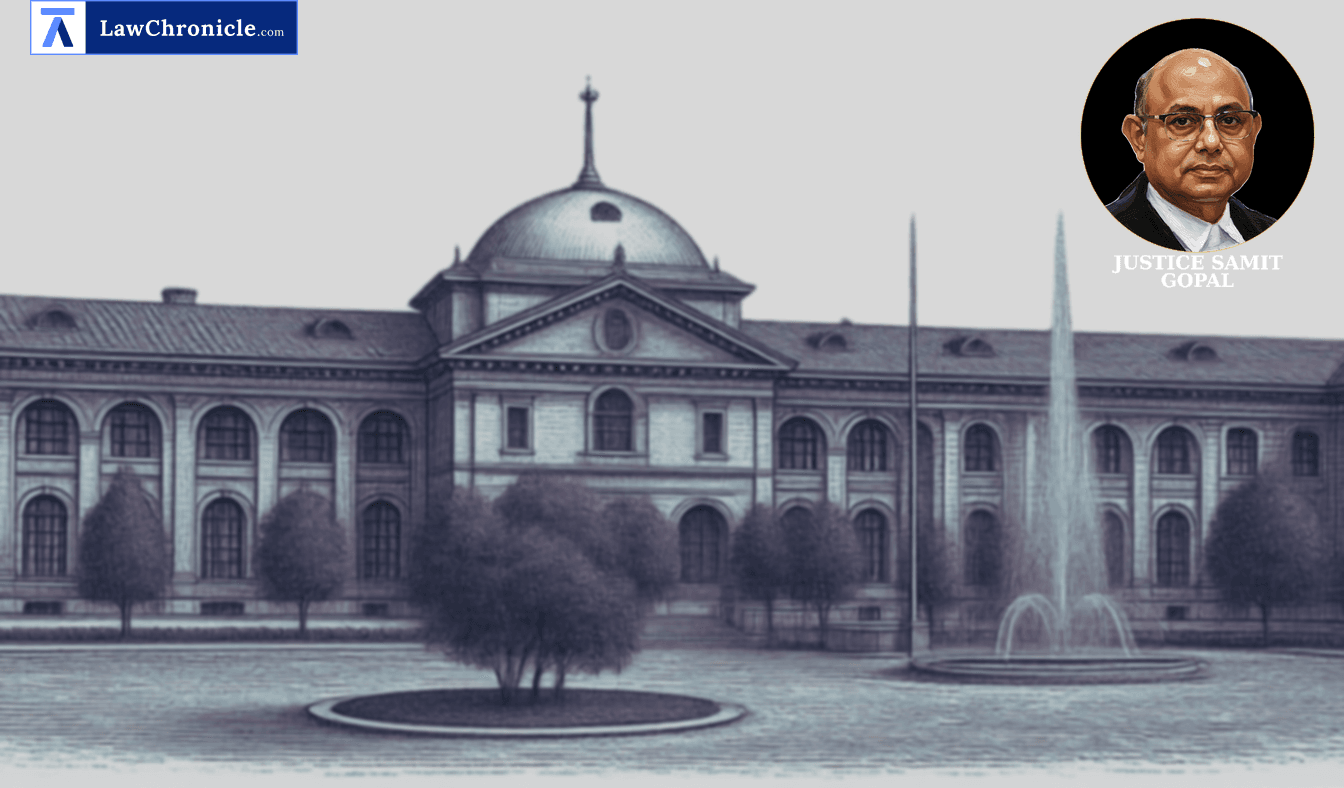
In a robust affirmation of personal liberty, the Allahabad High Court has ruled that bail once granted cannot be cancelled in a mechanical manner unless supervening circumstances like evidence tampering or misuse of liberty are proven. The Bench emphasized that while the gravity of the offence is a factor, it cannot be the sole basis to revoke freedom, especially when trial developments provide fresh grounds for a lower court's discretion.
A Single Judge Bench of SAMIT GOPAL, J. presided over the matter, hearing connected appeals filed by an informant seeking the cancellation of bail granted to two accused. The challenge arose after a subordinate court granted bail in a second application, despite the Allahabad High Court having previously rejected the initial bail pleas in a case involving the death of a petrol pump employee under the Bharatiya Nyaya Sanhita, 2023 and the Scheduled Castes And The Scheduled Tribes (Prevention Of Atrocities) Act, 1989.
Key Takeaways
High Threshold for Cancellation
Very cogent and overwhelming circumstances are mandatory for an order directing the cancellation of bail already granted, as opposed to the criteria for its initial rejection.
Gravity Not Decisive
While the seriousness of the charge is a relevant consideration, it is not the only test; Courts must balance individual liberty against societal interest.
Changed Circumstances Doctrine
Lower courts are competent to hear second bail applications if fresh grounds, such as the recording of crucial prosecution witness testimonies, have emerged since the previous rejection.
Object of Bail
The primary object of bail is to secure the attendance of the accused at trial, and it should neither be punitive nor preventative in nature.
When can Bail once Granted be Cancelled?
The Allahabad High Court observed that grant of bail and cancellation of bail are two entirely different situations. It noted that the trial court had passed detailed orders on merits, specifically considering the statements of two prosecution witnesses recorded during the trial. The Bench found no evidence that the accused had misused their liberty, tampered with evidence, or failed to cooperate with the trial process.
The Allahabad High Court discussed that “It is trite that bail once granted should not be cancelled ordinarily, but where the facts are so grave that they shake the conscience of the Court; and where the release of the accused on bail would have an adverse impact on the society, the Courts are not powerless... Nothing could be demonstrated in the present appeals... that there has been any misuse of bail granted to the accused, tempering with the evidence by them or their any non-cooperation in the trial.”
Ratio
Bail is the general rule and jail is the exception. Cancellation of bail is a harsh step that interferes with individual liberty and must not be resorted to lightly. It requires significant scrutiny and proof of supervening circumstances, such as interfering with the course of justice, evading trial, or tampering with witnesses, that render a fair trial impossible if the accused remains free.
Background
The dispute originated from an incident on July 16/17, 2024, at a petrol pump in Mahoba, where an employee, Amit Verma, sustained fatal injuries after a glass door was smashed during an altercation. Following the death, the investigation led to a charge sheet under Section 103(1) of the Bharatiya Nyaya Sanhita, 2023 and various sections of the Scheduled Castes And The Scheduled Tribes (Prevention Of Atrocities) Act, 1989. The initial bail applications of the accused were rejected by the Special Judge and subsequently by the High Court in April 2025. However, after the testimonies of the informant and an eyewitness were recorded by the trial court, the accused filed second bail applications. The trial court granted bail, leading the brother of the deceased to approach the High Court for cancellation. The appellant relied on Kalyan Chandra Sarkar v. Rajesh Ranjan alias Pappu Yadav to argue that the trial court overstepped its jurisdiction. The Allahabad High Court, however, maintained that the recording of evidence constituted a "changed circumstance" justifying the trial court's fresh exercise of discretion.
Case Details:
Case No.: CRIMINAL APPEAL No. - 11314 of 2025
Case Title: Hirdesh Kumar vs. State of U.P. and another
Appearances:
For the Petitioner(s): Virendra Kumar, Advocate
For the Respondent(s): G.A., Lavlesh Kumar Sharma, Amit Daga (Senior Advocate), Ajay Singh (A.G.A.-I)
Source: 2026 CaseBase(ALL) 1353
Similar Articles
 Breaking News


