


Child’s Emotional Stability Trumps Biological Father’s Natural Guardian Claim: Madras HC
 Copy Link
 Share
 Save
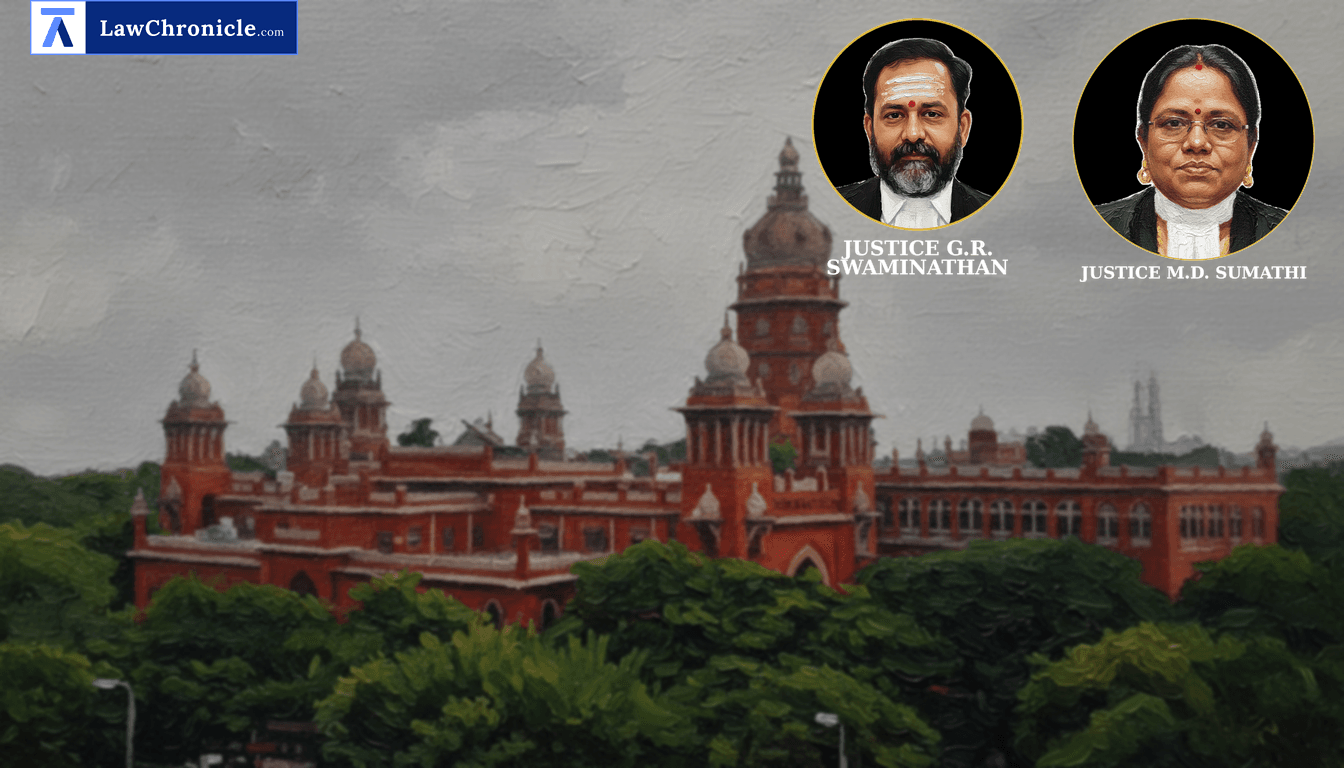
The Madras High Court has prioritized the emotional continuity and psychological welfare of a minor over the statutory rights of a biological father, holding that a child is a 'living soul' and not 'movable property' to be transferred based on legal status or financial superiority. The Bench emphasized that an abrupt removal from an established maternal environment following a mother’s death could cause irreparable psychological scars, mandating a child-centered approach that favors stability over mechanical natural guardianship.
A bench comprising Justice G.R. Swaminathan and Justice M.D. Sumathi delivered the judgment while hearing an appeal against a Family Court order that had directed the return of a minor child to his biological father. The Madras High Court intervened to reverse this decision, underscoring that the paramount consideration in custody disputes is the welfare of the minor, not the competing legal rights of the parties.
Key Takeaways
Welfare Over Legal Title
Custody determinations must focus on the 'best interest of the child' rather than the statutory or natural rights of the parent, rendering biological status secondary to emotional well-being.
Psychological Continuity Matters
Abruptly uprooting a child from a stable, familiar environment—especially after the loss of a parent—can cause severe psychological distress and anxiety.
Interaction as Evidence
Judicial interaction with the minor is a critical tool for assessing emotional bonds and comfort levels, which may outweigh theoretical arguments of financial or legal suitability.
Graded Visitation Rights
Even when physical custody is denied to a father, the court must preserve the paternal relationship through structured, non-disruptive visitation to ensure a meaningful bond.
Judicial Rationale and Mandatory Directions
The Madras High Court noted that the child had been under the care of his maternal grandparents since the mother's suspicious death in 2021. After personal interaction, the bench found the child was emotionally secure in his current environment, which included a maternal aunt and another child. The Bench held that the respondent-father failed to demonstrate a comparable support system, relying only on his aged mother.
The Madras High Court reasoned to observe that "A child is not a movable property, not an article to be claimed, divided or transferred from one hand to another merely on the strength of a legal status or a better financial capacity. A child is a living soul, a bundle of emotions, fears and innocent attachments. Custody is not about asserting ownership or enforcing a right. It is about shouldering a responsibility - the solemn responsibility to protect a tender mind from further hurt and to give it a sense of safety, belonging and unbroken love."
Ratio
In matters of custody under the Guardians and Wards Act, 1890, the 'welfare of the minor' is the paramount and supreme consideration. The biological father's status as a natural guardian is not an absolute right that warrants the mechanical transfer of physical custody if such a change disrupts a stable, emotionally secure existing arrangement that serves the child's best interests.
Background
The child's mother died in May 2021 under suspicious circumstances, leading to a criminal case against the respondent-father and his mother. Since then, the minor child, V.P. Johith, lived with his maternal grandparents. The father filed a petition under Section 25 of the Guardians and Wards Act, 1890 seeking custody. The Family Court allowed the father's petition, relying on his status as the natural guardian.
The Madras High Court, however, referred to Gaurav Nagpal v. Sumedha Nagpal ( "(2009) 1 SCC 42": 2008 CaseBase(SC) 201) and Nil Ratan Kundu v. Abhijit Kundu ( "(2008) 9 SCC 413": 2008 CaseBase(SC) 58), noting that financial position or natural rights cannot override the child's welfare. Citing Nirmala v. Kulwant Singh ( "(2024) 10 SCC 595": 2024 CaseBase(SC) 77) and Somprabha Rana v. State of Madhya Pradesh ( "(2024) 9 SCC 382": 2024 CaseBase(SC) 547), the Court highlighted the psychological risks of removing children from grandparents. It also relied on Col. Ramneesh Pal Singh v. Sugandhi Aggarwal ( "2024 INSC 397": 2024 CaseBase(SC) 94) to emphasize that welfare determination requires a holistic assessment through personal interaction. Finding the child comfortable in an extended maternal family, the Madras High Court set aside the Family Court's order and granted physical custody to the grandparents while allowing the father graded visitation rights.
Case Details:
Case No.: C.M.A(MD)No.1136 of 2022
Case Title: R.Arulshanthi and another v. S.Vickram
Appearances:
For the Petitioner(s): Mr.A.Sivasubramanian
For the Respondent(s): Mrs.M.Sangeetha for Mr.E.K.Kumaresan
Source: 2026 CaseBase(MAD) 28374
Similar Articles
 Breaking News


