


Mother's Natural Guardianship Prevails Over Grandmother's Custody Claim: Allahabad HC
 Copy Link
 Share
 Save
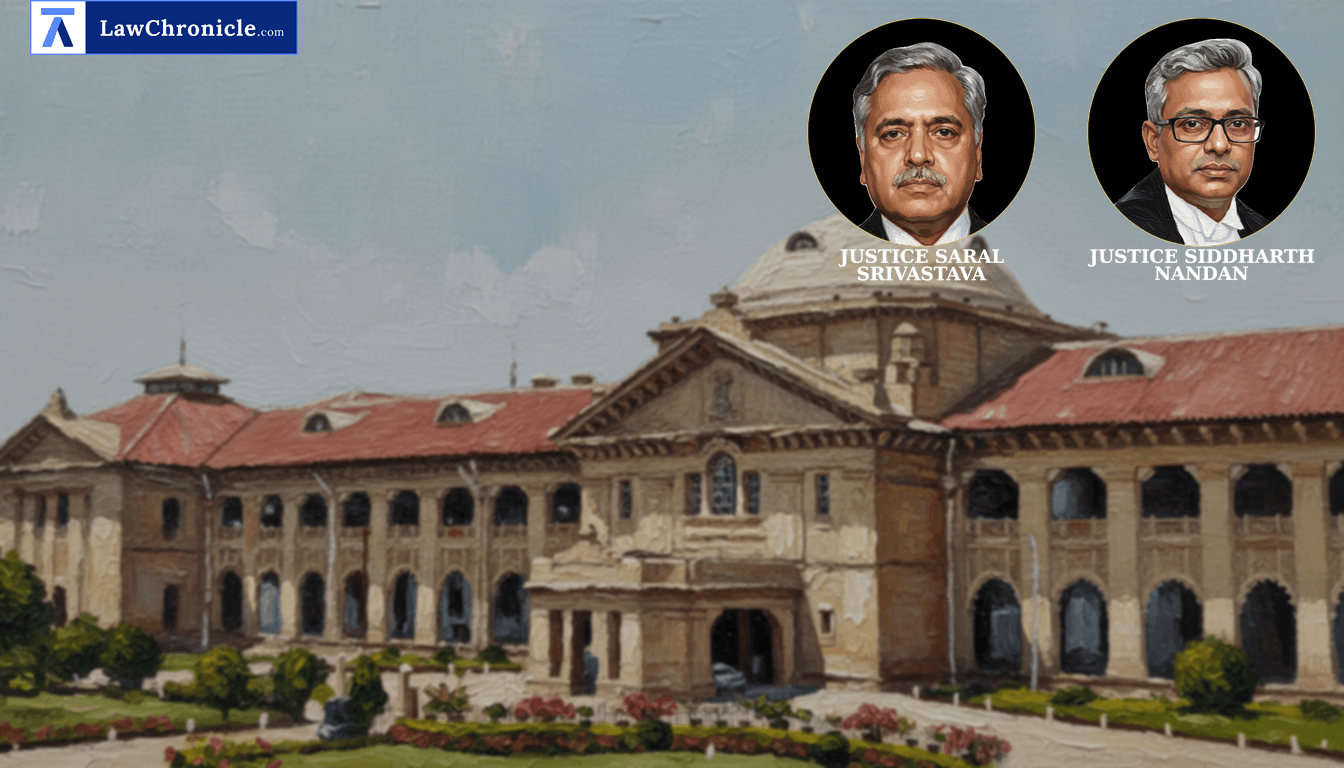
The Allahabad High Court has ruled that a mother’s natural instinct and status as a natural guardian outweigh the claims of extended family, declaring that any custody of a tender-aged child by other relatives while the mother is available constitutes 'unlawful custody' unless a clear disentitlement is proven.
A bench comprising Justice Saral Srivastava and Justice Siddharth Nandan heard an appeal challenging a Family Court's refusal to grant custody of a six-year-old child to his biological mother. The Allahabad High Court set aside the lower court's decree, emphasizing that neither financial dependency nor private agreements can strip a mother of her preferential right to her child’s upbringing.
Key Takeaways
Mother as Natural Guardian
Reaffirms that the mother is the best-oriented person to look after the welfare of an infant or young child, and her right is subject only to extreme exceptions like demonstrable immorality.
Invalidity of Custody Agreements
Establishes that legal rights of natural guardianship cannot be waived through private compromises or 'wills' executed by a deceased spouse to exclude the surviving parent.
Limits of Child Interviews
Determines that a child of tender age lacks the capacity for 'intelligent preference,' and their desire to stay with current caretakers may be a result of lack of access to the natural parent.
Gradual Transitional Custody
Provides a blueprint for shifting custody from relatives to a parent through structured visitation rights to neutralize initial transitional distress.
Maternal Instinct and the Principle of 'Intelligent Preference'
The Allahabad High Court observed that the 'nature' has created a unique coherence between a mother and her child. In cases involving minors of tender years, the Bench expressed skepticism regarding the statement of a six-year-old child living with relatives. It noted that such preferences often lack mature thinking and could be influenced by the environment or tutoring. Relying on Ms. Nasrin Begam and Another Vs. Prof. Mohd. Sajjad and another and Tejaswini Gaud and others vs. Shekhar Jagdish Prasad Tewari and others ( "(2019) 7 SCC 42": 2019 CaseBase(SC) 441), the Allahabad High Court held that the welfare of the child is the paramount consideration, and the mother's right to custody is well-established for children of tender age.
The Allahabad High Court discussed the status of mother as a natural guardian that "The natural instinct of a mother has always been regarded to be the best, to take care of the needs of a young child and secure his/her welfare compared to even against a natural father; whereas in the present case, in absence of the father, the welfare of the child is the best with the natural mother."
Addressing the grandmother's claim based on the child's long stay with her, the Allahabad High Court remarked that "Merely because certain relatives have taken care of the child, cannot be a justification for taking the child out of the custody of his mother, who has a preferential right being a natural guardian, and especially when the child is not in a position to give an intelligent preference."
The Allahabad High Court issued the following directions:
"the custody of the child may be handed over to his natural guardian, i.e., the mother, forthwith and though some problems may initially occur, but in our considered view the same shall be neutralized with the passage of time. However, this Court finds that till such time, the child can be said to be settled in that atmosphere with her mother, the opposite party, i.e., the grandmother shall have access to the child for an entire day, i.e., from 8 AM to 6 PM, at the residence of the appellant and it shall be expected from the appellant to provide a healthy and happy atmosphere at her home during such visits, every week. Accordingly, the opposite party shall have one complete day with the child every week for the next six months (The said day may be decided mutually); and this Court hopes that the difference between the two families gets eradicated within the said period; and even thereafter the grandmother shall have the right to visit the appellant's residence on every second weekend (Saturday or Sunday for another 6 months), unless with mutual agreement, the said meetings can also takes place beyond the time frame provided herein above, so that the welfare of the child remains intact and he has the benefit of growing up with love and affection of both the families."
Ratio
In the absence of a father, a mother is the sole natural guardian of a minor child under Hindu Minority And Guardianship Act, 1956. Her right to custody of a child of tender age is a natural right that cannot be superseded by other relatives based on financial superiority or duration of stay, unless she is demonstrably unfit. A child of six years is deemed incapable of forming an 'intelligent preference' regarding custody, and such preferences cannot override the long-term welfare ensured by a natural parent.
Background
The appellant married in 2017 and gave birth to a son in 2020. Her husband passed away eight months after the child's birth. She alleged that her in-laws took her signatures on blank papers to forge a custody agreement and insurance claim documents, subsequently depriving her of the child. The grandmother contested this, citing a 'Will' by the deceased husband and an agreement where the appellant allegedly abandoned the child for money. The Family Court had originally refused the mother's plea for custody under Sections 7 and 25 of Guardians And Wards Act, 1890.
The Allahabad High Court, however, dismissed the relevance of the alleged compromise and Will, noting they were not proved and cannot exclude a natural guardian's rights under the Constitution of India, 1950. Invoking the interpretation of Section 6(a) of Hindu Minority And Guardianship Act, 1956 from Githa Hariharan (MS) and Another Vs. Reserve Bank of India and Another ( "(1999) 2 SCC 228": 1999 CaseBase(SC) 65), the Bench clarified that 'after' means 'in the absence of' the father. Following the precedent in Vedika Dwivedi Vs. State of U.P. and others, the appeal was allowed, granting the mother custody while providing the grandmother visitation rights.
Case Details:
Case No.: FIRST APPEAL No. - 798 of 2026
Case Title: Smt. Sudha Tomar Vs. Smt. Shakuntala Devi
Appearances:
For the Petitioner(s): Manu Khare, Advocate
For the Respondent(s): Rakesh Pande, Senior Counsel; Piyush Tripathi, Advocate
Source: 2026 CaseBase(ALL) 1198
Similar Articles
 Breaking News


