


Citizen Videography of Officials Not Criminal Deterrence: Gujarat High Court Quashes 'Counter-Blast' FIR
 Copy Link
 Share
 Save
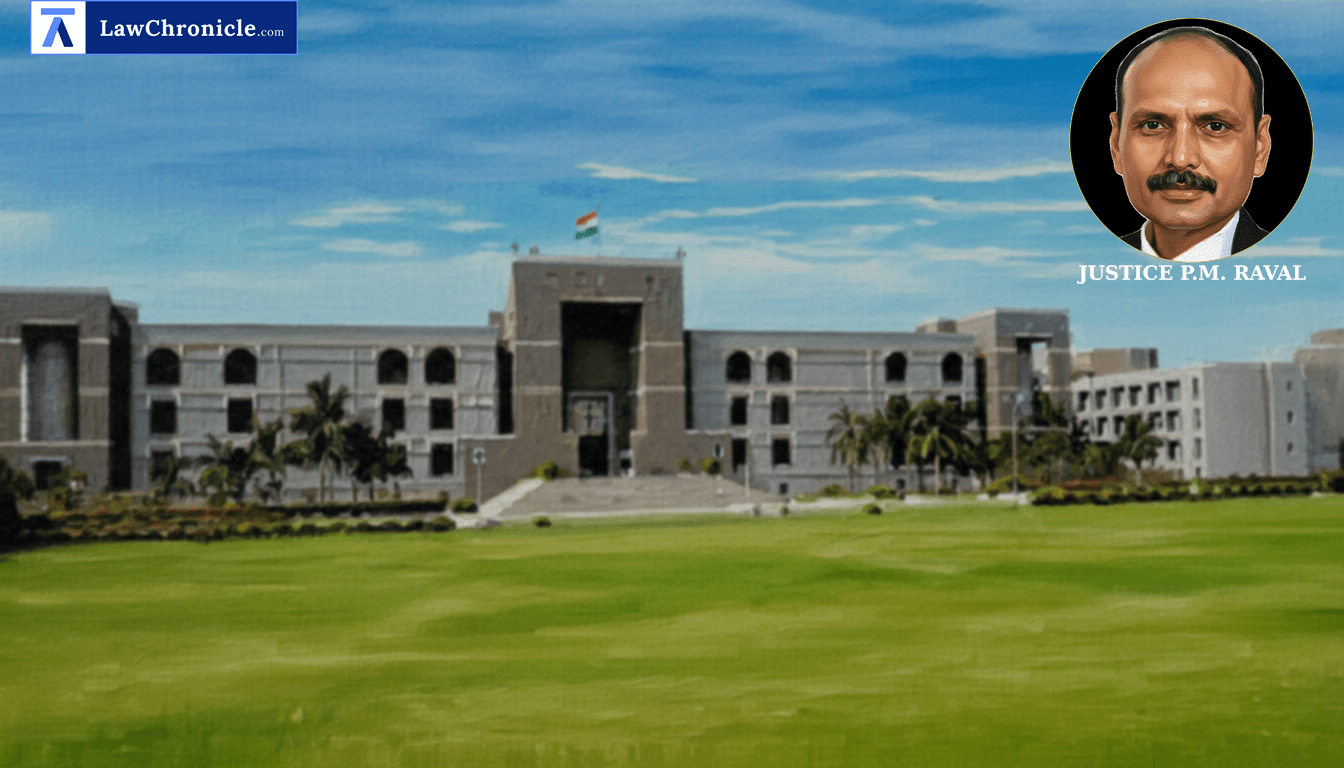
The Gujarat High Court has dealt a significant blow to the misuse of police power by quashing a 'counter-blast' FIR against an activist lawyer, ruling that recording public servants on duty in public spaces does not constitute criminal force or obstruction. The Court condemned the invocation of stringent atrocity laws as an 'umbrella shield' designed to insulate officers from criminal liability for their own violent conduct.
A single-judge bench of Justice P. M. Raval heard the petition seeking the quashing of an FIR registered against a lawyer who was brutally assaulted while live-streaming an alleged extortion racket by traffic personnel. The Court observed that the criminal proceedings were manifestly frivolous and instituted with the ulterior motive of wreaking vengeance.
Key Takeaways
Videography as Transparency
Citizens recording public officials performing duties in public view does not amount to 'criminal force' or 'deterrence' under the Indian Penal Code, 1860.
Curbing Statutory Misuse
The mere inclusion of casteist slurs in an FIR without foundational malice cannot justify the invocation of the Scheduled Castes and Scheduled Tribes (Prevention of Atrocities) Act, 1989 to block judicial scrutiny.
Protection Against Counter-Blasts
Courts must exercise inherent powers under Section 482 of the Code of Criminal Procedure, 1973 to quash proceedings that are inherently improbable and designed as leverage against separate criminal charges.
Court Observations on 'Absurd' Allegations
The Court scrutinized the timeline of events, noting that the Petitioner was live-streaming on Facebook when he was attacked by Traffic Brigade (TRB) personnel with a wooden log. The Court found the police narrative that an unarmed lawyer attempting to extort armed officers while broadcasting live to thousands to be 'inherently improbable and absurd.'
Regarding the invocation of the Scheduled Castes and Scheduled Tribes (Prevention of Atrocities) Act, 1989, the Court noted that the allegations were generalized and lacked specific corroborative detail. It held that a routine dispute regarding traffic enforcement cannot be wrapped under the umbrella of the Atrocities Act without targeted, caste-based humiliation.
The Court, in its reasoning, observed: "The narrative that the Petitioner demanded ₹1,000 per day from traffic personnel while simultaneously broadcasting the scene live is inherently improbable and absurd... This Court is satisfied that the impugned FIR was brought as a classic counter-blast and an abuse of police authority to create a leverage/settlement against the grave charge of attempt to murder (Section 307 IPC) registered against the TRB/police personnel."
Analysis of IPC Ingredients
On Section 353 and 332
The Court held that Section 353 of the Indian Penal Code, 1860 requires the use of 'criminal force' or 'assault.' It observed that "Recording public servants performing their official duties in a public space does not constitute 'criminal force' or 'obstruction' in law. Transparent public observation or citizen videography cannot be equated with physical deterrence." Furthermore, Section 332 was found non-applicable as there was no medical evidence of injury to any officer, whereas the Petitioner was hospitalized with life-threatening injuries.
On Extortion and Mischief
The Court dismissed the charge under Section 385 of the Indian Penal Code, 1860, stating that exposing corruption on social media does not constitute putting an officer in 'fear of injury.' Regarding the charge of tearing a uniform under Section 427, the Court noted that any damage likely occurred during the police's own assault on the Petitioner.
Ratio
Criminal proceedings that are manifestly attended with mala fide or are inherently improbable, particularly when used as a counter-blast to insulate public servants from their own criminal acts, must be quashed. Citizen videography of public officials on duty in a public space does not satisfy the statutory ingredients of 'criminal force' or 'deterrence' under the Indian Penal Code, 1860. Furthermore, the Scheduled Castes and Scheduled Tribes (Prevention of Atrocities) Act, 1989 cannot be invoked as a shield in localized disputes where the foundational element of targeted caste-based malice is absent.
Background
The dispute arose on August 18, 2022, when the Petitioner, an advocate and social activist, arrived at Lasana Main Road to record an alleged illegal money collection racket involving TRB personnel. While live-streaming, he was assaulted by TRB Supervisor Sajan Bharwad, leading to a Section 307 IPC (Attempt to Murder) FIR against the police staff. Shortly thereafter, the police registered a cross-FIR against the Petitioner, alleging extortion, assault on public servants, and caste-based insults.
The Court relied on the principles established in State of Haryana v. Bhajan Lal and Mahmood Ali vs State of UP ( "2023 INSC 684": 2023 CaseBase(SC) 599) to conclude that the continuation of such a prosecution would be a gross misuse of the judicial machinery. The Court allowed the application and quashed the FIR in its entirety.
Case Details:
Case No.: R/Criminal Misc.Application No. 15570 of 2022
Neutral Citation: 2026:GUJHC:64851
Case Title: Mehul Mansukhbhai Boghara Versus State Of Gujarat & Anr.
Appearances:
For the Petitioner(s): S M Kikani
For the Respondent(s): K M Antani APP for Respondent No. 1
Source: 2026 CaseBase(GUJ) 29394
Similar Articles

 Breaking News


