


Commercial Saree Sale With Deity Prints No Criminal Insult Under Section 295A IPC: Gujarat HC
 Copy Link
 Share
 Save
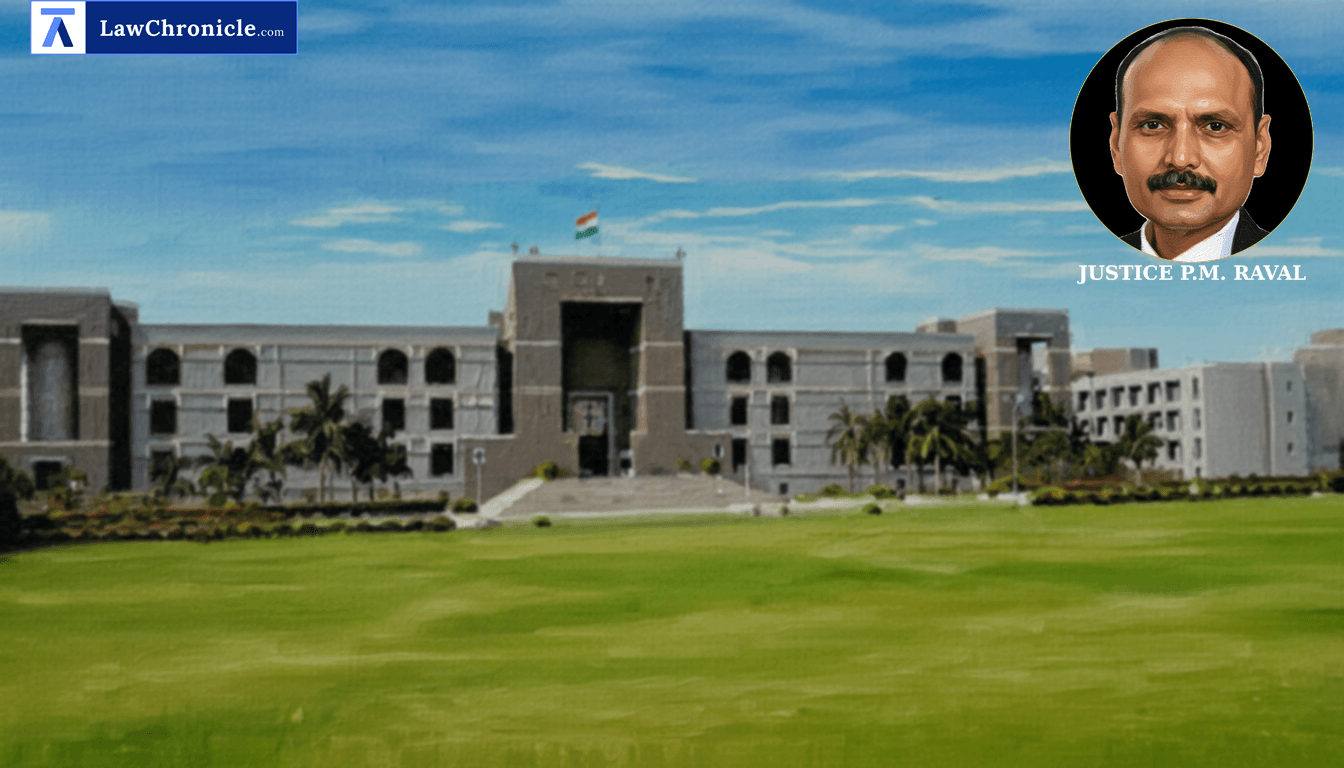
The Gujarat High Court has shielded commercial merchants from criminal prosecution for selling garments featuring religious motifs, ruling that the mere printing of deity images on sarees without proven malicious intent does not constitute an aggravated insult to religion. Quashing an FIR against a textile trader, the Court established that routine business activities involving religious icons, absent inflammatory rhetoric or a calculated attempt to disrupt public order, fall outside the punitive reach of Indian Penal Code, 1860.
Justice P. M. Raval, presiding as a single judge bench, heard the application filed under Section 482 of the Criminal Procedure Code, 1973 seeking to quash a criminal case registered at Salabatpura Police Station. The Court examined whether the act of selling sarees with prints of Lord Gautam Buddha on the lower borders could be termed a 'deliberate and malicious' act intended to outrage religious sentiments.
Key Takeaways
Intent as a Pre-condition
Criminal liability under Section 295A of the Indian Penal Code, 1860 requires more than a mere insult; it necessitates a 'deliberate and malicious intention' to outrage religious feelings, preventing the law from being used to penalize careless or unintended slights.
Protection for Commercial Trade
Trading in textile materials with religious designs as per market trends does not automatically imply criminal mens rea, protecting legitimate businessmen from harassment over routine commercial choices.
Threshold for Public Order
Only aggravated forms of religious insults that have a calculated tendency to disrupt public order are punishable, ensuring that the statute remains within constitutional boundaries regarding free speech and expression.
Prevention of Legal Abuse
Courts must exercise inherent powers to quash proceedings when the FIR, even if taken at face value, fails to disclose the essential statutory ingredients of a crime, stopping the criminal machinery from becoming an 'engine of harassment.'
The Court observed that the applicant, a merchant in Surat, was engaged in the routine business of trading sarees based on market designs. It noted that while the images were printed on the 'pallu' or lower portions of the garments, there was no evidence of an overt act intended to denigrate Buddhism.
The Court, in its reasoning, observed: "Commercial activity involving religious motifs, undertaken without any overt act, inflammatory rhetoric, or demonstrable intent to denigrate a religious belief, does not cross the threshold into a criminally punishable insult under Section 295A. To hold otherwise would expand the criminal statute beyond its intended constitutional parameters and penalize commercial practices absent any criminal mens rea."
Criteria for Quashing Criminal Proceedings
Referring to the landmark judgment in State of Haryana v. Bhajan Lal, the Court highlighted that judicial intervention is necessary to prevent the abuse of the process of any court. It noted that the allegations in the FIR did not satisfy the essential ingredients of the alleged offence. The Court also relied on the Constitution Bench decision in Ramji Lal Modi v. State of U.P., which clarified that Indian Penal Code, 1860 does not penalize every act of insult but only those perpetrated with a deliberate and malicious intention.
Applying the principles from the Mahendra Singh Dhoni v. Yerraguntla Shyamsundar and Maninder Singh and Another v. State of Punjab and Another decisions, the High Court emphasized that rational commercial practices or artistic depictions do not equate to a 'clear and present danger' to societal peace.
The Court has following directions:
"This application succeeds and is accordingly, allowed. The First Information Report registered against the applicant, referred in Paragraph 1 above, with all consequential criminal proceedings emanating therefrom, are hereby quashed and set aside qua the applicant. Rule is made absolute, accordingly."
Ratio
Routine commercial trading of garments featuring religious icons, in the absence of a demonstrable 'deliberate and malicious intention' to insult religious beliefs or a calculated tendency to disrupt public order, does not attract the penal provisions of Section 295A of the Indian Penal Code, 1860. Criminal prosecution in such instances constitutes an abuse of the process of law if the foundational statutory ingredients of mens rea are missing.
Background
The dispute originated from an FIR lodged by the President of Samast Yuva Ambedkar Samaj, who alleged that the applicant's firm, Shivam Textiles, was selling sarees with printed images of Lord Gautam Buddha on the lower portions (feet/border area). The complainant argued that this act was calculated to degrade the deity and wounded the religious sentiments of the Ambedkar community. The applicant contended that he was a reputed businessman merely selling goods based on current trends and that the FIR was a result of business rivalry.
The High Court analyzed the photographs of the material and a police report which indicated that similar materials were sold by various others in Surat. Ultimately, the Court found that the prosecution was 'manifestly attended with mala fide' and that continuing the case would be an exercise in futility as the uncontroverted facts failed to establish a prima facie case. Consequently, the FIR and all consequential proceedings were quashed.
Case Details:
Case No.: R/CRIMINAL MISC. APPLICATION NO. 854 of 2018
Neutral Citation: 2026:GUJHC:62863
Case Title: Bharatbhai Hirjibhai Shankar Versus State Of Gujarat & Anr.
Appearances:
For the Petitioner(s): Mr Rajesh K Kanani
For the Respondent(s): Mr NK Majmudar, Mr Km Antani, APP
Source: 2026 CaseBase(GUJ) 29369
Similar Articles
 Breaking News


