


Compelling DNA Test Without Consent Infringes Privacy And Proportionality: Gujarat HC
 Copy Link
 Share
 Save
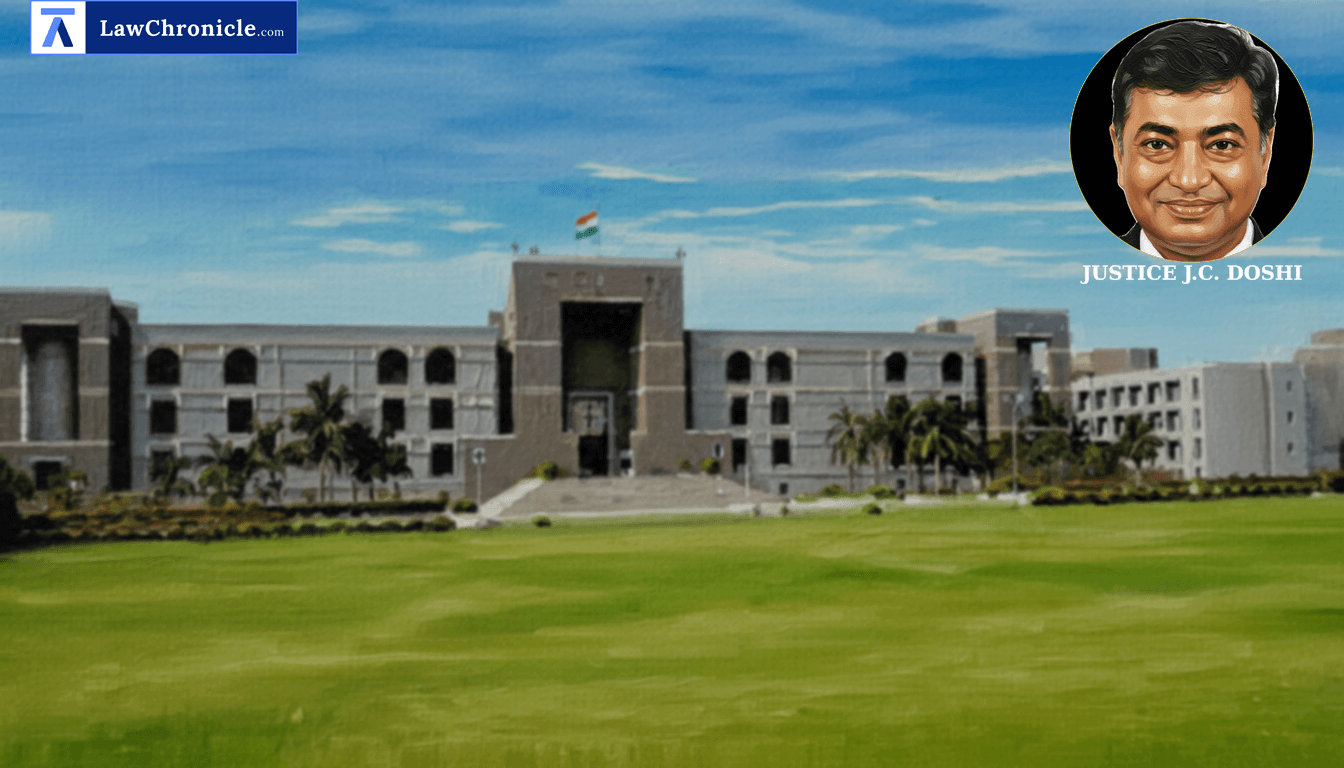
The Gujarat High Court has ruled that a person cannot be routinely compelled to undergo a DNA test to determine paternity, emphasizing that such intrusive procedures without explicit consent constitute a grave infringement of the constitutionally protected right to privacy. This decision underscores that the quest for truth must be balanced against individual autonomy, especially when scientific advancements are sought to be used in a manner that disregards the test of proportionality.
Justice J. C. Doshi presided over the case, which challenged an order of the Family Court, Vadodara. The High Court was called upon to determine whether a defendant in a long-standing maintenance suit under the Hindu Adoption and Maintenance Act, 1956 could be forced to provide a blood sample for DNA examination years after the litigation began and after the child involved had reached majority.
Privacy Rights And The Test Of Proportionality
The Court observed that DNA information is uniquely personal and its collection must meet the stringent standards of constitutional protection. Relying on the landmark privacy judgment in K.S Puttaswamy v. Union of India, the Court held that any direction for DNA profiling must be examined through the lens of legitimate aim and proportionality.
The Court, in its reasoning, observed: "DNA is unique to an individual and can be used to establish identity, trace familial linkage, and reveal sensitive health information, and that whether a person may be compelled to provide a DNA sample must be examined applying the test of proportionality laid down by the Hon’ble Apex Court in case of K.S Puttaswamy v. Union of India, in which the right to privacy was declared to be a constitutionally protected right in India. It was observed that the Court must examine the proportionality of the legitimate aim being pursued, whether the direction is arbitrary or discriminatory, whether it would have an adverse impact on the person concerned, and whether the encroachment upon the privacy and personal autonomy of the person directed to undergo the test is justified."
Limitations on Directing Scientific Evidence
Citing R. Rajendran Vs. Kamar Nisha and others, the Court reiterated that DNA testing cannot be ordered as a matter of course or for 'roving inquiries.' The Court noted that in the present case, the daughter (Respondent No. 2) had become a major, and her consent was never obtained for the test. Ordering such a procedure at this stage would not only be redundant for maintenance purposes but would also jeopardize her societal status without her participation.
Applying the principles established in Sharda Vs. Dharmpal ( "(2003) 4 SCC 493": 2003 CaseBase(SC) 473) and Bhabani Prasad Jena vs. Convenor Secretary, Orissa State Commission for Women and Another ( "(2010) 8 SCC 633": 2010 CaseBase(SC) 265), the Bench emphasized that the judiciary must be reluctant to use scientific tools that result in the invasion of privacy unless there is an "eminent need." The Court noted that the plaintiff had failed to first lead evidence to establish the factum of marriage before seeking a paternity test.
Decision and Directions
The High Court found that the Family Court had acted in a routine manner without considering the legal consequences of such an order on a major daughter. The Court has the following directions:
"The learned Family Court, Vadodara below application Exh.217 in Family (HMP) Suit No.1532 of 2010 (Old Special Civil Suit No.485 of 1994) is hereby quashed and set aside. Consequently, application Exh.217 is hereby dismissed. The learned Family Court is directed to go through the orders passed in the CRAs and to complete the suit proceedings."
Key Takeaways
- Privacy as a Barrier to DNA Compulsion: Judicial orders for DNA tests must pass the test of proportionality as mandated by K.S Puttaswamy v. Union of India to prevent encroachment on personal autonomy.
- Consent of Major Offspring is Mandatory: Courts cannot direct paternity tests for children who have attained majority without their explicit consent, as it impacts their privacy and societal status.
- Proof of Marriage as a Prerequisite: In maintenance disputes, the claimant must first establish the existence of a valid marriage before the court considers the secondary issue of paternity through scientific means.
- Anti-Roving Inquiry Stance: Scientific tests like DNA profiling cannot be granted for 'fishing' or 'exploratory' investigations if the timing of the application is suspicious or the need is not imminent.
Ratio
A direction to undergo a DNA test infringes upon the constitutionally protected right to privacy and personal autonomy; therefore, it cannot be ordered as a matter of course. Such a direction must satisfy the test of proportionality, ensure the 'eminent need' for a just decision, and respect the requirement of consent, particularly in the case of individuals who have attained majority, to avoid potential 'bastardization' or adverse societal consequences.
Background:
The dispute originated in 1994 when the Respondent No. 1 filed a suit under the Hindu Adoption and Maintenance Act, 1956 seeking maintenance for herself and her then fifteen-month-old daughter from the petitioner. The petitioner denied the marriage and the paternity of the child. Despite a 1998 deadline set by the High Court for the suit's disposal, the matter lingered. In 2010, the wife filed an application under Order 26 Rule 9 & 10 of the Code of Civil Procedure, 1908 and Section 45 of the Indian Evidence Act, 1872, seeking a DNA test. By the time the matter reached the High Court, the daughter was 32 years old, married, and residing in the USA. The Petitioner challenged the Family Court's order allowing the DNA test, arguing it was intended to prolong proceedings and was unnecessary given that the daughter was now a major and no longer entitled to maintenance. The High Court allowed the petition, quashing the DNA test direction.
Case Details:
Case No.: R/SPECIAL CIVIL APPLICATION NO. 8340 of 2012
NeutralCitation: 2026:GUJHC:46180
Case Title: Yeshwantsinh Shankarsinh Chauhan Versus Madhukanta @ Yeshmita D/O Late Madhavsinh Raisinh Jadav & Anr.
Appearances:
For the Petitioner(s): Mr RD Dave, Advocate
For the Respondent(s): Mr Nirav Thakkar For Mr Bhavin J Satwara, Advocates
Source: 2026 CaseBase(GUJ) 4137
Similar Articles
 Breaking News


