


Paternity Dispute: SC Orders DNA Test, Prioritizes Child’s Rights Over Privacy
 Copy Link
 Share
 Save
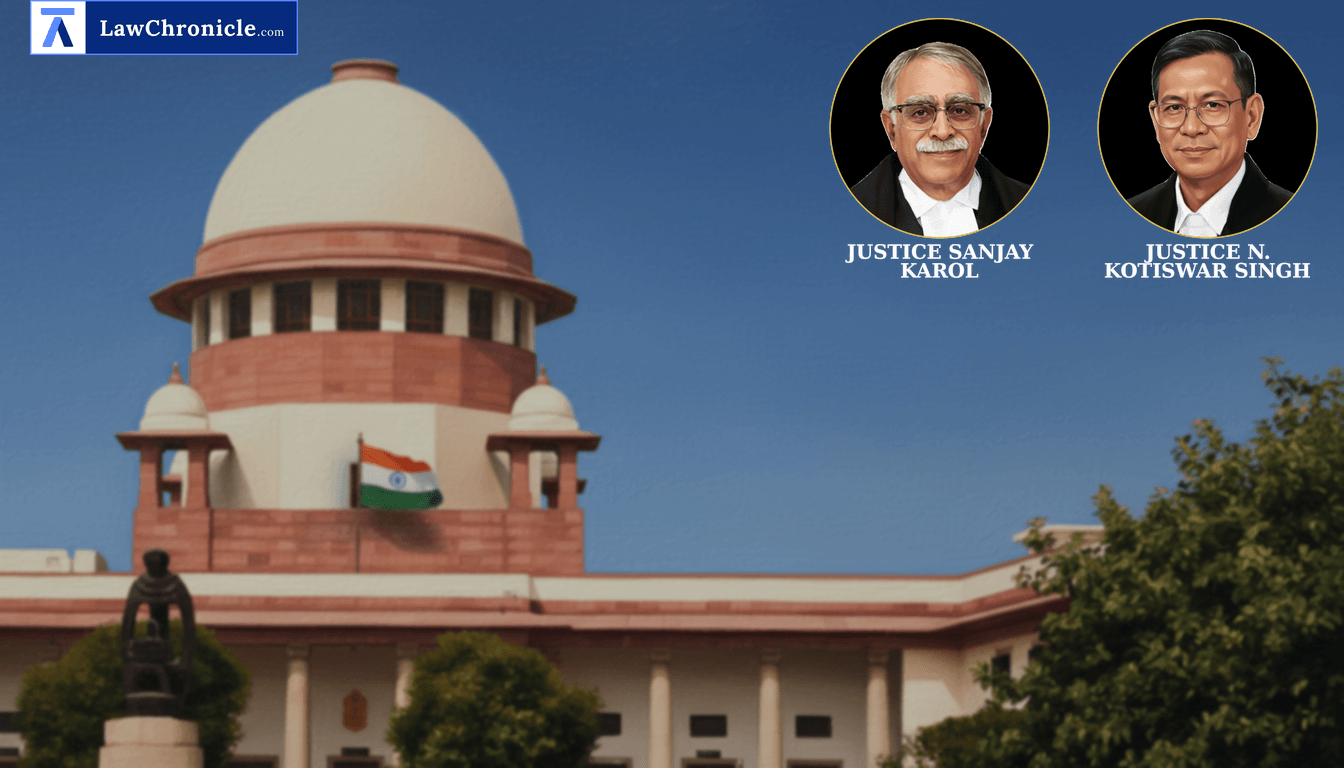
The Supreme Court, in Chaturbhuj Pradhan v. Amar Pradhan & Anr., emphasized that an individual's right to privacy is not absolute when weighed against a child's legitimate interest in determining their biological parentage.
A bench of Justice Sanjay Karol and Justice Nongmeikapam Kotiswar Singh dismissed an appeal filed by a man challenging concurrent orders from a Civil Court and the High Court of Chhattisgarh that directed him to undergo a DNA test to establish the paternity of a person claiming to be his son. The Court held that when paternity is the central issue and no other evidence can provide a conclusive answer, scientific tests are indispensable for the ends of justice.
Establishing the Necessity of DNA Testing
The Court observed that while DNA tests should not be ordered as a matter of course, they are permissible in exceptional cases where the controversy cannot be resolved through other evidence. Referring to the principles in Goutam Kundu v. State of W.B. ( "(1993) 3 SCC 418": 1993 CaseBase(SC) 15) and Dipanwita Roy v. Ronobroto Roy ( "(2015) 1 SCC 365": 2014 CaseBase(SC) 783), the Court noted that a balance must be struck between the social stigma of 'illegitimacy' and the child's right to know their father.
The Court, in its reasoning, observed: "In the present case, the alleged relationship between CP and the second respondent was in January 1999 and Amar was born in September 1999. CP has consistently denied paternity and there is no other evidence that can provide a categorical answer. It is nobody’s case that the second respondent had ever had an intimate relationship with someone else... the question of paternity is directly in issue. On this count as well, we find in favour of the respondent."
Privacy vs. Right to Identity
Addressing the appellant's argument regarding his right to privacy, the bench noted that the child's desire for closure on a question that has loomed large over his life outweighs the appellant's privacy concerns. The Court highlighted that without a DNA test, the child might forever be denied legal rights he would otherwise be entitled to. The Court further clarified that previous summary proceedings under Section 125 of the Code Of Criminal Procedure, 1973 do not operate as res judicata in a full-dress civil suit for declaration of paternity.
The Court has the following directions:
"The appeal is dismissed. Let the matter be taken up by the concerned Civil Court for fixing a date to conduct a DNA test and proceed further in the civil suit pending before it as per the result received subsequently."
Background:
The dispute originated when 'Amar' (Respondent 1) filed a civil suit seeking a declaration that 'CP' (Appellant) is his biological father and claiming a 1/3rd share in the property. Amar's mother alleged that she had a consensual relationship with the appellant in 1999, resulting in Amar's birth. The appellant denied these claims, citing his acquittal in a rape case filed by the mother under Section 376 of the Indian Penal Code, 1860.
Earlier maintenance litigations had resulted in observations that the relationship was not established, but the Supreme Court noted those were summary in nature. The Civil Court and the High Court had both ordered a DNA test, prompting the appellant to seek relief from the top court, primarily arguing against the compulsion to provide samples and citing the Indian Evidence Act, 1872. However, the Supreme Court, relying on Aparna Ajinkya Firodia v. Ajinkya Arun Firodia ( "(2024) 7 SCC 773": 2023 CaseBase(SC) 417), Ivan Rathinam v. Milan Joseph ( "2025 SCC OnLine SC 175": 2025 CaseBase(SC) 334), and Nikhat Parveen v. Rafique, concluded that the balance of interests lies in favour of the respondent to ensure justice and legal clarity.
Case Details:
Case No.: Civil Appeal No. ___ of 2026 (@ SLP (C) No. 4016 of 2026)
NeutralCitation: 2026 INSC 600
Case Title: Chaturbhuj Pradhan v. Amar Pradhan & Anr.
Source: 2026 CaseBase(SC) 510
Similar Articles


 Breaking News


