


Condoning Five-Year Delay Without Cogent Reasons Illegal: Calcutta High Court
 Copy Link
 Share
 Save
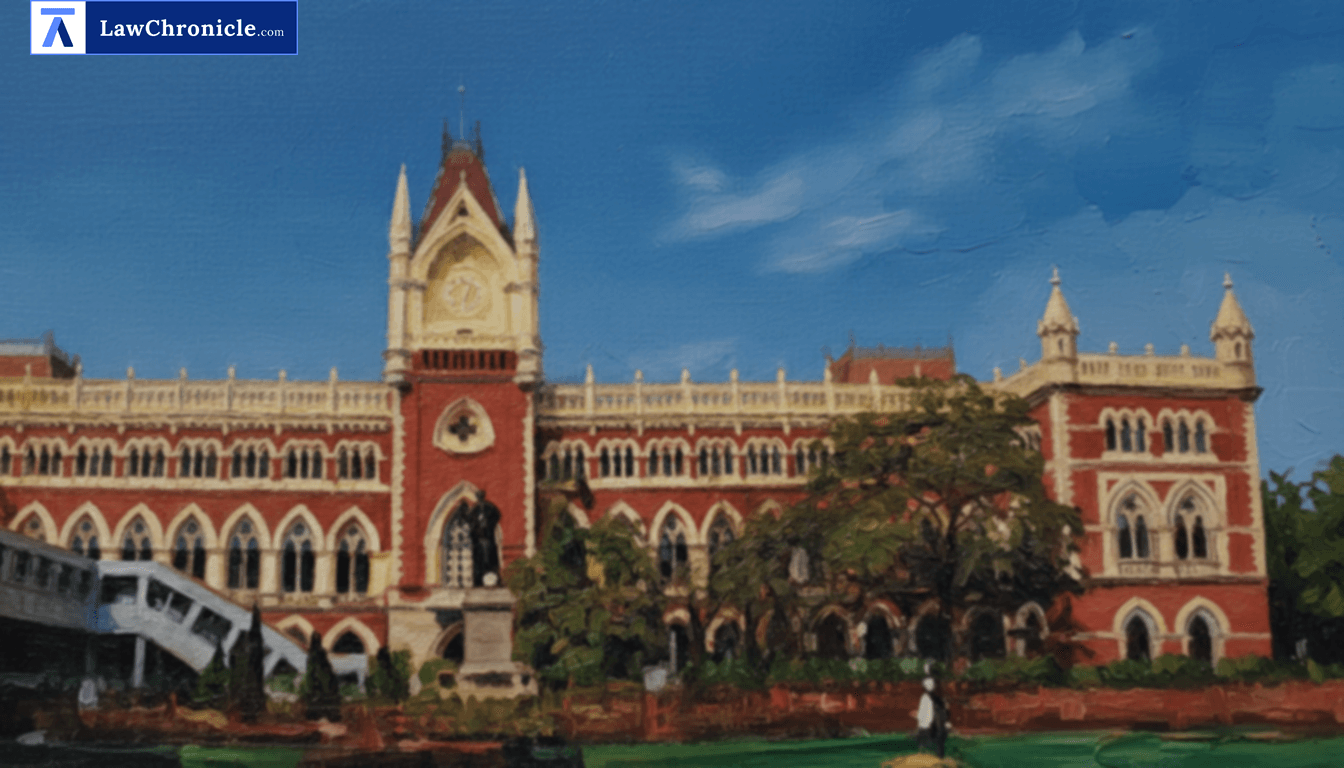
Fraud and suppression of material facts disentitle a litigant from seeking discretionary relief under the law of limitation, as technical justice cannot override the consequences of gross negligence and inaction. The Calcutta High Court has set aside a Trial Court order that condoned an inordinate delay of five years in a restoration application, ruling that the 'justice-oriented' approach cannot be used to reward parties who approach the court with unclean hands.
In a revisional application filed under Article 227 of the Constitution of India, Justice Ajay Kumar Gupta examined whether a lower court could mechanically condone a half-decade delay in a restoration proceeding where the applicants had misrepresented their knowledge of the litigation history.
Key Takeaways
Bona Fides Mandatory for Limitation Relief
Courts must first ascertain the bona fides of the explanation offered for delay before considering the merits of the underlying matter, ensuring that limitation laws are not frustrated.
Suppression of Facts Bars Discretion
Litigants who manufacture false claims regarding their knowledge of court proceedings are ineligible for discretionary reliefs, regardless of the 'liberal' interpretation of procedural laws.
Reasoned Orders Required for Inordinate Delay
While allowing applications for condoning significant delays, courts must exercise discretionary power sparingly and provide cogent, valid reasons rather than relying on generic observations.
Court Rebukes 'Mechanical' Condonation of Inordinate Delay
The Court found that the opposite parties had not disclosed the actual number of days of delay and had suppressed their knowledge of the pending proceedings. The High Court noted that the parties were aware of the litigation through Cr.P.C. proceedings and a Writ Petition before the High Court as early as 2015 and 2017, yet claimed they only gained knowledge in 2020.
The Court has following directions:
"Accordingly, C.O. No. 167 of 2026 is, thus, allowed without order as to costs. Connected applications, if any, are also, thus, disposed of. Interim order, if any, stands vacated. The order impugned being No. 91 dated 17.11.2025 passed by the Learned Civil Judge (Senior Division), 2nd Court at Contai, District- Purba Medinipur in J. Misc. Case No. 10 of 2020, is therefore set aside. Let a copy of this Judgment be sent to the Learned Court below for information."
The Court, in its reasoning, observed: "It is equally well settled that 'sufficient cause' within the meaning of Section 5 of the Limitation Act, 1963, cannot be construed so liberally as to reward a party guilty of negligence, inaction, or lack of bona fides. The applicant must satisfy the court that he was prevented by a cause beyond his control from prosecuting the proceeding within time; a mechanical or unreasoned condonation defeats the very object of the law of limitation..."
Ratio
Discretionary relief for condonation of delay under Section 5 of the Limitation Act, 1963 cannot be granted to a party that suppresses material facts or acts with lack of bona fides. A court must provide cogent and valid reasons when condoning inordinate delays, as a liberal approach cannot be employed to frustrate the substantive law of limitation.
Background
The dispute originated from a suit for declaration of title and permanent injunction filed in 2007. After the suit was decreed in favor of the petitioner, the defendant filed an appeal which was dismissed for non-prosecution in 2013. A subsequent restoration application under Order 41 Rule 19 of the Code of Civil Procedure was also dismissed for default in 2015.
In 2020, the legal heirs of the defendant filed a fresh application under Order IX Rule 9 of the Code of Civil Procedure along with a prayer under Section 5 of the Limitation Act, 1963 to condone a delay of nearly five years. The Trial Court allowed this application, observing that matters should be decided on merits. The petitioner challenged this, relying on H. Guruswamy & Ors. v. A Krishnaiah to argue that the conduct of the litigant is paramount. The High Court agreed, distinguishing Ghanshyam Das Gupta v. Makhan Lal ( "(2012) 8 SCC 745": 2012 CaseBase(SC) 317) and holding that the opposite parties had committed fraud by suppressing their prior knowledge of the case's dismissal.
Case Details:
Case No.: C.O. No. 167 of 2026
Neutral Citation: 2026:CHC-AS:1444
Case Title: Tapan Kumar Chakraborty Versus Tapas Kanti Panda & Ors.
Appearances:
For the Petitioner(s): Mr. Sounak Bhattacharjee Adv., Mr. Sounak Mondal, Adv., Mr. Anirban Saha Roy, Adv., Ms. Bipasha Bhattacharyya, Adv.
For the Respondent(s): Mr. Gobinda Chandra Baidya, Adv., Mr. Avilash Tripathy, Adv., Mr. Aminul Islam, Adv., Mr. Pravash Mondal, Adv.
Source: 2026 CaseBase(CAL) 2558
Similar Articles
 Breaking News


