


Consensual Relationships Not Rape Even if Promise of Marriage Fails: Allahabad HC
 Copy Link
 Share
 Save
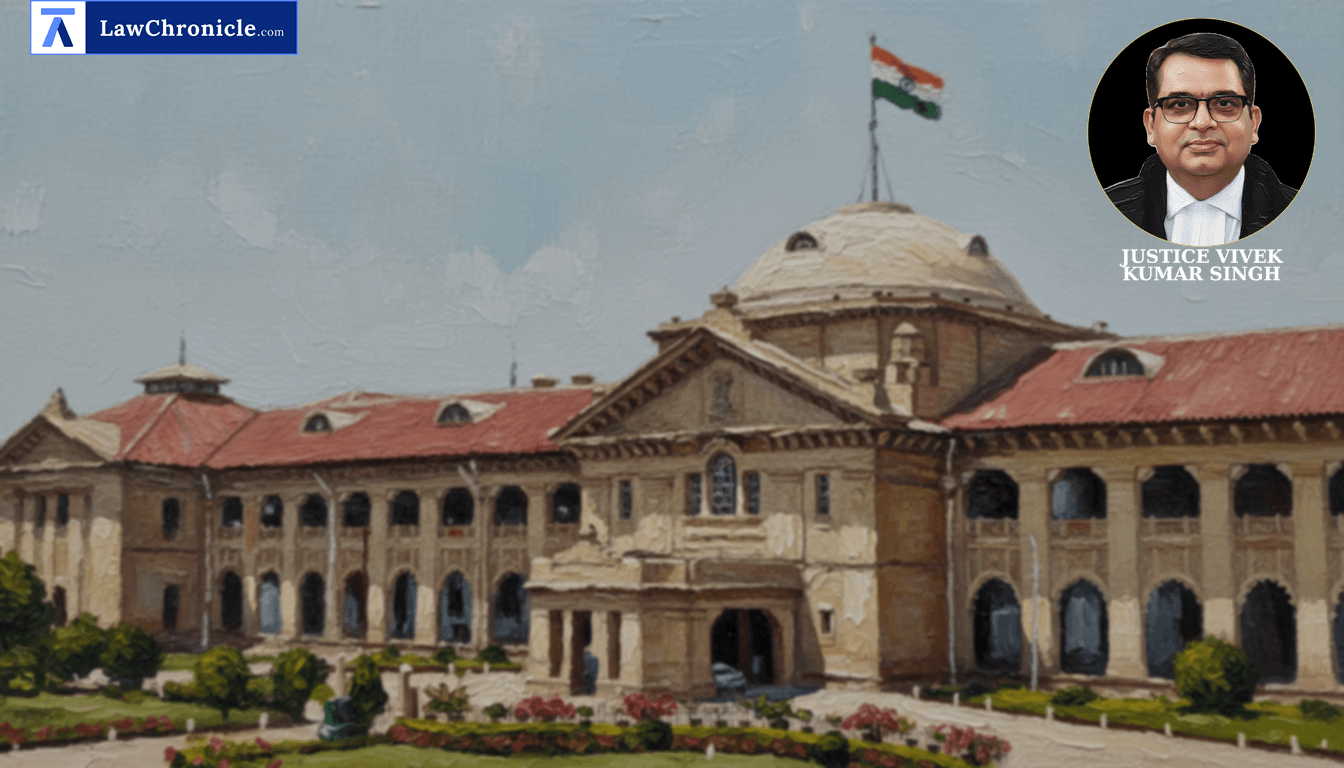
The Allahabad High Court, in Sanjay @ Sanjay Kashyap v. State of U.P. and Another, quashed a criminal case in which an adult woman alleged rape following a broken promise of marriage, aiming to prevent the criminalization of failed relationships. The Court emphasized that physical intimacy between consenting adults over a prolonged period cannot be retrospectively branded as rape merely because the relationship did not culminate in marriage.
Justice Vivek Kumar Singh, presiding over the matter, heard an application challenging a charge-sheet and cognizance order involving allegations under Sections 376, 323, 342, and 506 of the Indian Penal Code, 1860. The applicant sought the quashing of proceedings initiated under Section 528 of the Bharatiya Nagarik Suraksha Sanhita, 2023, arguing that the relationship was entirely consensual and the FIR was a result of a personal grudge following a breakup.
Distinction Between Breach of Promise and False Promise
The Court observed that for a sexual relationship to be classified as rape under a 'misconception of fact,' it must be proved that the promise of marriage was false from its very inception. Referring to the principles laid down in State of Haryana and others Vs. Ch. Bhajan Lal ( "AIR 1992 SC 605": 1990 CaseBase(SC) 91) and Pramod Suryabhan Pawar Versus State of Maharashtra And Another ( "(2019) 9 Supreme Court Cases 608": 2019 CaseBase(SC) 2769), the Court noted that a mere breach of promise due to unforeseen circumstances or a change of heart does not equate to the 'false promise' required to vitiate consent.
The Court, in its reasoning, observed: "Unless it is alleged that, from the very beginning of such a relationship, there was some element of cheating on the part of the accused while making such promise, it would not be treated as a false promise of marriage. Once, a promise was made in good faith and, subsequently after change of circumstances when the relationship between the parties went wrong for various other reasons, such breach of promise would not be treated as misconception for the purpose of consent of establishing physical relationship."
Abuse of Criminal Justice Machinery
The High Court expressed concern over the growing trend of using criminal jurisprudence to settle scores in souring relationships. It noted that the victim was a major (20 years old) and was in a relationship for a year, during which time she engaged in physical intimacy voluntarily. The Court relied on Dhruvaram Murlidhar Sonar Vs. State of Maharashtra ( "(2019) 18 SCC 191": 2018 CaseBase(SC) 551) and State of Karnataka v. M. Devendrappa ( "(2002) 3 SCC 89; 2002 SCC (Cri) 539": 2002 CaseBase(SC) 1149) to highlight that such cases often lack the 'mens rea' or 'actus reus' necessary for a criminal conviction.
The Court has the following directions:
"Accordingly, the instant application is allowed and the entire criminal proceedings of Case No.159 of 2025, arising out of Case Crime No.238 of 2024, under Sections 376, 323, 342 and 506 of I.P.C., Police Station Pipraich, District-Gorakhpur, pending in the court of J.M./ Civil Judge Junior Division-14, Gorakhpur as well as charge-sheet dated 09.06.2024 including cognizance order dated 08.02.2025, are hereby quashed against the applicant."
Background:
The dispute originated from an FIR lodged on March 30, 2024, where the victim claimed that the applicant established physical relations with her on a promise to marry but later declined. The victim and the applicant had met a year prior at a marriage ceremony and had maintained a relationship since then. During the investigation, the victim's statements under Sections 161 and 164 of the Cr.P.C. showed inconsistencies, and she eventually expressed a desire to marry the applicant, suggesting the FIR was a tool for pressure.
The Court analyzed a series of Supreme Court precedents, including Mahesh Damu Khare Versus State of Maharashtra and Another, Prashant Versus State of NCT of Delhi ( "(2025) 5 Supreme Court Cases 764": 2024 CaseBase(SC) 757), and Maheshwar Tigga Vs. State of Jharkhand ( "(2020) 10 SCC 108": 2020 CaseBase(SC) 840), which consistently hold that if two able-minded adults reside together or maintain long-term physical relations, a presumption of valid consent arises. Following the guidelines in State of Haryana and others Vs. Ch. Bhajan Lal ( "AIR 1992 SC 605": 1990 CaseBase(SC) 91), the High Court concluded that the continuation of this prosecution would be a gross misuse of the law.
Case Details:
Case No.: APPLICATION U/S 528 BNSS No. - 29363 of 2025
Case Title: Sanjay @ Sanjay Kashyap Versus State of U.P. and Another
Appearances:
For the Petitioner(s): Ashwani Kumar Singh, Devendra Singh Kushwaha
For the Respondent(s): Mahesh Kumar Sahani, Prashant Kumar Singh, G.A.
Source: 2026 CaseBase(ALL) 194
Similar Articles

 Breaking News


