


Contractual Bar On Interest Overrides Arbitrator Discretion Under Section 31(7): Bombay HC
 Copy Link
 Share
 Save
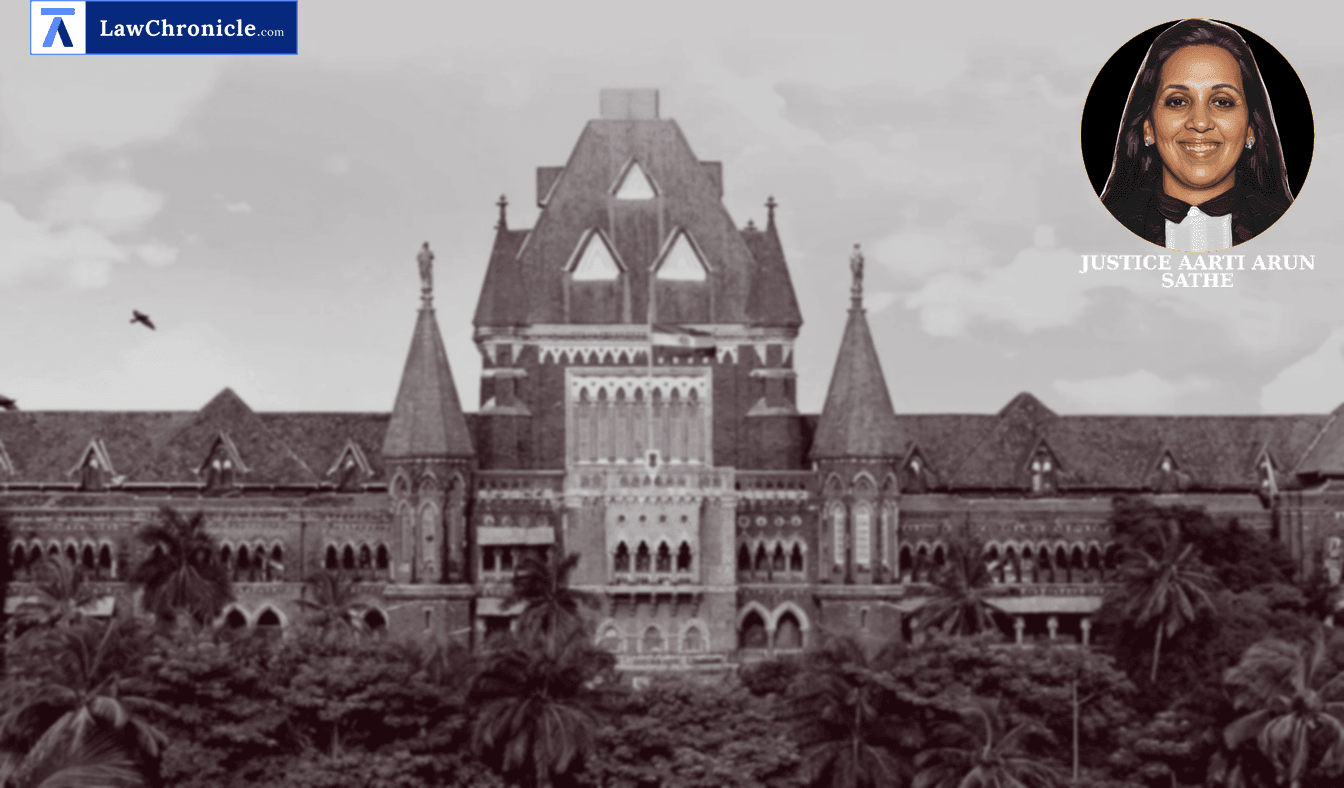
The Bombay High Court has reaffirmed the sanctity of party autonomy in arbitration, ruling that an express contractual prohibition on interest effectively ousts an arbitrator's statutory power to grant pendente lite interest. This means that the discretionary power under Section 31(7)(a) of the Arbitration and Conciliation Act, 1996 is strictly subject to the 'unless otherwise agreed' caveat, preventing tribunals from awarding interest when the underlying agreement contains a clear bar.
A Single Judge Bench of Justice Aarti Sathe partially set aside an arbitral award that had granted significant interest to a contractor despite an explicit prohibitory clause. While upholding the principal monetary award of over ₹24 crore, the Bombay High Court held that the arbitrator committed a patent illegality by disregarding the contractual bargain which stated that no interest would be payable on any claims.
Key Takeaways
Sanctity of Contractual Bar
Parties can explicitly contract out of interest claims, and such agreements bind the arbitrator regardless of the statutory discretion provided under the 1996 Act.
Pendente Lite Interest Restrictions
Section 31(7)(a) operates only in the absence of an agreement; a clause barring interest under the Interest Act or 'any other provisions' covers the pendente lite period.
Post-Award Interest Modification
Courts possess the authority to sever and modify post-award interest rates to align with the current statutory mandate of 2% above the prevalent rate.
Adverse Inference on Withheld Records
Municipal bodies and civic authorities cannot benefit from withholding relevant transactional records, justifying the use of adverse inference to determine actual collections.
Court's Rationale on Section 31(7) and Contractual Autonomy
The Bombay High Court scrutinized the interplay between the Arbitration and Conciliation Act, 1996 and the Indian Contract Act, 1872. It noted that unlike the 1940 Act, the current regime prioritizes the specific agreement between parties. The Petitioner challenged the award of 18% interest from 1997, citing Clause 24 of the Agreement which stipulated that the Agent shall not be entitled to claim any kind of interest on any claims as per the Interest Act, 1978 or any other provisions.
The Bombay High Court observed that “Once the contract entered between the parties bars charging of interest, taking any other view would be doing violence to the provisions of section 31(7)(a) of the Act... Therefore, where the parties had agreed that no interest shall be payable, the Arbitral Tribunal cannot award interest between the date when the cause of action arose to the date of award.” The Bombay High Court relied on North Eastern Electric Power Corpn. Limited (NEEPCO) v. Astra Construction (P) Ltd. and Garg Builders v. Bharat Heavy Electricals Limited ( "(2022) 11 SCC 697": 2021 CaseBase(SC) 1515) to emphasize that party autonomy is supreme. Even if the conduct of a party (in this case, the Municipal Corporation) was found to be dishonest or dilatory, the Court held that a tribunal cannot invoke 'equity' or 'public policy' to rewrite a commercial contract that prohibits interest.
Direction to Modify Interest and Release Deposits
Regarding post-award interest, the Court found the arbitrator’s flat rate of 18% to be inconsistent with the amended Section 31(7)(b). Relying on Gayatri Balasamy v. ISG Novasoft Technologies Ltd. ( "(2025) 7 SCC 1": 2025 CaseBase(SC) 8690), the Court severed this portion, reducing the future interest to 9% per annum to reflect the current market rates.
The Bombay High Court issued the following directions: "The effect and operation of the Judgment shall remain stayed for a period of three weeks from today. Any amount deposited in Court shall be released on the expiry of one month from the date this judgment is uploaded on the website of this Court. No costs."
Ratio
Section 31(7)(a) of the Arbitration and Conciliation Act, 1996 statutorily recognizes party autonomy; hence, an express contractual bar on interest for 'any kind of claim' precludes an arbitrator from awarding pendente lite interest. Furthermore, an arbitral award is severable, and courts may modify post-award interest rates that fail to comply with the statutory formula of '2% higher than the current rate of interest' as per the amended Section 31(7)(b).
Background
The dispute arose from an octroi collection agreement for the period 1995-1996. The Respondent (Agent) was appointed by the Kolhapur Municipal Corporation but the contract was terminated following alleged breaches. After two decades of litigation, including a recusal by an earlier arbitrator, a Sole Arbitrator awarded ₹24,06,50,119.03 to the Respondent based on an expert accountant's report and adverse inferences drawn against the Corporation for withholding RTI-disclosed records.
The Corporation challenged the award under Section 34, alleging patent illegality and mathematical absurdity, particularly attacking the 18% pendente lite interest granted despite Clause 24 of the agreement. The Bombay High Court upheld the principal award and costs of ₹1.5 crore but struck down the interest components.
Case Details:
Case No.: Commercial Arbitration Petition No. 1018 of 2019
Neutral Citation: 2026:BHC-OS:22044
Case Title: The Kolhapur Municipal Corporation v. Fairdeal Construction
Appearances:
For the Petitioner(s): Mr. S.C. Naidu a/w. Mr. Abhishek T. Ingale i/b. Mr. Abhijit Adagule
For the Respondent(s): Mr. Akhilesh Dubey a/w. Mr. Vagish Mishra a/w. Mr. Amit Dubey
Source: 2026 CaseBase(BOM) 6523
Similar Articles
 Breaking News


