


Conviction Quashed in Child Sexual Assault Case Citing Investigative Lapses and Unreliable Witnesses
 Copy Link
 Share
 Save
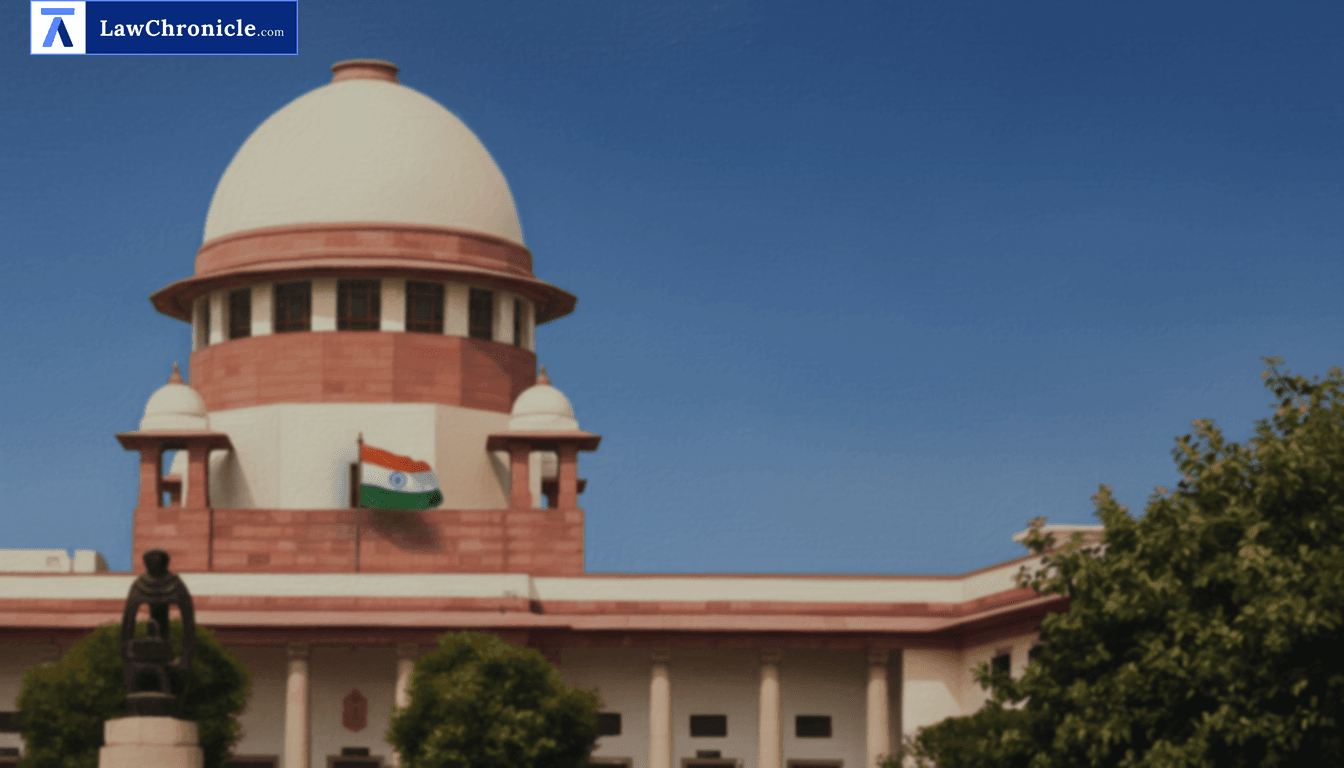
A Bench of Justices Vikram Nath and Sandeep Mehta heard an appeal against convictions under Sections 363, 376(2)(i) and 201 IPC and Sections 3 and 4 of the POCSO Act, arising from allegations of brutal sexual assault upon a four‑year‑old child and challenging the judgments of the trial court and the Gujarat High Court.
The Supreme Court allowed the appeal, set aside the conviction and sentence, and acquitted the appellant, after finding that the prosecution failed to prove an unbroken chain of incriminating circumstances. The Court observed that the prosecution case was “enveloped in layers of investigative apathy and procedural infirmities,” and that the “highly unnatural conduct of the witnesses, marked by gross insensitivity/rank apathy, contradictions and apparent concoctions raises serious doubts about the reliability of the prosecution’s case.” The relief followed a finding that the FIR omitted essential material particulars, the so‑called last‑seen witnesses were of doubtful credibility (two were hostile at trial), recoveries and forensic reports lacked a trustworthy chain of custody, and investigating officers failed to pursue available scientific avenues for confirmation. The Court, in its reasoning, observed: “The law with regard to conviction based on circumstantial evidence has been crystallized by this Court in the case of Sharad Birdhichand Sharda v. State of Maharashtra, wherein it was held: (1) The circumstances from which the conclusion of guilt is to be drawn should be fully established. (2) The facts so established should be consistent only with the hypothesis of the guilt of the accused. (3) The circumstances should be of a conclusive nature and tendency. (4) They should exclude every possible hypothesis except the one to be proved. (5) There must be a chain of evidence so complete as not to leave any reasonable ground for a conclusion consistent with the innocence of the accused.”
Background: On 13 June 2013 a resident, Nazir Mohammed, found a four‑year‑old girl walking naked and bleeding in the vicinity of his house; she was taken to Kalol Government Hospital and a complaint was lodged against unknown persons. Nazir stated that four boys had brought the child and had told him they had seen the accused eject the child from his house; however the written complaint (FIR) omitted the identities of those boys and did not mention that they had named the accused. Medical examination recorded injuries; the investigating officer later arrested the appellant and reported recovery of blood‑stained clothes and bedding from the accused’s house, and forensic reports were presented in the trial.
The trial court convicted and sentenced the accused to imprisonment including life terms; the Gujarat High Court dismissed the appeal. The Supreme Court scrutinised the entire record and original trial proceedings and found pervasive defects: material omissions in the FIR, contradictions and implausibilities in the oral testimony of the complainant, a journalist witness and the four boys (two of whom turned hostile), and serious lapses in investigation. The investigating officers admitted that they did not promptly record statements of the persons who brought the child, did not collect forensic samples from those boys, did not establish ownership or exclusive possession of the house searched, and failed to maintain a clear chain of custody for seized articles sent to the FSL. The child victim did not identify the accused at trial and the Court noted she had been “tutored by her mother.” In view of these cumulative infirmities, the Court concluded that the prosecution had not established the chain of circumstantial evidence required for conviction and held that the convictions could not stand.
The Supreme Court allowed the appeal, set aside the conviction and sentence dated 3 November 2015 and the High Court order dated 5 April 2016, acquitted the appellant and directed his release if not wanted in any other case. The Court also issued nationwide directions for trial courts to adopt tabulated charts of witnesses, exhibits and material objects in criminal judgments to improve clarity and assist appellate review (paragraphs 81–90 of the judgment).
Case Details: Case No.: CRIMINAL APPEAL NO(S). 2973 of 2023 (2025 INSC 1433) Case Title: Manojbhai Jethabhai Parmar (Rohit) v. State of Gujarat Appearances: For the Petitioner(s): (Advocate name not specified in the judgment) For the Respondent(s): Ms. Swati Ghildiyal, Standing Counsel for the State of Gujarat
Similar Articles
 Breaking News


