


Corporate Insolvency Does Not Shield Directors From Criminal Liability: Karnataka High Court
 Copy Link
 Share
 Save
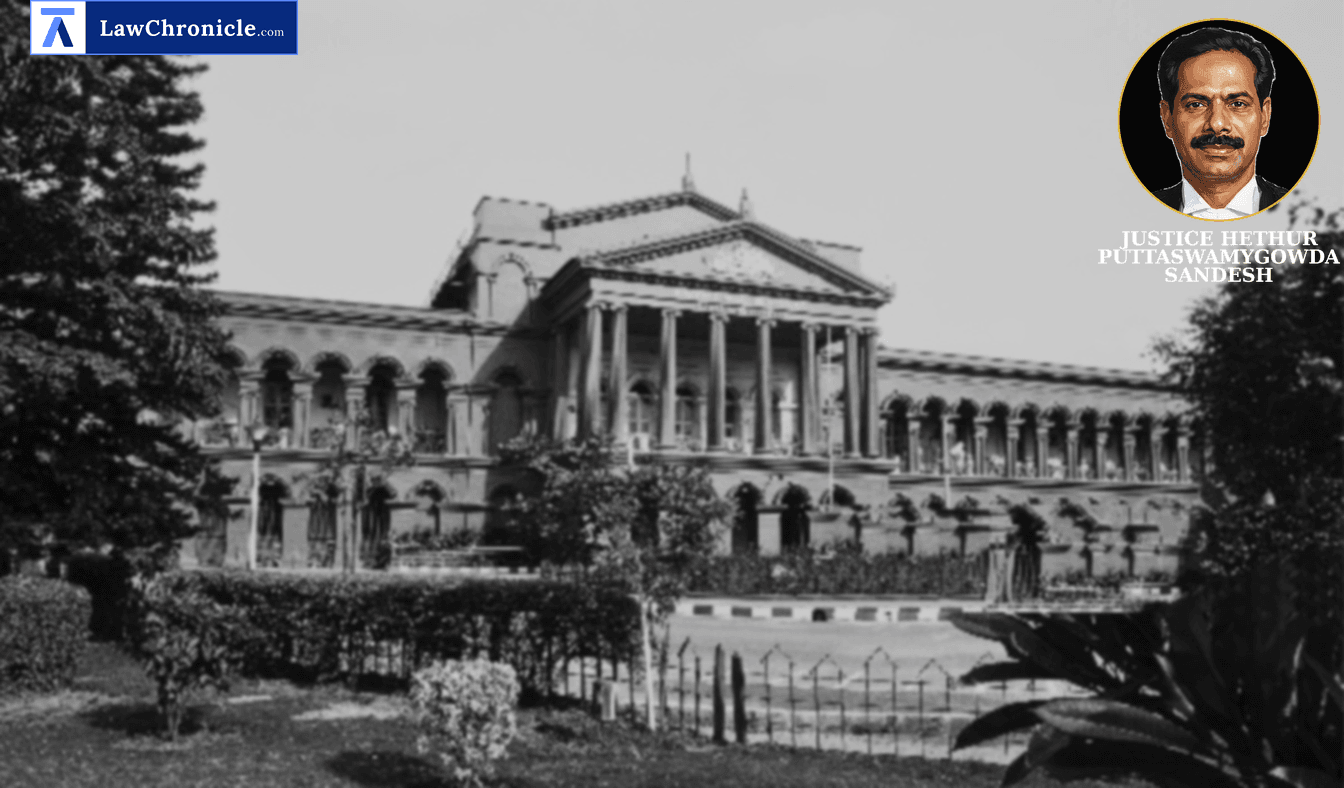
The Karnataka High Court has fortified the principle that the 'clean slate' provided to corporate entities under insolvency laws does not extend to the natural persons behind the company, ruling that former directors remain liable for cheating and criminal breach of trust despite the initiation of resolution processes. While the corporate debtor itself gains immunity from past offences upon the appointment of a liquidator or approval of a resolution plan, the court clarified that individuals who were in charge of the company's affairs at the time of the offence cannot escape the rigours of criminal prosecution.
Justice H.P. Sandesh heard the petition filed by Biodiversity Conservation India Pvt. Ltd. and its directors. The petitioners sought to quash an FIR registered for offences under Section 406 and Section 420 read with Section 34 of the IPC, arguing that the ongoing proceedings under the Insolvency and Bankruptcy Code, 2016 created a legal bar against their prosecution.
Key Takeaways
No Immunity for Natural Persons
Directors and officers in default continue to face criminal liability for acts committed prior to the corporate insolvency resolution process, notwithstanding the immunity granted to the corporate debtor.
Statutory Distinction
Section 32A of the Insolvency and Bankruptcy Code, 2016 distinguishes between the 'corporate debtor' and the individuals managing it, ensuring that the 'clean slate' policy for businesses does not become a sanctuary for personal criminal acts.
Concurrent Proceedings Permissible
Criminal proceedings for cheating or dishonour of cheques can proceed against directors even while the company is undergoing liquidation or resolution under the insolvency framework.
Interpretation of Section 32A of the IBC
The Court examined the scope of Section 32A of the Insolvency and Bankruptcy Code, 2016, which provides immunity to corporate debtors for offences committed prior to the commencement of the Corporate Insolvency Resolution Process (CIRP). However, the Court highlighted the second proviso to the section, which explicitly states that every person who was an "officer who is in default" or in charge of the business shall continue to be liable to be prosecuted and punished.
The Court has following directions:
"(i) The petition in respect of petitioner No.1 is allowed. The proceedings initiated against petitioner No.1 in FIR registered in Crime No.408/2017 is quashed.
(ii) The petition in respect of petitioner Nos.2 and 3 is rejected."
The Court, in its reasoning, observed: "Section 32A broadly leads to extinguishment of the criminal liability of the corporate debtor, if the control of the corporate debtor goes in the hands of the new management... The prosecution in relation to every person who was a 'designated partner'... or an 'officer who is in default'... or was in any manner incharge of, or responsible to the corporate debtor for the conduct of its business... shall be proceeded and the law will take its own course."
Ratio
The immunity from prosecution granted to a corporate debtor under Section 32A of the Insolvency and Bankruptcy Code, 2016 following the approval of a resolution plan or liquidation does not extend to the erstwhile directors or officers in default. Such natural persons remain liable for criminal offences committed during their management of the corporate debtor, and criminal proceedings against them are not terminated by the operation of the IBC.
Background
The dispute originated when a complainant invested Rs. 4.20 Crores with the petitioners, who allegedly promised a return of Rs. 6.19 Crores. Cheques issued for repayment were subsequently dishonoured. The complainant alleged that the petitioners had a deceptive intention from the inception, leading to the registration of an FIR for cheating and criminal breach of trust.
The petitioners argued that since the companies were admitted to CIRP by the NCLT and new management had taken over under approved resolution plans, the criminal proceedings were barred. They relied on Manish Kumar V. Union Of India And Another ( "(2021) 5 SCC 1": 2021 CaseBase(SC) 1011) to support their claim for protection under the Insolvency and Bankruptcy Code, 2016. Conversely, the respondent cited Tata Steel Bsl Limited And Another V. Union Of India And Another and Ajay Kumar Radheyshyam Goenka V. Tourism Finance Corporation Of India Limited ( "(2023) 10 SCC 545": 2023 CaseBase(SC) 514) to argue that the liability of directors is independent of the company's status under insolvency law.
The High Court partially allowed the petition, quashing the FIR against the corporate entity (Petitioner No. 1) due to its liquidation status, but refused to grant any relief to the Managing Director and Directors (Petitioner Nos. 2 and 3), holding that they must face the criminal trial.
Case Details:
Case No.: Criminal Petition NO.360 OF 2018
Case Title: Biodiversity Conservation India Pvt. Ltd. And Others V. State Of Karnataka And Another
Appearances:
For the Petitioner(s): Sri. Ajesh Kumar S., Advocate
For the Respondent(s): Sri. Suhas Gowda M., HCGP FOR R1; SRI. N.Venkatesh Kamath, Advocate For Sri. Chintan Chinnappa, Advocate FOR R2
Source: 2026 CaseBase(KAR) 28589
Similar Articles

 Breaking News


