


Supreme Court affirms admission of insolvency petition, holds restructuring did not novate loan and Section 10A bar is inapplicable
 Copy Link
 Share
 Save
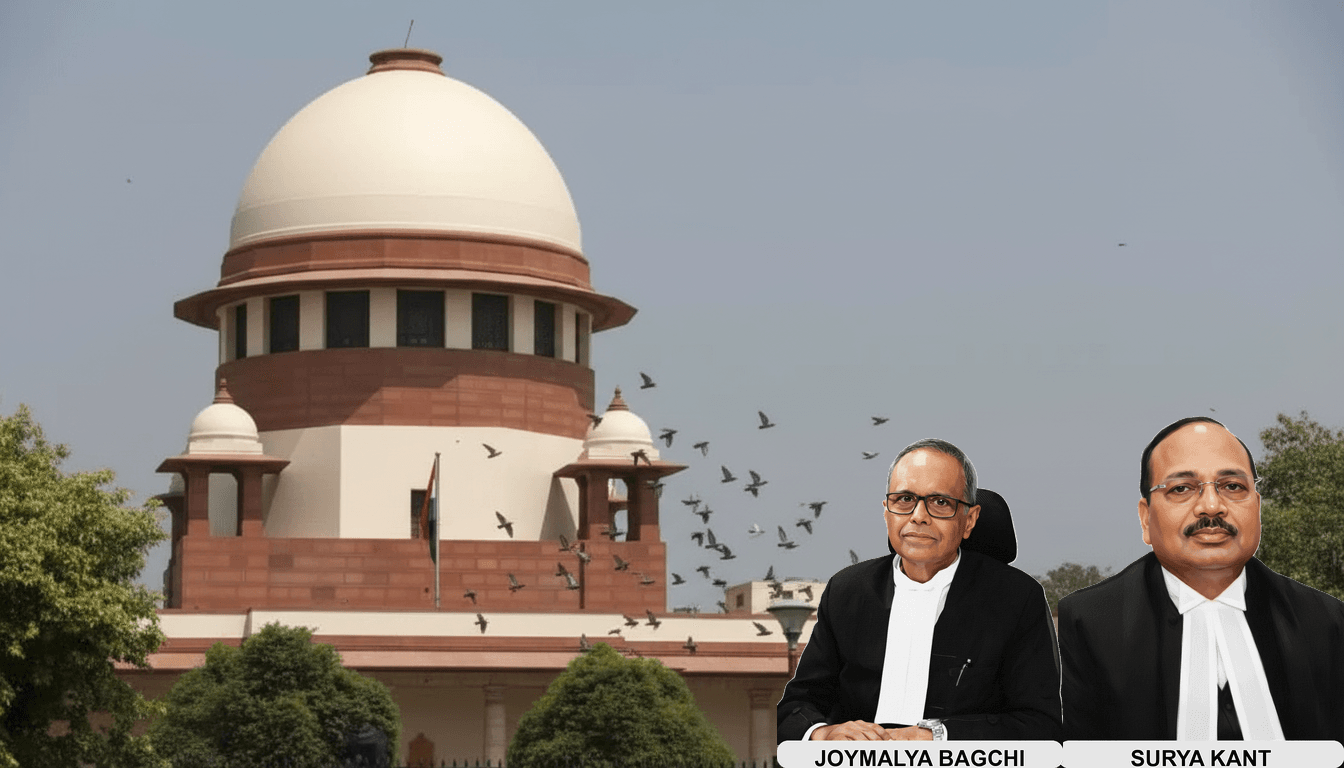
A bench of Chief Justice Surya Kant, Justice Joymalya Bagchi and Justice Vipul M. Pancholi heard an appeal by Power Trust, promoter of Hiranmaye Energy Ltd., challenging the NCLAT order that had upheld the NCLT, Kolkata’s admission of a Section 7 petition by REC Ltd. The appeal questioned whether the corporate insolvency resolution process (CIRP) was barred by the Section 10A moratorium, whether two forbearance/restructuring agreements novated the original loan so as to displace any default, and whether the Adjudicating Authority erred in admitting the Section 7 petition without a deeper inquiry into the debtor’s commercial viability; the appellant also sought consideration of multiple out‑of‑court settlement proposals and a continued stay of the CIRP.
The Court dismissed the appeal and vindicated the admission of the Section 7 application. It held that the plea of bar under Section 10A was “a non‑starter” because the financial creditor’s case pleaded a default from 31.03.2018 and the restructuring proposals had not crystallised into binding novations. The Court further reiterated the limited scope of the adjudicatory enquiry at the admission stage: the Adjudicating Authority was required only to satisfy itself that a financial debt existed and that a default had occurred from the records or evidence produced by the financial creditor, and it was not the stage for an extended evaluation of commercial viability. The Court, in its reasoning, observed: “30…… in the case of a corporate debtor who commits a default of a financial debt, the adjudicating authority has merely to see the records of the information utility or other evidence produced by the financial creditor to satisfy itself that a default has occurred. It is of no matter that the debt is disputed so long as the debt is ‘due’ i.e. payable unless interdicted by some law or has not yet become due in the sense that it is payable at some future date. It is only when this is proved to the satisfaction of the adjudicating authority that the adjudicating authority may reject an application and not otherwise.” The Court also recorded that “the plea of bar under Section 10A, IBC is a non‑starter.”
Background
The dispute arose from a common loan facility granted to Hiranmaye Energy Ltd. (the corporate debtor) in 2013 and an additional loan in 2015 for a thermal power project at Haldia. The debtor entered into restructuring proposals dated 21.02.2020 and 29.09.2020 that envisaged revised repayment schedules, subject to pre‑implementation conditions including a favourable tariff order from the WBERC, creation of a Debt Service Reserve Account (DSRA), priority debt and working capital and demonstration of plant operation for 72 continuous hours. The tariff order did not arrive within the stipulated timeline and other conditions remained unfulfilled. REC Ltd. filed a Section 7 petition alleging default dated 31.03.2018; the NCLT admitted the petition on 02.01.2024 and the NCLAT affirmed on 25.01.2024.
Power Trust argued that the restructuring arrangements had novated the original loan and that the effective default fell within the Section 10A moratorium (25.03.2020–24.03.2021), which would bar CIRP initiation; it also urged that the debtor was a running concern with substantial receivables and operating linkages and that its settlement proposals to the CoC were superior to the approved resolution plan. The respondents countered that the restructurings never fructified because the pre‑implementation conditions were not met, part payments did not amount to acceptance or novation, and the limited enquiry under Section 7 excluded a full‑blown viability assessment. The Court analysed binding precedents including Innoventive Industries, Vidarbha Industries (and subsequent clarifications), M. Suresh Kumar Reddy and Swiss Ribbons, and concluded that Innoventive correctly stated the law on the constrained admission exercise. The Court found the restructuring proposals unimplemented, held the default to be pre‑Section 10A (31.03.2018), and rejected the contention that part payments or subsequent bills cured or subsumed the debt. The CoC’s repeated rejections of multiple settlement offers by the appellant were treated as exercises of commercial wisdom that were not amenable to judicial review. The appeal was dismissed, the earlier stay of CIRP granted conditionally by this Court on 12.09.2025 was vacated, and the Court directed refund of Rs.125 crore (deposited as a condition of stay) with accrued interest to the appellant while rejecting SEFL’s prayer for release of the deposit in its favour.
Case No.: 2026 INSC 166 / Civil Appeal No. 2211/2024
Case Title: Power Trust (Promoter of Hiranmaye Energy Ltd.) v. Bhuvan Madan (Interim Resolution Professional of Hiranmaye Energy Ltd.) & Ors.
Appearances:
For the Petitioner(s): [Not indicated in the judgment]
For the Respondent(s): [Not indicated in the judgment]
Source: 2026 CaseBase(SC) 137
Similar Articles
 Breaking News


