Court Allows Renewal of Passport Despite Pending Criminal Proceedings Where Courts Permit Renewal Under GSR 570(E)
 Copy Link
 Share
 Save
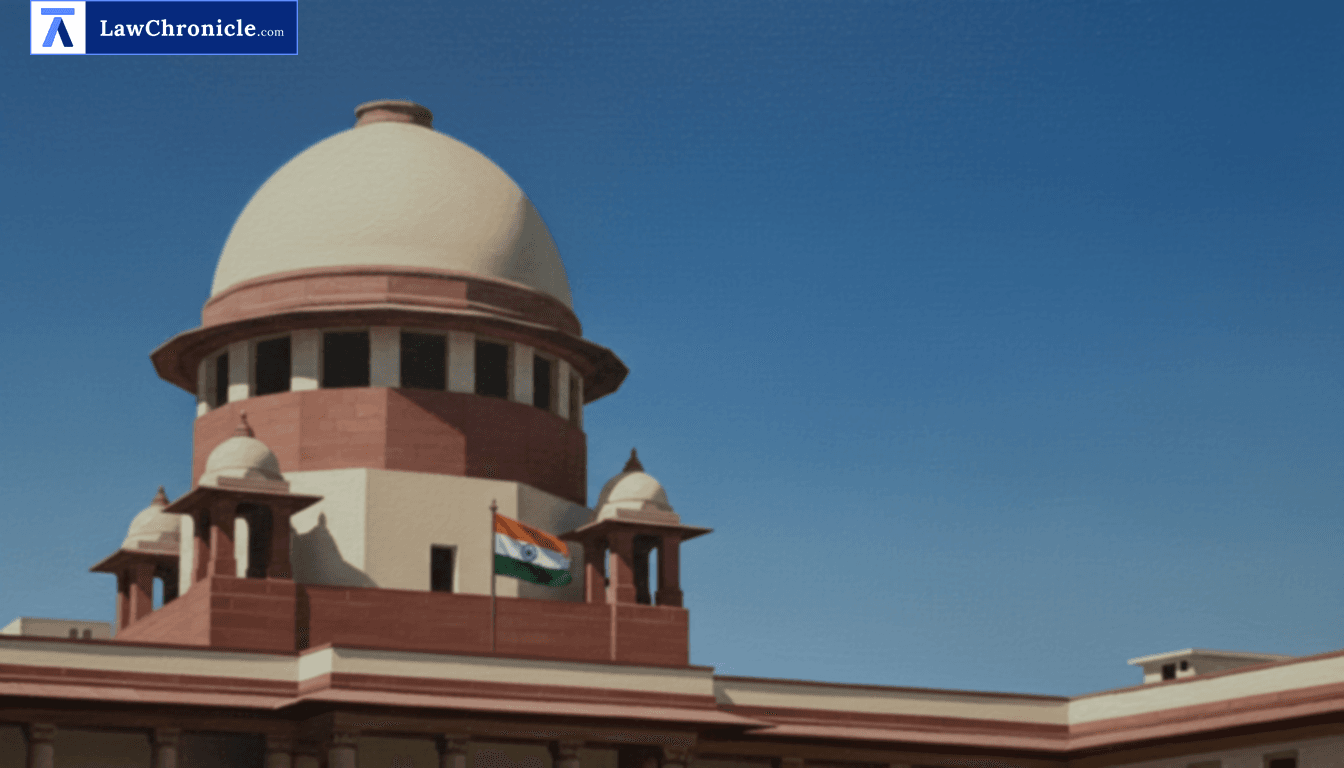
A bench of Justice Vikram Nath and Justice Augustine George Masih heard an appeal by Mahesh Kumar Agarwal challenging the Calcutta High Court’s dismissal of his writ petition and intra‑court appeal seeking renewal of an ordinary passport which had expired while criminal proceedings were pending. The appeal raised the question whether the statutory bar in Section 6(2)(f) of the Passports Act prohibited re‑issuance where criminal courts had granted “no objection” or permission for renewal under notification GSR 570(E) and the Ministry’s Office Memorandum dated 10.10.2019.
The Court allowed the appeal, set aside the Calcutta High Court’s orders and directed the Regional Passport Office, Kolkata to re‑issue an ordinary passport to the appellant for the normal period of ten years within four weeks of production of this judgment, subject to usual procedural requirements and all existing and future orders of the criminal courts. The bench emphasised that “Liberty, in our constitutional scheme, is not a gift of the State but its first obligation,” and held that the exemption under GSR 570(E) must be given effect where criminal courts, with knowledge of the pending proceedings, permitted renewal while retaining control over travel. The Court, in its reasoning, observed: “On a plain reading, GSR 570(E) does two things. First, it recognises that persons facing criminal proceedings are not to be treated as absolutely disentitled to a passport. Instead, it permits such persons to obtain a passport, notwithstanding Section 6(2)(f), where the concerned criminal court has applied its mind and passed an order in relation to issuance or use of the passport and where the applicant furnishes an undertaking to appear before the court as and when required. Secondly, it structures the exercise of that exemption by tying the validity and use of the passport to the terms of the court’s order.”
Background
The appellant held an ordinary passport valid until 28.08.2023. He was an accused in an NIA case (RC No. 06/2018/NIA/DLI) and stood charge‑sheeted in related proceedings; separately he had been convicted in a CBI coal block matter and had appealed, with sentence suspended by the Delhi High Court. Earlier orders required deposit of the passport and restricted travel without court permission. The appellant sought “no objection” for renewal: the NIA Court, Ranchi permitted release of the passport for the limited purpose of renewal subject to an indemnity bond, sureties, redeposit after renewal and a condition that he would not obtain any visa or travel abroad without court permission; the Delhi High Court granted “no objection” for renewal for a regular period of ten years while continuing the condition that he would not leave the country without its permission.
The Passport Authority (RPO, Kolkata) declined to re‑issue a ten‑year passport, relying on Section 6(2)(f) and the respondents’ reading of GSR 570(E) and the OM dated 10.10.2019 that, in the respondents’ view, a criminal court must expressly permit departure for specified travel periods before issuance for the normal term. The Calcutta High Court’s Single Judge and Division Bench agreed with that approach and denied renewal, though the Division Bench left the appellant free to seek appropriate directions from the Delhi High Court and the NIA Court.
The Supreme Court analysed Sections 5, 6, 7, 8, 9, 10 and 22 of the Passports Act, Rule 12, GSR 570(E) and the OM. It held that GSR 570(E) created a controlled exemption to Section 6(2)(f) and that where criminal courts allowed renewal while retaining supervisory control over travel, the statutory concern of securing presence was adequately addressed. The Court distinguished the roles of pre‑conviction pendency under Section 6(2)(f) and post‑conviction consequences under Section 6(2)(e), relied on precedent including Vangala Kasturi Rangacharyulu, and clarified that the passport authority retained powers under Section 10 to impound or revoke if circumstances changed. The appeal was allowed and the Calcutta High Court orders dated 04.04.2025 and 15.05.2024 were set aside. The respondents were directed to re‑issue the passport within four weeks, subject to all judicial conditions and future orders.
Case Details: Case No.: 2025 INSC 1476 Case Title: Mahesh Kumar Agarwal v. Union of India & Anr. Appearances: For the Petitioner(s): Mr. Gopal Subramanium, Senior Counsel For the Respondent(s): Mrs. Aishwarya Bhati, Additional Solicitor General
Similar Articles

 Breaking News