Criminal Pendency Not An Absolute Bar For Passport Issuance: Karnataka HC
 Copy Link
 Share
 Save
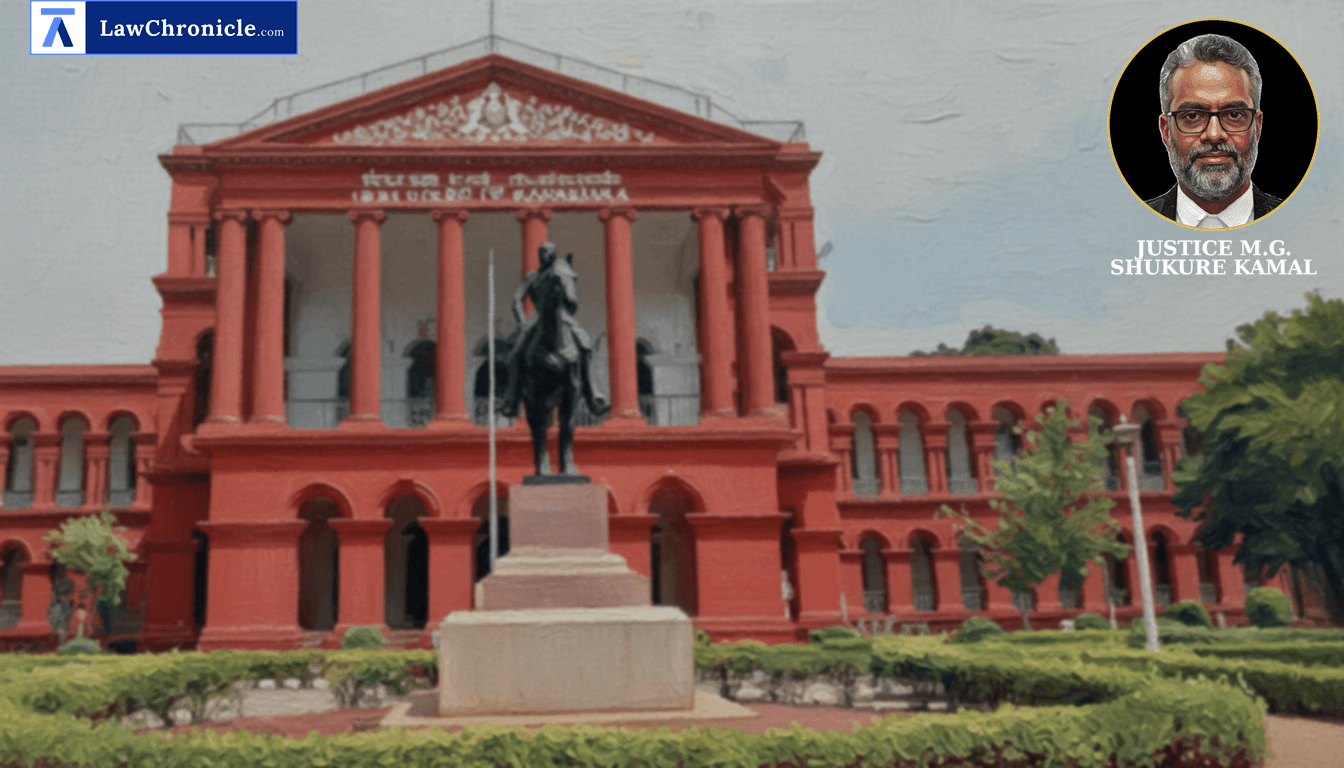
The Karnataka High Court has cleared the path for citizens facing criminal trials to obtain travel documents, ruling that the mere pendency of a criminal case cannot be used as an absolute shield by authorities to deny passport applications. Emphasizing the regulatory framework that permits conditional exemptions for students and litigants, the Court quashed police-led endorsements that summarily stall the right to apply for a passport due to ongoing legal proceedings.
In a hearing presided over by Justice M.G.S. Kamal, the Court addressed a petition filed by a student whose passport application was stalled via an online endorsement after a negative police verification report. The petitioner, arraigned as an accused in a pending Sessions case, sought the document to participate in a mandatory international study tour to Dubai as part of his business school curriculum.
Key Takeaways
Regulatory Exemptions for Litigants
Pending criminal proceedings do not result in a total forfeiture of the right to apply for a passport, provided the applicant adheres to the Central Government's exemption notifications.
Strict Adherence to GSR 570(E)
Passport authorities are bound to follow the specific conditions laid down in the 1993 Government Order, which allows for short-term passport validity even when cases are pending.
Judicial Oversight on Travel
Issuance of a passport by the authority does not equate to a right to travel; the accused must still secure specific permission from the trial court to leave the country.
Protection of Educational Interests
Academic requirements, such as international study tours, serve as a legitimate ground for the court to direct the consideration of passport applications despite criminal charges.
Court Observation on Section 6 of Passports Act
The Court scrutinized the interplay between the Passports Act, 1967 and the executive powers of the Union of India. It noted that while Section 6(2)(f) of the Passports Act, 1967 generally restricts passport issuance to those with pending criminal cases, the Central Government has exercised its power under Section 22 to grant specific exemptions. The Court, in its reasoning, observed: "Issuance of a passport particularly under the facts situations of this nature are governed under the Government Order dated 25.08.1993... which hereby exempts citizens of India against whom proceedings in respect of an offence alleged to have been committed by them are pending before a criminal court in India."
Directions Issued to Passport Authorities
The Court has the following directions:
"Respondent No.2 is directed to consider the application of the petitioner as per Annexure-D in issuing of the passport in accordance with law more particularly the Government Order dated 25.08.1993 extracted here in above keeping in mind the scheduled dates of his academic tour. It is made clear that the petitioner shall obtain necessary orders/permission from the jurisdictional Session Court for his Travel as intended. This order is restricted only to the extent of consideration of application for issuance of the passport as requested. This order shall not be treated as permission for petitioner to travel abroad, which is subject to petitioner obtaining necessary orders from the concerned Sessions Court."
Ratio
Under Section 22 of the Passports Act, 1967 and Notification GSR 570(E), the pendency of a criminal case is not a categorical bar to the issuance of a passport. If an applicant produces a court order or qualifies under the conditions of the 1993 notification, the authority must issue a passport for a limited duration, usually one year, notwithstanding the restrictions under Section 6(2)(f) of the Act.
Background
The petitioner, a 22-year-old student, was named as the fifth accused in a case involving Section 307 of the IPC. While he was out on bail, he applied for a passport to attend an international tour organized by Bright Business School. The Union of India, acting through the Regional Passport Office, issued an endorsement declining the application because the police verification report was not clear due to the pending trial in Belagavi.
The petitioner argued that his bail conditions did not restrict his travel and that the Ministry of External Affairs' own memorandum dated 10.10.2019 provided for such contingencies. The Court agreed, quashing the endorsement and clarifying that while the passport could be issued for the purpose of identification and documentation, the actual act of travelling abroad remains contingent upon specific permission from the IX Additional District and Sessions Judge, Belagavi, where the criminal trial is pending. The Writ Petition was filed under Article 226 of the Constitution of India and Article 227 of the Constitution of India.
Case Details:
Case No.: WP No. 107828 of 2026
Neutral Citation: 2026:KHC-D:15367
Case Title: Mr. Shivakumar S/O Basavaraj Nadavinahalli v. The Union of India & Ors.
Appearances:
For the Petitioner(s): Sri. R.H. Angadi, Advocate
For the Respondent(s): Sri. Venkatesh M. Kharvi, Advocate for R1 and R2; Sri. Prashanth V. Mogali, HCGP for R3
Source: 2026 CaseBase(KAR) 20401
Similar Articles


 Breaking News