


Court Upholds Committal to Special Court, Holds Drug-record Lapses Attract Chapter IV Offences and Are Within Three-year Limitation
 Copy Link
 Share
 Save
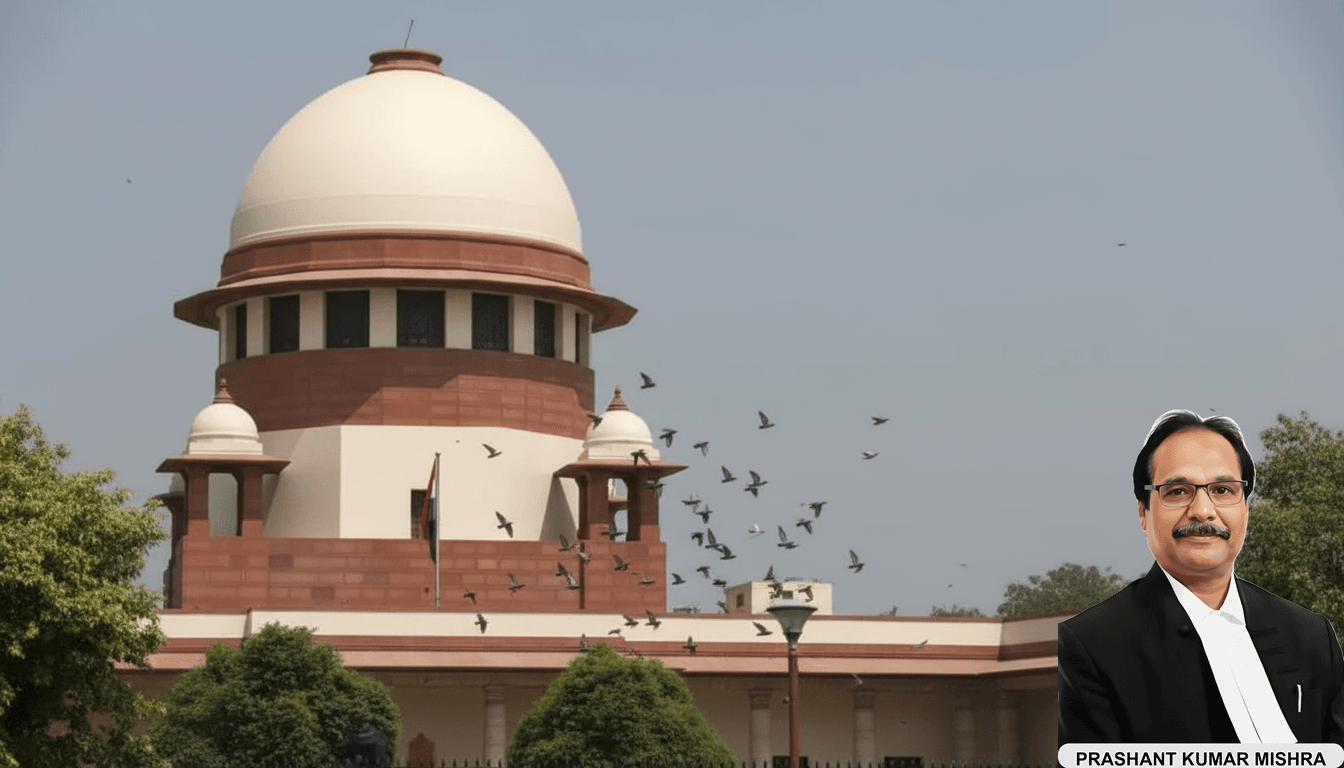
A bench of Justices Prashant Kumar Mishra and Vipul M. Pancholi heard the appeal by M/s SBS Biotech and others against the High Court of Himachal Pradesh’s judgment dismissing a petition under Section 482 Cr.P.C. The appellants challenged cognizance and committal orders arising from alleged non-maintenance and tampering of manufacturing records for pseudoephedrine and related drugs, and contended inter alia that the complaint was time-barred and that the matter was triable summarily by a Magistrate.
The Court affirmed the High Court and dismissed the appeal, holding that the allegations disclosed offences under Chapter IV of the Drugs and Cosmetics Act triable by a Court of Sessions or a Special Court and that the complaint was filed within the three-year limitation period under Section 468 Cr.P.C. The Court observed that the complaint alleged "that the firm had not maintained the requisite records as stipulated under Schedule M & U of the Rules" and that the seized records showed discrepancies and tampering which attracted offences under Section 18(a)(vi) read with Rule 74 and Section 18-B, punishable under Section 27(d) and Section 28-A. The Court, in its reasoning, observed: “Thus, Section 36-A specifically excludes the offences triable by the Special Court under Section 36-AB or Court of Sessions under this Act from the purview of Section 36-A of the Act. Now, Section 32(2) specifically provides that no Court inferior to that of a Court of Session shall try an offence punishable under this Chapter (Chapter IV). Thus, it can be said that for the offences punishable under Chapter IV, the Court inferior to the Court of Session shall not try such offences. We are, therefore, of the view that when Section 32(2) specifically provides for offence to be tried by the Courts not inferior to the Court of Sessions, Section 36-A would not be applicable to the facts of the present case. Hence, learned JMFC has rightly committed the case to the Court of Sessions and thereby has not committed illegality as alleged by learned counsel for the appellants.” The Court also noted that "no person can manufacture for sale or for distribution, or sell or stock or exhibit or offer for sale or distribute any drug or cosmetic in contravention of any provisions of Chapter IV or any Rule made thereunder," and recorded that the complaint "has been filed within a period of 03 years (two years and six months)."
Background
The dispute arose from an inspection of the appellants’ pharmaceutical manufacturing premises on 22 July 2014. The Drug Inspector allegedly found incomplete and tampered records relating to Pseudoephedrine Hydrochloride (batch No. 503413) and directed preservation of stock and production of records. A re-inspection on 5 August 2014 led to seizure of the drug and documents in Form-16, and the Inspector issued a subsequent notice to produce complete records under Sections 22(1)(cca), 18-B and related provisions. The firm contended that the directions in the spot inspection report, delay in informing the State Drug Controller, and non-production of seized original records raised procedural infirmities; it also argued that the alleged lapses amounted only to offences under Section 18-B punishable under Section 28-A (maximum one year), and therefore were time-barred as the complaint was instituted after roughly two-and-a-half years.
The State relied on findings of substantial discrepancies, tampering, missing entries in Schedule M and Schedule U registers, and the Screening Committee’s recommendation; sanction to prosecute issued on 15 September 2016 led to filing of Complaint No. 36/3 of 2017 (renumbered Complaint No. 9 of 19.12.2017). The Judicial Magistrate took cognizance on 6 April 2017 and subsequently committed the matter to the Special Judge as the offence under Section 27(d) carried imprisonment of not less than one year and up to two years. The appellants’ quashing petition before the High Court was dismissed on 29 July 2024 on the grounds that (i) the allegations disclosed an offence under Section 18(a)(vi) attracting Section 27(d), (ii) the complaint lay within the three-year limitation under Section 468 Cr.P.C, and (iii) Section 36-A did not apply where Section 32(2) and Section 36-AB designated trial by Session or Special Courts. The Supreme Court agreed with these conclusions, refused to interfere, and dismissed the appeal.
Case No.: 2026 INSC 171 (Special Leave Petition (Criminal) No. 9281 of 2025)
Case Title: M/s SBS Biotech & Others versus State of Himachal Pradesh
Appearances:
For the Petitioner(s): Counsel for the appellants (names and designations not specified in the judgment)
For the Respondent(s): Deputy Advocate General, State of Himachal Pradesh (designation recorded; name not specified in the judgment)
Source: 2026 CaseBase(SC) 138
Similar Articles



 Breaking News


