


Courts Hold Welfare Boards' Constitution Is Sine Qua Non For BOCW Cess; NHAI Appeals Dismissed, Prakash Atlanta Allowed
 Copy Link
 Share
 Save
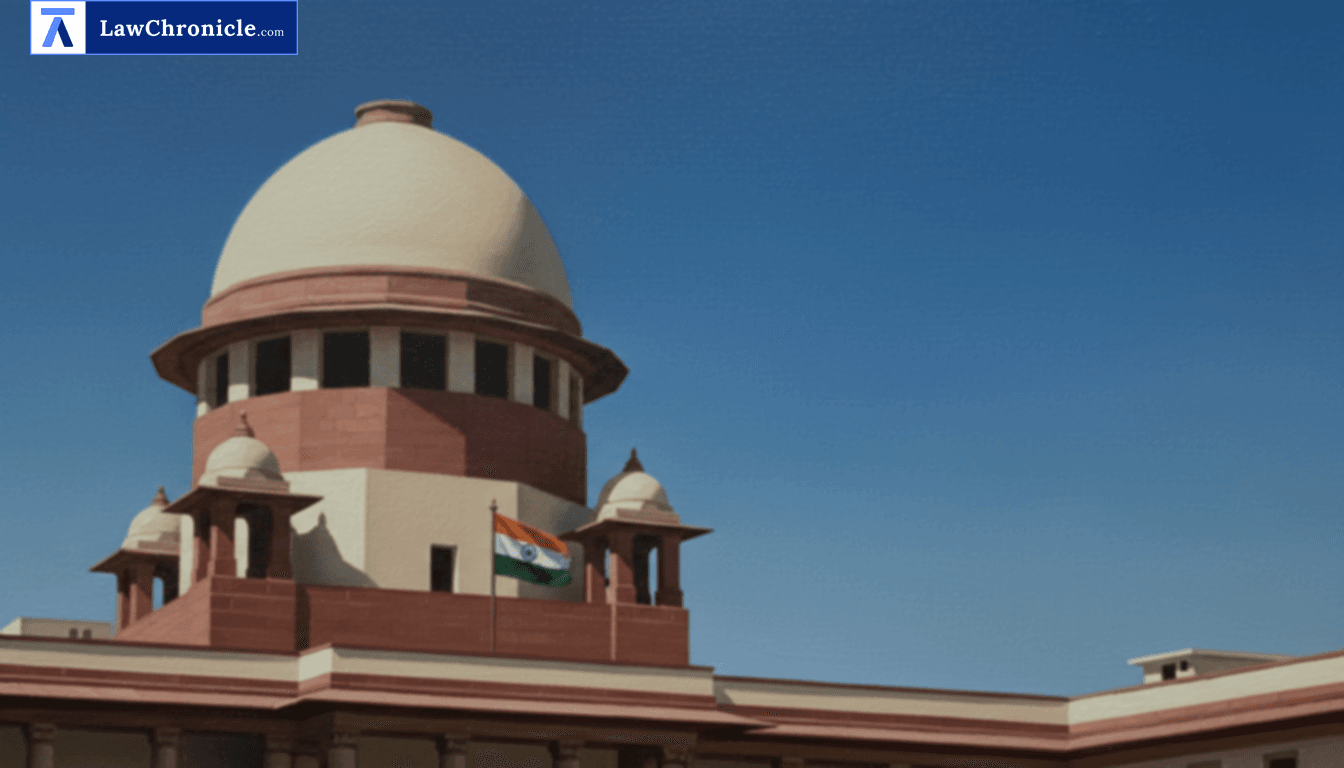
A Bench of Justices Sanjay Kumar and Alok Aradhe heard a batch of civil appeals arising out of arbitral awards and challenges under the Arbitration and Conciliation Act, 1996. The appeals concerned whether the Building and Other Construction Workers (Regulation of Employment and Conditions of Service) Act, 1996 (BOCW Act) and the Building and Other Construction Workers’ Welfare Cess Act, 1996 (Cess Act) could be treated as “subsequent legislation” for contracts entered into by the National Highways Authority of India (NHAI) with various contractors, and whether NHAI could recover cess from contractor payments where welfare boards or the necessary machinery had not been in place when bids were submitted.
The Court held that constitution of Welfare Boards under the BOCW Act and the setting up of the requisite machinery for levy, collection and deposit of cess were essential pre-conditions for giving effect to the Cess Act; in the absence of such machinery the levy and collection could not logically arise. The Court affirmed that arbitral tribunals’ constructions of the contract terms invoking the “subsequent legislation” clause were plausible and not perverse, and therefore not liable to be set aside. The Court observed that the enactments, though notified in the 1990s, had in practice “remained dormant” because they “were not given actual effect owing to the complete absence of the required machinery” for levy and collection. The Court, in its reasoning, observed: "The contractors could not have factored such cess component into their bid prices prior to a mechanism being put in place for its collection; constitution of Welfare Boards was the sine qua non for giving effect to the BOCW Act and the Cess Act, and in the absence of the requisite machinery the levy and collection of cess could not logically arise." The Court therefore found no contravention of the fundamental policy of Indian law or patent illegality in the awards.
Background The disputes arose from several NHAI contracts spanning 2000–2009 and subsequent deductions or demands by NHAI of 1% cess under the Cess Act. Contractors whose bids and contracts pre-dated effective state-level notifications and constitution of Welfare Boards resisted deductions and sought reimbursement through arbitration. Arbitral tribunals in favour of contractors applied the contract’s “subsequent legislation” clause (Clause 70.8) or held that levy could not be recovered in the absence of statutory machinery; those awards were affirmed by Delhi High Court benches. NHAI contested five awards in appeals (C.A. Nos. 5301, 5302, 5304, 5412 and 5416 of 2025) and Prakash Atlanta (JV) appealed in C.A. No. 4513 of 2025 where NHAI had adjusted amounts during execution after long delay.
The Court reviewed the statutory scheme: the BOCW Act and the Cess Act were enacted in 1996 but required rules, assessing officers, cess collectors and constitution of state Welfare Boards under Section 18 to operate. The Court traced earlier jurisprudence, including Dewan Chand Builders, A. Prabhakara Reddy and subsequent authority on arbitral review, and reiterated that courts under Sections 34 and 37 do not sit as appellate tribunals over plausible contract constructions by arbitrators. Applying these principles, the Court concluded that where bids were submitted long before state notifications or constitution of Boards, contractors could not fairly be expected to have priced in cess; the arbitral tribunals’ interpretation was a plausible construction and did not offend public policy. The Court dismissed NHAI’s five appeals and allowed Prakash Atlanta’s appeal, directing NHAI to release sums adjusted against Prakash Atlanta’s award with interest. The Court also permitted certain additional facts and documents (IA Nos. 77056 of 2013 and 2 of 2013).
Case Details: Case No.: C.A. No. 4513 of 2025 (lead) Case Title: Prakash Atlanta (JV) v. National Highways Authority of India & Others Appearances: For the Petitioner(s): Not indicated in the reported judgment For the Respondent(s): Not indicated in the reported judgment
Similar Articles
 Breaking News


