DCLR Cannot Usurp Civil Court Powers To Adjudicate Title Disputes: Patna HC
 Copy Link
 Share
 Save
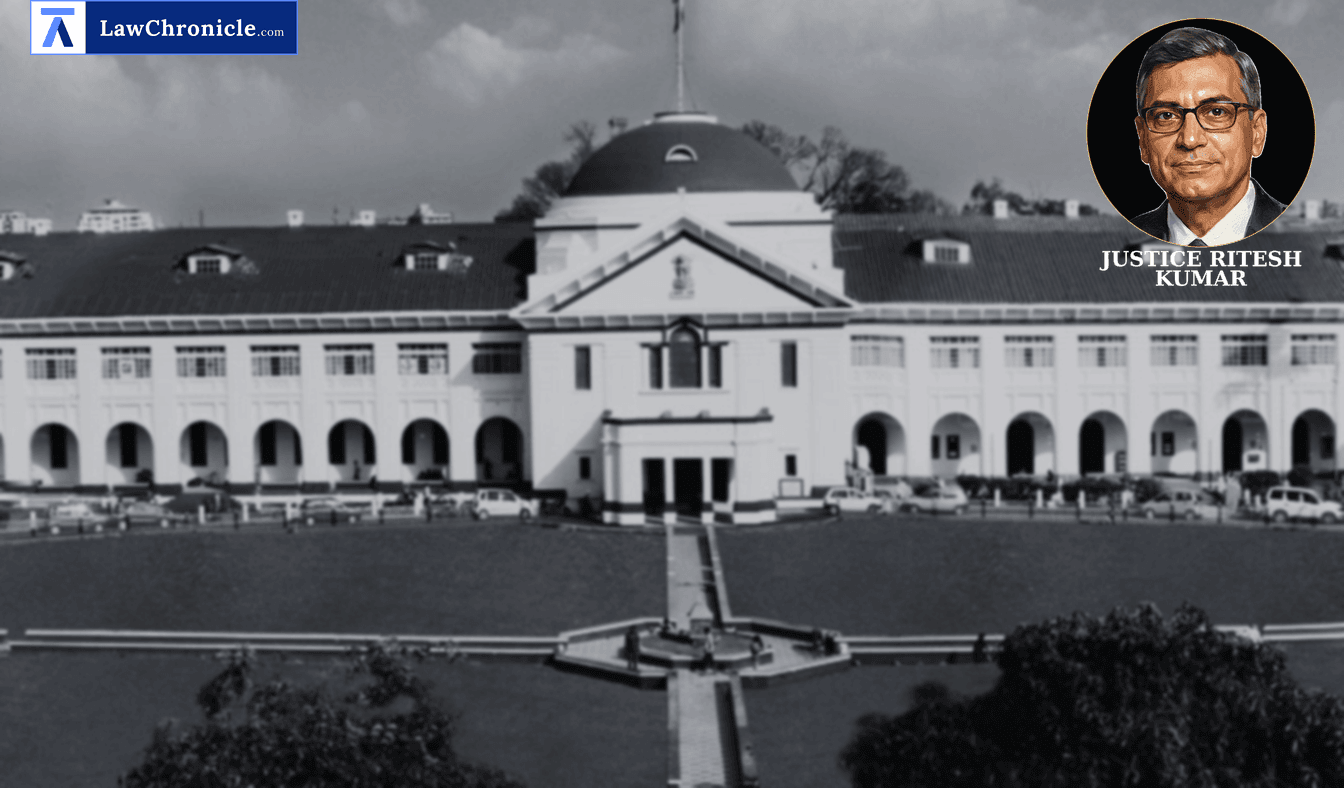
In a decisive check on executive overreach, the Patna High Court has ruled that the Deputy Collector Land Reforms (DCLR) lacks the jurisdiction to adjudicate competing claims of inheritance and title under the Bihar Land Disputes Resolution Act, 2009, holding that revenue authorities cannot transform summary proceedings into a substitute for Civil Court trials.
A bench of Justice Ritesh Kumar quashed an order of the DCLR, Danapur, which had declared raiyati rights and directed the dispossession of a party based on a disputed Jamabandi, affirming that such powers are strictly limited to implementing rights already crystallized by competent judicial forums.
Key Takeaways
Executive Jurisdiction Curtailed
The Court clarified that revenue authorities cannot decide complex questions of title, succession, or the validity of genealogies under the guise of land dispute resolution.
Civil Court Supremacy
Where the source of a right is disputed, the DCLR is mandatorily required to close proceedings and relegate parties to a Civil Court, rather than assuming the role of a trial judge.
Protection of Property Rights
The ruling reinforces constitutional safeguards under Article 300A, preventing the summary dispossession of individuals through administrative orders without proper judicial determination of ownership.
Limits of Power under Section 4 of the 2009 Act
The Court analyzed the scope of Section 4 of the Bihar Land Disputes Resolution Act, 2009, particularly Section 4(1)(g). It observed that this provision does not confer unrestricted jurisdiction upon the DCLR to determine ownership between rival claimants. Relying on the precedent in Maheshwar Mandal and Ors. vs The State of Bihar & Ors., the Court noted that the authority's role is limited to enforcing rights already determined by an appropriate court or forum.
The Court, in its reasoning, observed: "The jurisdiction of the D.C.L.R. under the 2009 Act is not that of a Civil Court, empowered to adjudicate upon competing claims of ownership, inheritance, succession and partition. The authority may exercise its statutory powers for the implementation of rights, which have already crystallized through an adjudication by a competent Court or forum. However, where the very source of the claimed right is disputed and its determination requires adjudication of complicated questions of Title, the D.C.L.R. cannot assume the jurisdiction of a Civil Court."
Addressing the mandatory nature of Section 4(5) of the Act, the Court has the following directions:
"The D.C.L.R. shall bear in mind the mandatory nature of Section 4 (5) of the 2009 Act and having regard to the disputed questions of genealogy, inheritance and title involved in the present matter, shall close the proceeding, leaving it open to the parties to seek appropriate remedies before the competent Civil Court. The D.C.L.R. shall not undertake any fresh adjudication of the title or ownership of the parties in respect of the land in question."
Ratio
The jurisdiction of the Deputy Collector Land Reforms (DCLR) under the Bihar Land Disputes Resolution Act, 2009 is limited to the enforcement and implementation of rights already adjudicated by a competent Civil Court or statutory forum. Revenue authorities cannot conclusively determine substantial questions of title, inheritance, or disputed genealogy in summary proceedings; such disputes must be closed and referred to the Civil Court under Section 4(5) of the Act.
Background
The dispute arose regarding 85.5 decimals of land in Mauza Bihta/Parev. The petitioner claimed the land was ancestral property inherited through a single branch of the family, supported by Jamabandi No. 35/1. Conversely, the private respondents (Respondents 8 to 11) claimed they were descendants of a second branch of the same common ancestor, relying on Jamabandi No. 385/1 created in their mother's name.
On March 17, 2025, the DCLR Danapur passed an order declaring the private respondents' rights based on their Jamabandi, directed a measurement of the land, and ordered the petitioner's dispossession. The petitioner challenged this, citing the Division Bench ruling in Ramowtar Lakhotia vs The State of Bihar and Ors., which struck down certain powers of dispossession as ultra vires the Constitution of India, 1950. The petitioner also relied on Shambhu Singh and Ors. vs The State of Bihar and Ors. and Akhilesh Singh vs The State of Bihar & Ors. to argue that the DCLR had travelled beyond his statutory mandate.
While the State argued that an alternative remedy of appeal existed under Section 14 of the Act, the High Court held that since the DCLR's order was fundamentally without jurisdiction, a writ petition was maintainable. The Court quashed the DCLR's order and remitted the matter only for the limited purpose of land demarcation, barring any further adjudication of title.
Case Details:
Case No.: Civil Writ Jurisdiction Case No. 8318 of 2025
Case Title: Pintu Kumar @ Pintu Yadav v. The State of Bihar & Ors.
Appearances:
For the Petitioner(s): Mr. Kamlesh Kumar, Adv; Ms. Kahkashan Alam, Adv; Ms. Shaziya Parween, Adv
For the Respondent(s): Mr. Uma Shankar Pd. Singh, GP-37; Mr. Anish Kumar, AC to GP-37; Mr. Jitendra Kishore Verma, Adv; Mr. Shreyash Goyal, Adv
Source: 2026 CaseBase(PAT) 4438
Similar Articles


 Breaking News