


Delhi HC: Conviction Stay Not Automatic Relief for Disqualified Legislators
 Copy Link
 Share
 Save
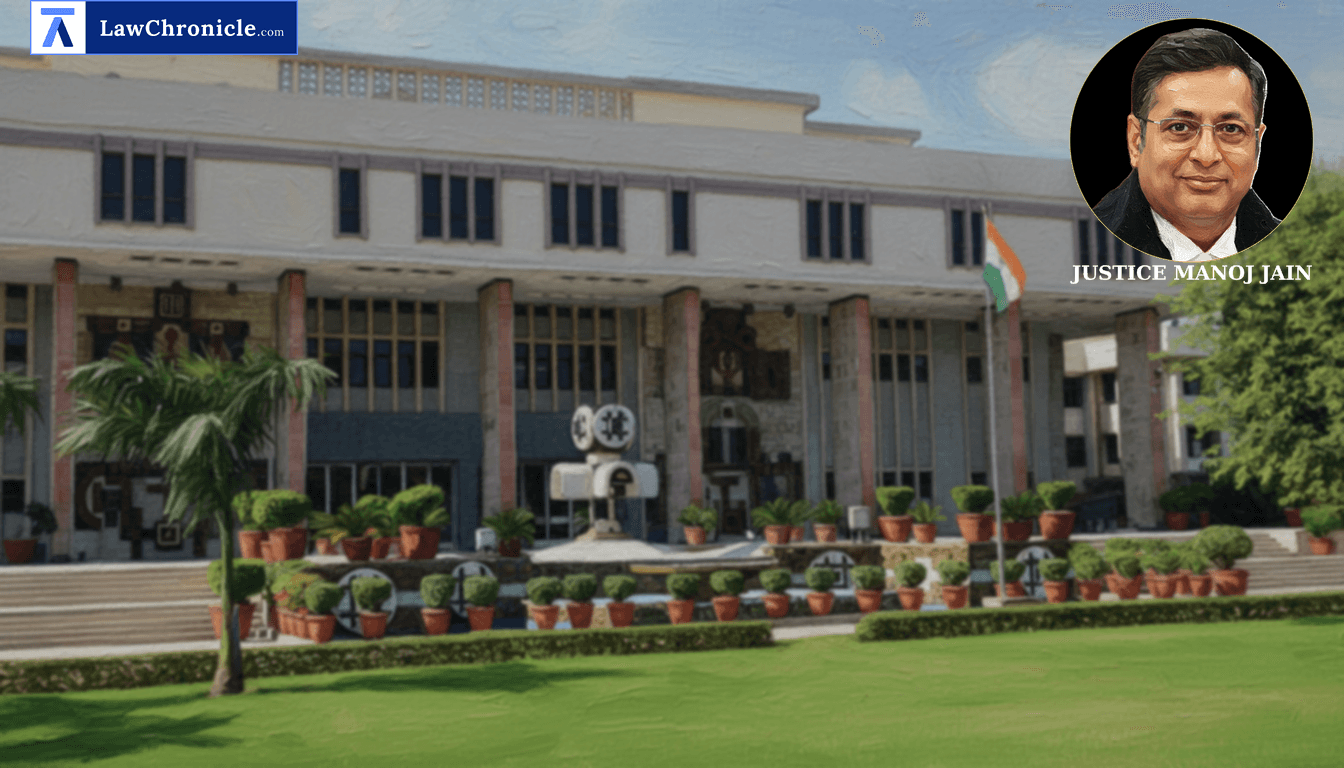
The Delhi High Court has slammed the door on immediate relief for a convicted legislator, ruling that the disqualification from membership of a Legislative Assembly and the subsequent notification of bye-elections do not constitute 'exceptional circumstances' necessary to stay a criminal conviction. This decision reinforces the judiciary's role as a gatekeeper of electoral purity, emphasizing that the statutory mandate to keep individuals with tainted credibility out of public life cannot be bypassed through routine judicial interference.
A single-judge bench of Justice Manoj Jain presided over the appeal challenging the conviction and seeking a stay on the same. The appellant, an elected Member of the Legislative Assembly from the Datia Constituency in Madhya Pradesh, faced disqualification following his conviction in a multi-year bank fraud case involving the manipulation of fixed deposits to benefit a family trust.
Factual Matrix and the Plea for Suspension of Conviction
The appellant stood disqualified under Constitution of India, 1950 read with Representation of People Act, 1951 following his conviction under Section 120B of the Indian Penal Code, 1860 read with Sections 420, 467, 468, and 471. He argued that the upcoming bye-elections for his constituency created a situation of 'irreversible damage' and 'hardship' that necessitated a stay on his conviction to allow him to contest the polls. His counsel, citing Afjal Ansari vs. State of U.P. and Abbas Ansari vs. State of U.P., contended that the appellate courts possess ample power to suspend conviction to prevent irreparable injury when an appeal raises critical questions of law and fact.
Court Rejects 'Universal Hardship' as Ground for Stay
Justice Manoj Jain clarified that while the power to stay a conviction exists under Section 389 of the Code of Criminal Procedure, 1973, it must be exercised only in very exceptional circumstances. The Court noted that the hardship faced by a disqualified MLA due to an upcoming election is not 'classic to an individual' but is a 'universal and omnibus one' affecting any elected representative in a similar position. The bench observed that the scope of Section 389 has been widened by the Supreme Court in Rama Narang vs. Ramesh Narang and Others ( "(1995) 2 SCC 513": 1995 CaseBase(SC) 13), yet it requires utmost circumspection.
Referring to the legal standards set in K.C. Sareen vs. CBI and Ravikant S. Patil vs. Sarvabhouma S. Bagali ( "2006 SCC OnLine SC 1214": 2006 CaseBase(SC) 285), the Court emphasized that a stay on conviction virtually overturns a statutory mandate designed to ensure purity in political affairs. The Court, in its reasoning, observed: "Hardship has to be individual-centric i.e. specific to an individual. A general and omnibus fallout cannot be taken as a case of individual hardship... any elected representative, in such a situation, would come up with a similar prayer and, therefore, aspect related to irreversible consequence would, generally speaking, be inherent. Viewed thus, the hardship is not classic to an individual, but a universal and omnibus one, touching the entire class."
Findings on Moral Turpitude and Abuse of Position
Scrutinizing the trial court record, the High Court found no manifest error or perversity in the findings of guilt. The prosecution's case revealed that a three-year Fixed Deposit was systematically altered to fifteen years to allow a trust, headed by the appellant's mother, to draw high interest for over a decade. The Court highlighted that the appellant held dual responsibilities as a Chairman of the Bank and an elected representative, and his actions suggested an abuse of position for family benefit.
Justice Manoj Jain further noted that offences involving forgery and cheating possess a clear semblance to moral turpitude. Relying on Antony Raju vs. State of Kerala & Anr. ( "2026 SCC OnLine Ker 3573": 2024 CaseBase(SC) 908), the Court remarked that the lack of serious infirmity in the trial court's judgment precluded the grant of a stay. The Court held: "Staying the conviction, in the present factual scenario, would rather frustrate the very purpose, spirit and objective behind incorporation of Section 8 of Representation of Peoples Act, 1951."
Directions Issued by the Court
Regarding the application for suspension of conviction, the Court has following directions:
"Viewed thus, the present application seeking suspension of conviction is, hereby, dismissed. Needless to emphasize, observations appearing hereinabove are tentative in nature and shall not prejudice the mind of this Court while hearing final arguments in the main appeal."
Key Takeaways:
Bye-Election Jeopardy Not 'Exceptional'
Disqualification and the resulting bye-election do not automatically qualify as 'exceptional circumstances' for staying a conviction, as these are statutory consequences applicable to all convicted legislators.
Preservation of Electoral Purity
Courts must prioritize the legislative intent of Representation of People Act, 1951 to keep individuals with stained credibility out of public office over the individual political career of the convict.
Standard of Palpable Error
To secure a stay on conviction, an appellant must demonstrate a 'manifest illegality' or 'palpable perversity' gross on the face of the record, rather than merely arguing for a re-appreciation of evidence.
Standalone Nature of Conspiracy
Criminal conspiracy is an independent offence; a conviction for conspiracy to commit forgery or cheating can stand even if the accused is not the 'maker' of the forged document.
Ratio Decidendi:
The power to suspend an order of conviction under Section 389(1) of the Code of Criminal Procedure, 1973 is extraordinary and should be exercised only in 'very exceptional cases' where failure to stay the conviction leads to injustice and irreversible consequences. The hardship arising from the statutory disqualification of an elected representative under Section 8 of the Representation of People Act, 1951 is a universal consequence and does not, by itself, constitute an exceptional circumstance. A stay will only be granted if the judgment of conviction suffers from a manifest infirmity or palpable perversity that renders the finding of guilt prima facie unsustainable.
Case Details:
Case No.: CRL.A. 328/2026 & CRL.M.A. 14343/2026
Case Title: Rajendra Bharti V. The State Nct Of Delhi & Anr.
Appearances:
For the Appellant: Mr. P. Chidambaram, Senior Advocate with Mr. Abhik Chimni, Ms. Pranjal, Mr. Ayan Dasgupta, Ms. Moksha Sharma, Advocates
For the Respondent(s): Mr. Raj Kumar, APP for the State/R-1; Mr. Mohit Mathur, Senior Advocate with Mr. Manish Kumar, Mr. Amitabh Narendra, Mr. Ashish Ranjan, Ms. Aparajita Jha, Mr. Vignesh, Advocates for R-2; Mr. Dama Seshadri Naidu, Senior Advocate with Mrs. Rohini Prasad, Mr. Prateek Kumar, Mr. Deepak Sharma, Mr. Devansh Rai, Mr. Kumar Utsav, Mr. Ashish Shukla, Advocates
Source: 2026 CaseBase(DEL) 493
Similar Articles

 Breaking News


