


Delhi HC Grants Injunction Against Deceptively Similar Pharmaceutical Mark
 Copy Link
 Share
 Save
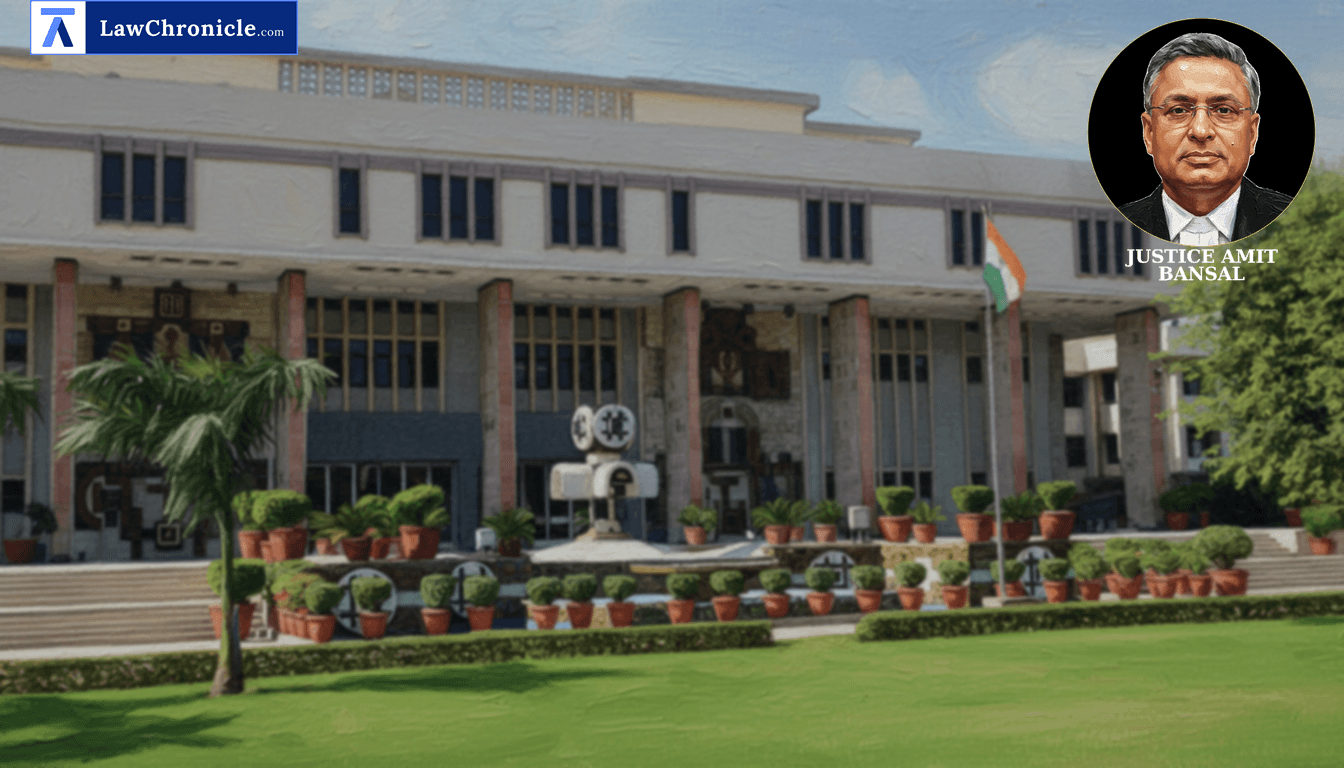
A single-judge bench of Justice Amit Bansal heard a commercial suit instituted by Sanofi against Intas Pharmaceuticals and another, challenging the defendants' use of the mark CLAVIX as infringing the plaintiff's registered device and word marks for PLAVIX and seeking permanent injunctions, damages and rendition of accounts under Section 29 of the Trade Marks Act, 1999 and related reliefs.
Decision Summary
The Court held that the plaintiff was the registered proprietor of the mark PLAVIX and that the defendant's use of the mark CLAVIX amounted to infringement under Section 29 of the Trade Marks Act, 1999, concluding that the adoption of CLAVIX by the defendant was dishonest and that the defence under Section 34 of the Trade Marks Act, 1999 did not avail the defendant. The Court awarded a permanent injunction restraining the defendants from using CLAVIX, nominal damages of Rs. 20,00,000 and actual costs to be proved under the procedural framework of the Code of Civil Procedure, 1908 and the Delhi High Court (Original Side) Rules, 2018. The Court, in its reasoning, observed: "The legal position that emerges from the aforesaid judgement can be summarized as under: (a) Infringement is a statutory remedy available to a registered proprietor of a trade mark whereas passing off is a common law remedy. (b) In an action for infringement, where the similarity between the competing marks is evident and the Court reaches the conclusion that there is imitation, no further evidence is required to establish that the plaintiff's rights are violated. (c) When the competing marks are not identical, the plaintiff is required to establish that the impugned mark is deceptively similar to the plaintiff's registered trade mark and the same is likely to deceive or cause confusion."
The judgment also reiterated the public-interest sensitivity of pharmaceutical marks, noting that "Drugs are poisons, not sweets. Confusion between medicinal products may, therefore, be life threatening, not merely inconvenient." In reaching its conclusion the Court analysed visual, structural and phonetic similarity between the marks as a whole and applied the man-of-average-intelligence-and-imperfect-recollection test, accepting the plaintiff's submission that a single-letter difference was insufficient to avoid confusion in the context of identical medicines sold side-by-side.
Background
The plaintiff, a multinational pharmaceutical company, pleaded worldwide use and reputation of PLAVIX since its coinage in 1995 and global launch in 1998, registration of device and word marks and subsequent launch in India in 2003; the defendants admitted launch of CLAVIX in 2001 and claimed bona fide adoption derived from the salt name and therapeutic indication. The Court considered earlier authorities including Kaviraj Pandit Durga Dutt Sharma v. Navaratna Pharmaceutical Laboratories ( "1964 SCC OnLine SC 14": 1964 CaseBase(SC) 45) to distinguish infringement and passing off principles, relied on Cadila Health Care v. Cadila Pharmaceuticals to emphasise a stricter approach for medicinal products, and referred to Corn Products Refining v. Shangrila Food Products in relation to mark-to-mark comparison. The bench noted that this Court and other benches had followed the Kaviraj Pandit principle as reflected in decisions such as Ramdev Food Products v. Arvindbhai Rambhai Patel, Renaissance Hotel Holdings v. B. Vijaya Sai ( "(2022) 5 SCC 1": 2022 CaseBase(SC) 775) and Zydus Wellness Products v. Cipla Health. The Court examined evidence on prior use, advertising and alleged trans-border spillover and found that while the plaintiff had substantial global sales, it had not established sufficient goodwill in India by July 2001 to sustain a passing off claim; accordingly the passing off cause failed on proof of Indian goodwill. On infringement, however, the Court found that registrations (dated with retroactive effect in the record) and the essential adoption of the plaintiff's coined word in the defendant's mark established infringement: the defendant's user claim was insufficient under Section 34 of the Trade Marks Act, 1999 and was negated by findings of dishonest adoption and lack of due diligence, a point the Court linked to the reasoning in Himalaya Wellness Company v. Wipro Enterprises and Wipro Enterprises v. Himalaya Wellness regarding expected searches before adoption. The Court further discussed the legal effect of registered device marks containing essential word elements, drawing on United Biotech Private Limited v. Orchid Chemicals & Pharmaceuticals to hold that the word element of the registered device mark attracted protection in terms of Section 17 of the Trade Marks Act, 1999.
In framing relief the Court followed established principles on damages and costs, recalling the evidentiary burden on a plaintiff to prove quantum as explained in Kabushiki Kaisha Toshiba v. Tosiba Appliances and awarded nominal damages in view of clear infringement but lack of specific proof of loss, while directing the plaintiff to file its bill for actual costs before the Taxation Officer in accordance with the Delhi High Court (Original Side) Rules, 2018 and the principles in Uflex Limited v. Government of Tamil Nadu. The Court cited and applied precedent on prior user and Section 34 from Bodhisattva Charitable Trust v. Mayo Foundation for Medical Education and Research ( "Judgment dated 28th July 2025 in FAO(OS) (COMM) 73/2024": 2025 CaseBase(DEL) 1630) and related authorities, and dealt with delay and laches in light of authorities such as Midas Hygiene Industries v. Sudhir Bhatia, Hindustan Pencils v. India Stationary Products, Dr. Reddys Laboratories v. Reddy Pharmaceuticals and Alkem Laboratories v. Alchem International, observing that dishonest adoption disentitled the defendant to equitable defences. The Court also invoked Wow Momo Foods v. Wow Burger in explaining mark-to-mark comparison in infringement proceedings and relied on S. Syed Mohideen v. P Sulochana Bai to articulate the essential elements of passing off; the principles from Toyota Jidosha Kabushiki Kaisha v. Prius Auto Industries Ltd. & Ors were considered on the question of trans-border spillover of reputation.
The final decree directed permanent injunction against CLAVIX and similar marks, payment of Rs. 20,00,000 as nominal damages within eight weeks, and recovery of actual costs after taxation.
Case Details:
Case No.: CS(COMM) 120/2016
Case Title: SANOFI v. INTAS PHARMACEUTICALS LTD. & ANR.
Appearances:
For the Petitioner(s): Mr. Pravin Anand; Ms. Vaishali Mittal; Mr. Siddhant Chamola, Advocates
For the Respondent(s): Mr. Rajiv Nayar; Mr. C.M. Lall, Senior Advocates with Ms. Vrinda Pathak; Mr. P.S. Manjunathan; Ms. Rinkoo Kakkar; Ms. Annanya; Mr. Rajnish Kumar; Ms. Sandhya Kukreti, Advocates
Source: 2026 CaseBase(DEL) 268
Similar Articles

 Breaking News


