


Phonetic Similarity In Life-Saving Drugs Warrants Strict Rectification Standard: Bombay HC
 Copy Link
 Share
 Save
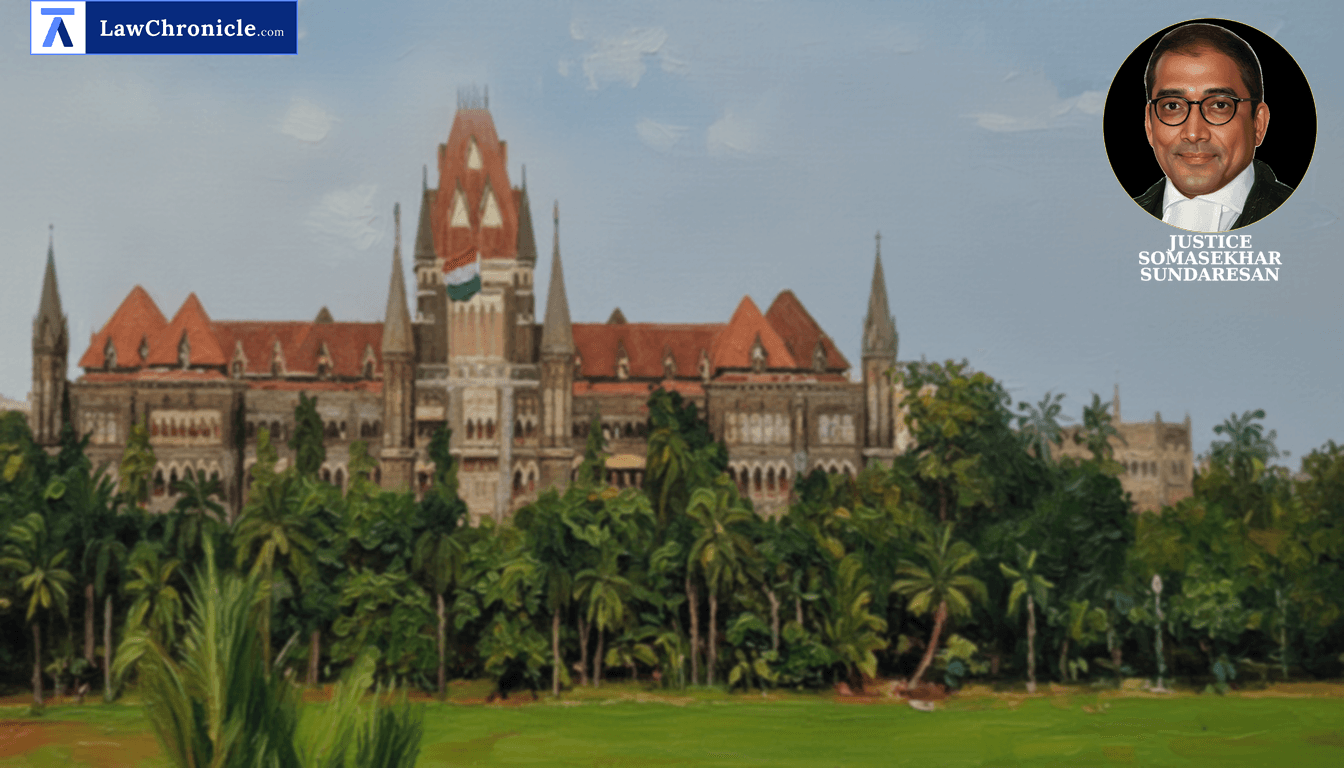
The Bombay High Court has mandated the removal of a deceptively similar pharmaceutical trademark from the Register, ruling that the potential for medicinal confusion, even in products meant for export, poses a critical risk to public health. By enforcing a conservative standard for pharmaceutical nomenclature, the Bench underscored that the purity of the Register must override commercial interests where 'heart medicine' and 'antibiotics' risk being interchanged due to phonetic resemblance. Justice Somasekhar Sundaresan adjudicated on a rectification petition involving long-standing global brands and modern pharmaceutical entrants. The Bench was called upon to determine if the mark 'LEFOXIN BIOX' infringed upon the sanctity of the decades-old 'LANOXIN' mark, despite differences in their therapeutic applications and target markets.
Key Takeaways
Heightened Scrutiny for Medicines
Courts must apply a stricter, more conservative approach to trademarks in the pharmaceutical sector because confusion between drugs can have life-threatening consequences.
Export as 'Deemed Use'
Manufacturing or applying a trademark in India solely for the purpose of export constitutes 'use' under Indian law, making such marks liable for rectification if they cause confusion.
Dominant Element Rule
Adding descriptive suffixes like 'BIOX' (referring to oxidation) does not cure deceptive similarity if the dominant phonetic and visual part of the mark remains substantially similar to an earlier registered mark.
Rectification Timing
In rectification proceedings, the core assessment is whether a likelihood of confusion existed at the time of registration, regardless of whether actual confusion has been demonstrated in the years following.
Impact of Phonetical and Visual Similarity on Public Health
The Bombay High Court observed that 'LEFOXIN BIOX' was phonetically and visually close to the Petitioner's mark, 'LANOXIN', which has been registered since 1956. While the Respondent argued that the drugs served different ailments, one for cardiac failure and the other for bacterial infections, the Court found this divergence actually increased the risk. A heart patient accidentally consuming an antibiotic, or vice-versa, represents the 'disastrous consequences' that Section 11 of the Trade Marks Act, 1999 seeks to prevent. Referring to established precedents like Cadila Healthcare Ltd. v. Cadila Pharmaceuticals Ltd. and Macleods Pharmaceuticals Ltd. v. Union of India, the Bombay High Court rejected the 'anti-dissection' argument that 'OXIN' was common to the trade, noting that such a conclusion would ignore the first impression of the marks as composite wholes.
The Bombay High Court discussed the reasons that "In the field of pharmaceuticals, the likelihood of confusion has to be more conservatively construed since confusion between two medicinal products can have disastrous consequences... The Court may not speculate as to whether there is a probability of confusion between the marks. Mere existence of the slightest probability of confusion in case of medicinal product marks, requires that the use of such mark be restrained."
The Bombay High Court directed the Registrar to remove the impugned mark from the Register registered in 2021 on a proposed to be used basis, likely to confuse with the Glaxo Mark, with effect from 31st December, 2026. It further added that “The time until then shall be used by Shreya to implement a communications, marketing and public relations campaign to widely disseminate that the Impugned Mark, LEFOXIN BIOX, would change to such new mark as may be adopted by Shreya with effect from January 1, 2027. This time period shall also be utilised to apply for and process changes in any regulatory approvals that may be necessary, and all authorities shall act on the basis of this judgement when processing such applications.”
Ratio
For pharmaceutical products, the standard for 'likelihood of confusion' under Section 11(1)(b) of the Trade Marks Act, 1999 is significantly higher than for non-medicinal goods. Even if competing drugs have different active ingredients (APIs), are prescription-only, or are intended solely for export, the phonetic and visual similarity that suggests a mark is a 'variant' of an earlier registration is sufficient ground for rectification to maintain the 'purity of the register' and protect public health.
Background
The Petitioner, a member of the GSK group, sought the cancellation of Trademark No. 5001470 'LEFOXIN BIOX' owned by Shreya Life Sciences. The Petitioner argued that their mark 'LANOXIN' (used for Digoxin) had been in continuous use in India since the 1950s. The Respondent contended that they only exported their antibiotic levofloxacin tablets and that no sales occurred in India, thereby eliminating any chance of confusion among Indian consumers.
However, the Bombay High Court relied on Section 56(1) of the Trade Marks Act, 1999 to hold that application of a mark for export constitutes use within India. While the Bench found no positive evidence of 'bad faith' or ‘dishonest adoption’, attributing the registration more to a 'lack of diligence' by the Respondent and the Registry, it ultimately ruled that honest adoption is no defense against a confusing mark in the medicinal sector. The Bombay High Court allowed the petition but granted the Respondent time until the end of 2026 to rebrand and secure necessary regulatory approvals.
Case Details:
Case No.: COMMERCIAL MISCELLANEOUS PETITION NO. 12 OF 2026
Case Title: Glaxo Group Limited v. Shreya Life Sciences Pvt. Ltd. & Anr.
Appearances:
For the Petitioner(s): Mr. Hiren Kamod, Ms. Bhavya Shah, Mr. Jaskaran Singh, Ms. Urfee Roomi, Vanshika Bansal, Janaki Arun, Mujtaba Ambekar i/b A & P Partners.
For the Respondent(s): Mr. Aniket Gautam, Mr. Siddharth Kurrich, Adv. P. Amrut.
Source: 2026 CaseBase(BOM) 7133
Similar Articles
 Breaking News


