


Delhi HC Restrains Dabur From Selling 'Cool King' Oil Over Trade Dress Similarity
 Copy Link
 Share
 Save
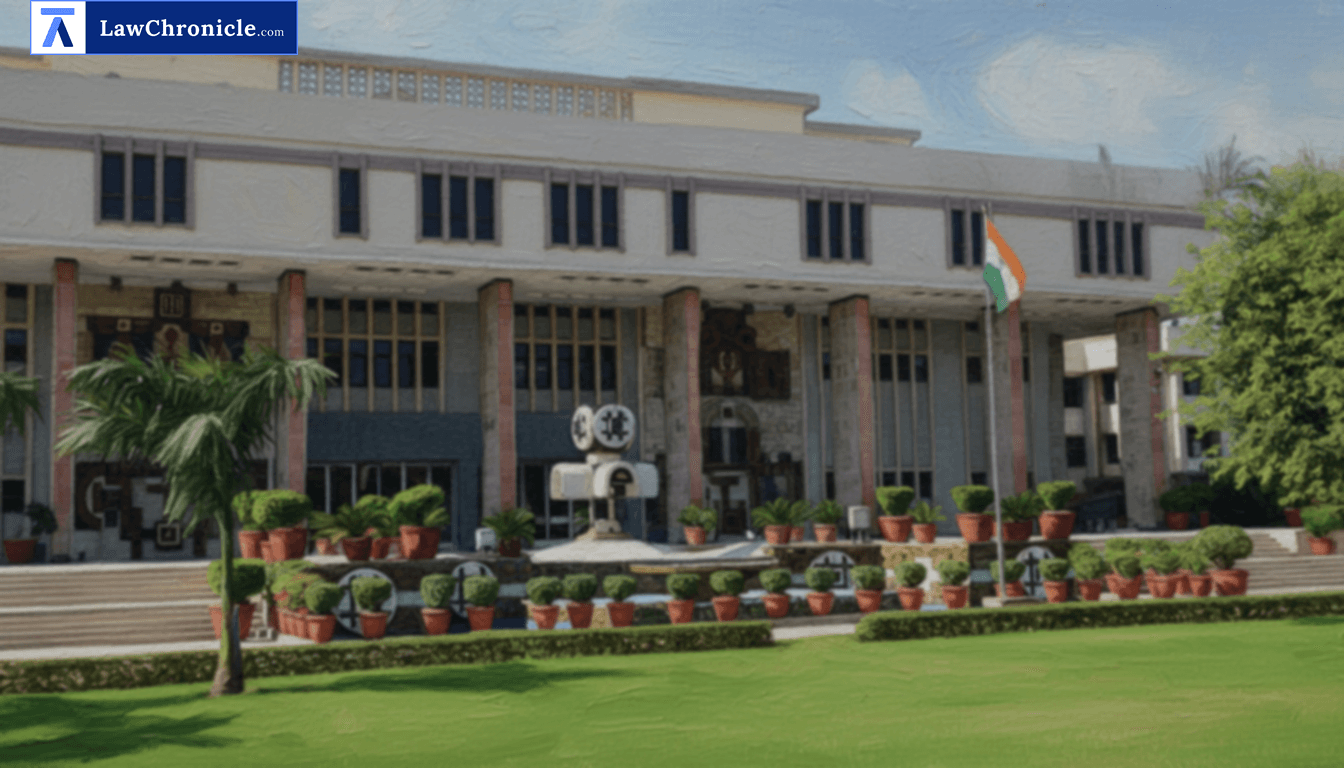
In a significant move to protect intellectual property rights in the therapeutic cooling oil segment, the Delhi High Court has upheld an interim injunction against the sale of a product found to be deceptively similar to a market leader. This decision underscores the judiciary's commitment to preventing market confusion and protecting established goodwill.
The Division Bench, comprising Justice V. Kameswar Rao and Justice Manmeet Pritam Singh Arora, dismissed an appeal filed against a Single Judge's order that restrained the sale of a cooling oil product. The Court found that the appellant had attempted to imitate the essential features of the respondent's long-standing product, potentially leading to consumer deception.
The Essence of the Dispute: Passing Off and Trade Dress
The litigation centered on allegations of 'passing off'. The respondent, a market leader with a 66% share in the cooling oil segment for its product launched in 1989, claimed that the appellant's new product, launched in 2023, slavishly imitated its trade dress. While the respondent did not claim a monopoly over the color red or individual herbal ingredients, it argued that the specific combination of elements, including the red liquid, bottle shape, hibiscus flower imagery, ice blocks, and even specific Hindi taglines, constituted a unique identity that had acquired a secondary meaning.
Court's Rationale on Deceptive Similarity
The Court, in its reasoning, observed: "The overall comparison of the Defendant’s Product with the Plaintiff’s Product shows that there is an attempt to imitate the essential features of the Plaintiff’s Trade Dress by the Impugned Trade Dress. The Impugned Trade Dress is deceptively similar to the Plaintiff’s Trade Dress as the essential features of the Plaintiff’s Trade Dress such as colour of the packaging, colour of the cap, colour of the liquid, shape of the bottle and the use of combination of red, white, yellow and gold with the essential features of ice cubes, hibiscus flowers, ayurvedic herbs are copied in the Impugned Trade Dress along with the use of the words ‘Raahat’, ‘Aaraam’ and ‘Tarotaazgi’ in the same order."
The Bench highlighted that it is not necessary for Courts to have a side-by-side comparison to determine deceptive similarity; rather, the overall impression from the perspective of an average consumer with imperfect recollection is the standard. The Court rejected the argument that the presence of a well-known house mark would automatically dispel confusion, noting that for low-cost goods, consumers exercise a lower degree of care.
Directions Issued by the Court
The Court has the following directions:
"In view of our findings and analysis above, this appeal being devoid of merits is dismissed. We uphold the impugned order passed by the learned Single Judge. The pending application is also dismissed. Needless to state that our findings in the present order, are prima facie and the same shall be subject to final decision in the suit post trial. The learned Single Judge shall decide suit without being influenced by any observation made by us in this judgment."
Background: The Legal Battle Over 'Thanda Tael'
The dispute arose when the respondent filed a suit under Order XXXIX Rules 1 and 2 of the Code of Civil Procedure, 1908, alleging that the appellant’s 'COOL KING THANDA TAEL' infringed upon its rights and passed off its goods as those of the respondent's 'Navratna Oil'. The respondent produced extensive evidence of its turnover, reaching over Rs. 58,000 lacs, and its substantial marketing expenditure.
The appellant contended that elements like red color, ice cubes, and hibiscus are 'common to trade' and cited competitors like 'Himtaj'. However, the Court relied on Cadila Healthcare Ltd. v. Cadila Pharmaceuticals Ltd. to emphasize that a holistic view must be taken. It also referenced the principles in Wander Ltd. and Anr. v. Antox India P. Ltd regarding the limited scope of appellate interference in discretionary orders. The Court found the 'triple test' for passing off goodwill, misrepresentation, and damage as established in Reckitt & Colman Products Ltd. v. Borden Inc. and S. Syed Mohindeen v. P. Sulochana Bai, was prima facie satisfied. The Court also discussed the 'dominant feature test' as interpreted in Pernord Ricard India Private Limited and Anr. v. Karanveer Singh Chhabra ( "2025 SCC OnLine SC 1701": 2025 CaseBase(SC) 397) but concluded that the similarities here were overwhelming.
Case Details:
Case No.: FAO(OS) (COMM) 23/2026
Case Title: DABUR INDIA LIMITED vs EMAMI LIMITED
Appearances:
For the Petitioner(s): Mr. Sandeep Sethi, Sr. Advocate with Ms. Kripa Pandit, Mr. R. Jawahar Lal, Mr. Anirudh Bakhru, Mr. Prabhu Tandon, Mr. Christopher Thomas, Ms. Meghna Kumar, Mr. Krisna Gambhir, Ms. Shreya Sethi and Ms. Aayomi Sharma, Advocates.
For the Respondent(s): Mr. Abhimanyu Bhandari, Sr. Advocate with Ms. Roohe Hina Dua, Mr. Harshit Khanduja, Ms. Shrutika Garg and Mr. Piyush Jain, Advocates.
Source: 2026 CaseBase(DEL) 362
Similar Articles

 Breaking News


