


Delhi HC Upholds Rejection of UP Kho Kho Elections, Affirms Applicability of Sports Code To State Associations
 Copy Link
 Share
 Save
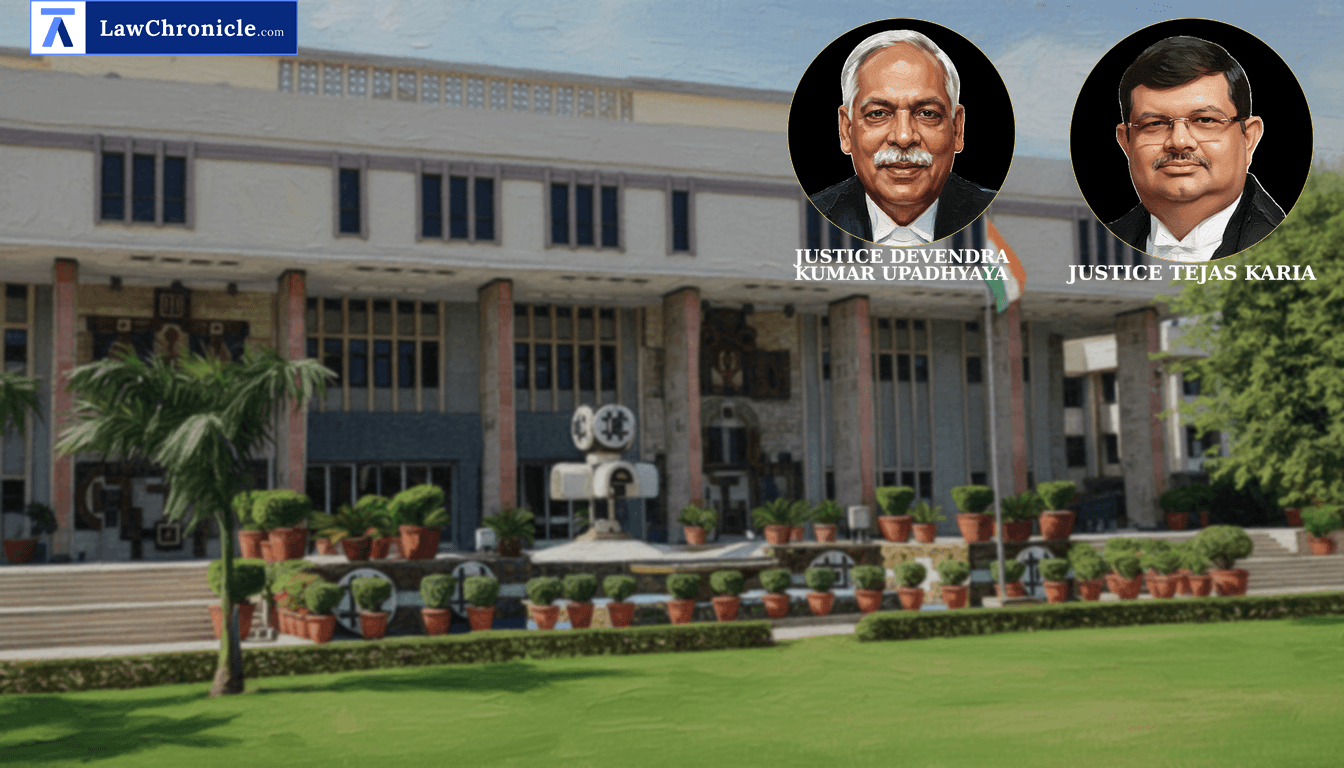
The Delhi High Court, in Uttar Pradesh Kho Kho Association v. Kho Kho Federation of India & Ors., held that the National Sports Development Code, 2011 applies to state-level associations, requiring their elections to comply with national standards of transparency and eligibility. The decision reinforces the principle that any constituent of a National Sports Federation must adhere to the National Sports Development Code, 2011 to ensure players can access government facilities and represent the country effectively.
A Division Bench comprising Hon'ble the Chief Justice and Hon'ble Mr. Justice Tejas Karia, J heard an intra-court appeal challenging a Single Judge's decision that refused to recognize the 2021 executive committee elections of the Uttar Pradesh Kho Kho Association. The dispute centered on whether state associations are exempt from the rigorous eligibility criteria of the National Sports Code.
Court Reaffirms Mandatory Compliance with National Sports Code
The Court dismissed the appellant's contention that the National Sports Development Code, 2011 applies only to National Sports Federations. It held that for a state body to remain affiliated and enjoy the benefits provided by the government, it must comply with the regulatory framework established for the sport at the national level. The bench noted that the legal principles established in previous rulings like Rahul Mehra v. Union of India & Ors. and K.P. Rao v. Union of India & Ors. were clarificatory and therefore applicable to the elections held by the appellant.
The Court, in its reasoning, observed: "Accordingly, the provisions of the Sports Code are applicable to every constituent of every National Sports Federation, including the State Federations such as the Appellant. It is thus clear that the decisions of this Court in Rahul Mehra (supra), as reiterated in K.P. Rao (supra), are clarificatory in nature as it only clarifies the existing law. Consequently, no issue of retrospective application of the said decisions arises in the facts of the present case since the Sports Code was always applicable to the Appellant..."
Election Irregularities and Fraudulent References
A critical factor in the Court's decision was the discovery that the Returning Officer had been misled by a non-existent order purportedly from the High Court of Orissa. This fraudulent reference led to the elections being conducted under the Model Election Guidelines instead of the stricter National Sports Development Code, 2011. Furthermore, the Court noted that several elected office bearers were government employees who were ineligible under the code's tenure and age guidelines.
The Court has the following directions:
"The Appellant is, therefore, granted liberty to avail such appropriate remedies as may be available to it in accordance with law. In view of the foregoing discussion, we find no infirmity in the Impugned Judgment passed by the learned Single Judge in the Writ Petition warranting interference in the present Appeal. The Appeal is, accordingly, dismissed."
Background:
The case originated when the Uttar Pradesh Kho Kho Association, a society registered under the Societies Registration Act, 1860, was disaffiliated by the Kho Kho Federation of India in 2020. This led to a series of litigations, eventually resulting in court-monitored elections in October 2021. However, the Federation refused to recognize the results, citing violations of the National Sports Development Code, 2011 and the fact that the Returning Officer ignored the code based on a fabricated judicial order.
The appellant argued that Rahul Mehra v. Union of India & Ors., which mandated the code's application to state bodies, was decided after their elections and should not apply retrospectively. They also cited Mahipal Singh and Ors. v. Union of India regarding the appointment of executive bodies. The High Court rejected these arguments, finding that the code's applicability was always inherent for affiliated units. The Court concluded that since the election process was vitiated by the reliance on a non-existent court order and the election of ineligible candidates, the Single Judge's refusal to grant relief was justified.
Case Details:
Case No.: LPA 305/2026
Case Title: UTTAR PRADESH KHO KHO ASSOCIATION v. KHO KHO FEDERATION OF INDIA & ORS.
Appearances:
For the Petitioner(s): Mr. Sanjeev Mahajan, Ms. Vanshita Gupta and Mr. Siddhartha, Advocates.
For the Respondent(s): Mr. Raj Shekar Rao, Senior Advocate with Mr. Sachin Chopra, Mr. Anuj Tyagi, Ms. Maitry Kakade, Ms. Astha Gupta and Ms. Shreelekha Vyas, Advocates for R1; Mr. Devvrat Yadav, SPC with Mr. Nipun Jain, GP and Mr. Kush Garg, Advocates for UoI.
Source: 2026 CaseBase(DEL) 415
Similar Articles
 Breaking News


