


Developer's Failure to Commence Redevelopment for 15 Years Justifies LOI Termination: Bombay HC
 Copy Link
 Share
 Save
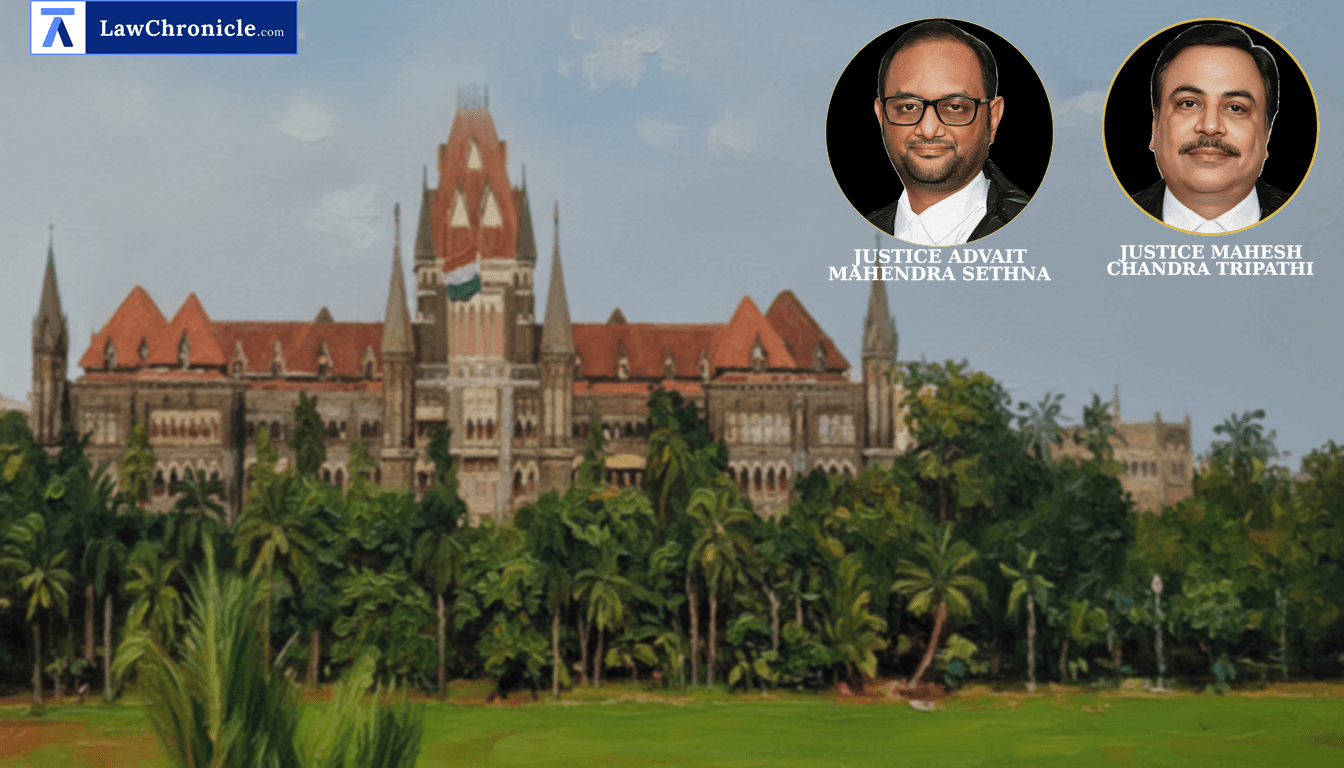
The Bombay High Court has upheld the termination of a redevelopment project's Letter of Intent, ruling that a 15-year delay without even obtaining a Commencement Certificate constitutes an abject failure that overrides any technical plea of natural justice.
A bench comprising Chief Justice Mahesh Chandra Tripathi and Justice Advait M. Sethna dismissed the challenge brought by developers who had sought to revive a cancelled project, emphasizing that the housing aspirations of residents cannot be held hostage to indefinite delays under the guise of contractual negotiations.
Key Takeaways
Performance Overcomes Procedure
Technical breaches of natural justice, such as the lack of a personal hearing, do not invalidate a termination if the developer's failure to meet statutory timelines is an admitted and irreversible fact.
Binding Nature of Undertakings
Solemn undertakings furnished by developers to complete projects within revalidated periods are self-operating; failure to comply leads to ipso facto termination without the need for fresh show-cause notices.
Clean Hands in Writ Jurisdiction
Litigants approaching the High Court under Constitution of India, 1950 must disclose all material facts, including previous undertakings and pending arbitration, or risk dismissal at the threshold for suppression.
Statutory Purpose of Incentive FSI
Incentives like additional Floor Space Index under Mumbai Municipal Corporation Act, 1888 are meant to facilitate timely housing, not to allow developers to unjustly enrich themselves while procrastinating indefinitely.
Court Observations and Directions
The Bombay High Court noted that the developers had held the redevelopment rights since 2008 but failed to show any meaningful progress on the site. The bench observed that the building, being over 86 years old and in a dilapidated state, required urgent intervention which the petitioners failed to provide despite multiple extensions. The Bench, in its reasoning, observed that "We cannot countenance a situation where the Petitioners who by adopting a novel device before this Court by advancing a maze of technical objections, can deprive substantive justice to the Respondent No. 4 - Society and its tenants/members. In our considered view, this is not a case where justice lies on the side of the Petitioners."
The Court further emphasized that the principles of natural justice are not "unruly horses" and cannot be used to protect a party that has failed to fulfill its primary obligations for over a decade.
Ratio
In matters of urban redevelopment involving dilapidated structures and incentive FSI, time is of the essence. A developer who fails to obtain a Commencement Certificate or provide transit accommodation over a prolonged period (15 years) loses the equitable right to seek revalidation of a Letter of Intent. Furthermore, a breach of natural justice does not warrant judicial interference unless the petitioner demonstrates that a personal hearing would have led to a different substantive outcome.
Background
The dispute originated from a redevelopment project on plot C.S. No. 761 in Mumbai under Regulation 33(7) of the Mumbai Municipal Corporation Act, 1888. The Petitioners were appointed as developers in 2008 and received an initial Letter of Intent (LOI). Over the years, the LOI was terminated once in 2018 and reinstated after the induction of new partners and payment of Rs. 27.68 crore as capital value.
In December 2020, the Petitioners provided a registered undertaking to the Municipal Corporation of Greater Mumbai (MCGM) stating that the LOI would be terminated if the project was not completed by April 2022. Despite this, no construction commenced. The MCGM issued a show-cause notice in April 2023 and finally issued the Impugned Termination Notice on February 11, 2025.
The Petitioners argued that the termination violated natural justice as no personal hearing was granted and contended that their payment of substantial capital value showed bona fides. The Respondents, represented by Senior Counsel Ashish Kamath and counsel for MCGM, argued that the petitioners suppressed their 2020 undertaking and that the dispute was essentially contractual, governed by the Indian Contract Act, 1872 and Arbitration And Conciliation Act, 1996.
The Bombay High Court found that the Petitioners had suppressed material facts, including the 2020 undertaking and the fact that the Society had already appointed a new developer. Relying on K.D. Sharma v. Steel Authority of India Ltd ( "(2008) 12 SCC 481": 2008 CaseBase(SC) 564) and Dalip Singh v. State of Uttar Pradesh, the Bombay High Court held that the petitioners did not approach the court with clean hands. References were also made to State of Uttar Pradesh v. Sudhir Kumar Singh ( "(2021) 19 SCC 706": 2020 CaseBase(SC) 728) and State Bank of India v. Rajesh Kumar Agrawal regarding the flexibility of natural justice rules.
Case Details:
Case No.: WRIT PETITION NO. 4824 OF 2025
Neutral Citation: 2026:BHC-OS:23160-DB
Case Title: Om Shanti Properties & Ors. Versus The Municipal Corporation of Greater Mumbai & Ors.
Appearances:
For the Petitioner(s): Mr. Rohan Sawant a/w Mr. Raunak Shirsekar, Ms. Gauri Joshi, Mr. Sushant Pandey i/b. Ganesh & Co.
For the Respondent(s): Ms. K.H. Mastakar (MCGM), Mr. Ashish Kamath, Sr. Counsel a/w Mr. Shlok Parikh i/b. Mr. Abhay Parab (Respondent No. 4), Smt. Lavina Kripalani, AGP (State)
Source: 2026 CaseBase(BOM) 7125
Similar Articles


 Breaking News


