


Clean Hands A Must: Allahabad HC Dismisses Writ For Suppressing Prior Litigation
 Copy Link
 Share
 Save
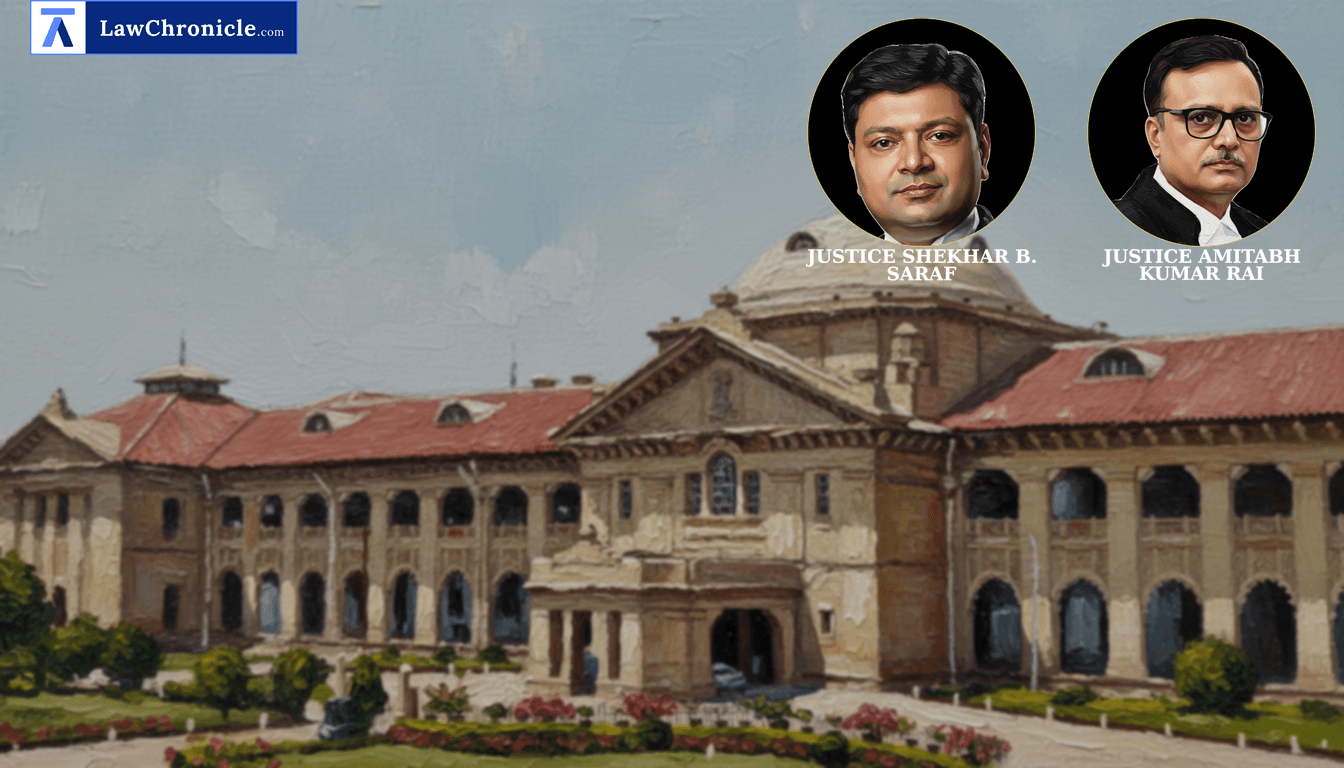
Allahabad High Court has clarified that litigants who withhold material information about parallel legal proceedings forfeit their right to claim discretionary relief, as the extraordinary writ jurisdiction is reserved solely for those who approach the court with absolute candor. The Bench ruled that it constitutes a fatal suppression of facts that disentitles a party from seeking relief under Constitution of India, 1950.
A bench comprising Justice Shekhar B. Saraf and Justice Amitabh Kumar Rai heard the matter. The Allahabad High court was confronted with a petition challenging an order passed by the Principal Secretary, Awas Evam Shahri Niyojan, and seeking directions to stop alleged illegal construction on Nazool land. However, the proceedings were halted by a preliminary objection regarding the petitioner's lack of transparency.
Key Takeaways
Mandatory Disclosure
Full and fair disclosure of all material facts is a non-negotiable prerequisite for invoking the High Court's extraordinary jurisdiction.
Doctrine of Clean Hands
Litigants seeking equitable and discretionary remedies must act in good faith; suppression of parallel proceedings leads to immediate dismissal.
Judicial Protection Against Misuse
Courts are duty-bound to protect their processes from being misused by parties obtaining ex parte orders through misrepresentation.
The Requirement of Utmost Good Faith
The Bench emphasized that the power under Constitution of India, 1950 is discretionary and equitable. The Allahabad High court noted that the petitioner was already a party to another writ petition concerning the same subject matter but failed to disclose this vital detail. The Bench observed that "A person invoking the extraordinary writ jurisdiction of this Court under Constitution of India, 1950 of the Constitution of India, 1950 is under an obligation to make a full and fair disclosure of all material facts. A litigant seeking equitable and discretionary relief must approach the Court with clean hands and must not suppress material facts, make misleading statements, or furnish incorrect information."
Relying on the precedent in The Asiatic Engineering Company vs. Achhru Ram and others, the Court reiterated that any attempt to obtain a rule nisi or ex parte order by concealing relevant facts is a misuse of the valuable right to constitutional remedies.
Ratio
Suppressing material facts, particularly those relating to concurrent or prior proceedings concerning the same subject matter, disentitles a litigant from claiming relief under the extraordinary writ jurisdiction of the High Court under Article 226 of the Constitution. A party must approach the court with clean hands to seek discretionary and equitable remedies.
Background
The dispute originated from a challenge to an order dated July 25, 2025, passed by the Principal Secretary, Awas Evam Shahri Niyojan, U.P. The petitioner also sought a Mandamus to halt construction on land he claimed was Nazool land. During the hearing, the State's counsel raised a preliminary objection, pointing out that the petitioner was Respondent No. 7 in a previous writ petition, Writ Petition No. 26481 (MB) of 2021, which dealt with the exact same subject matter.
The petitioner had failed to mention the existence of this prior litigation or the orders passed therein. The Allahabad High court applied the 'salutary principle' that courts must protect themselves from misrepresentation. By failing to disclose the earlier proceedings, the petitioner was found to have withheld information that had a direct bearing on the controversy. Consequently, the Allahabad High court declined to hear the case on its merits and dismissed the petition solely on the ground of suppression.
Case Details:
Case No.: WRIT - C No. - 10302 of 2026
Case Title: Ajimul Hasan vs. State Of U.P. Thru. Prin. Secy. Awas Evam Shahri Niyojan Lko. And 4 Others
Appearances:
For the Petitioner(s): Devendra Kumar, Aziza Khan, Ishwar Dutt Shukla, Sandeep Kumar Pandey, Advocates
For the Respondent(s): Ms. Deepshikha, Chief Standing Counsel (C.S.C.)
Source: 2026 CaseBase(ALL) 1212
Similar Articles
 Breaking News


