


Disciplined Force Personnel Cannot Escape Accountability Through Unsubstantiated Mental Health Pleas: Delhi HC
 Copy Link
 Share
 Save
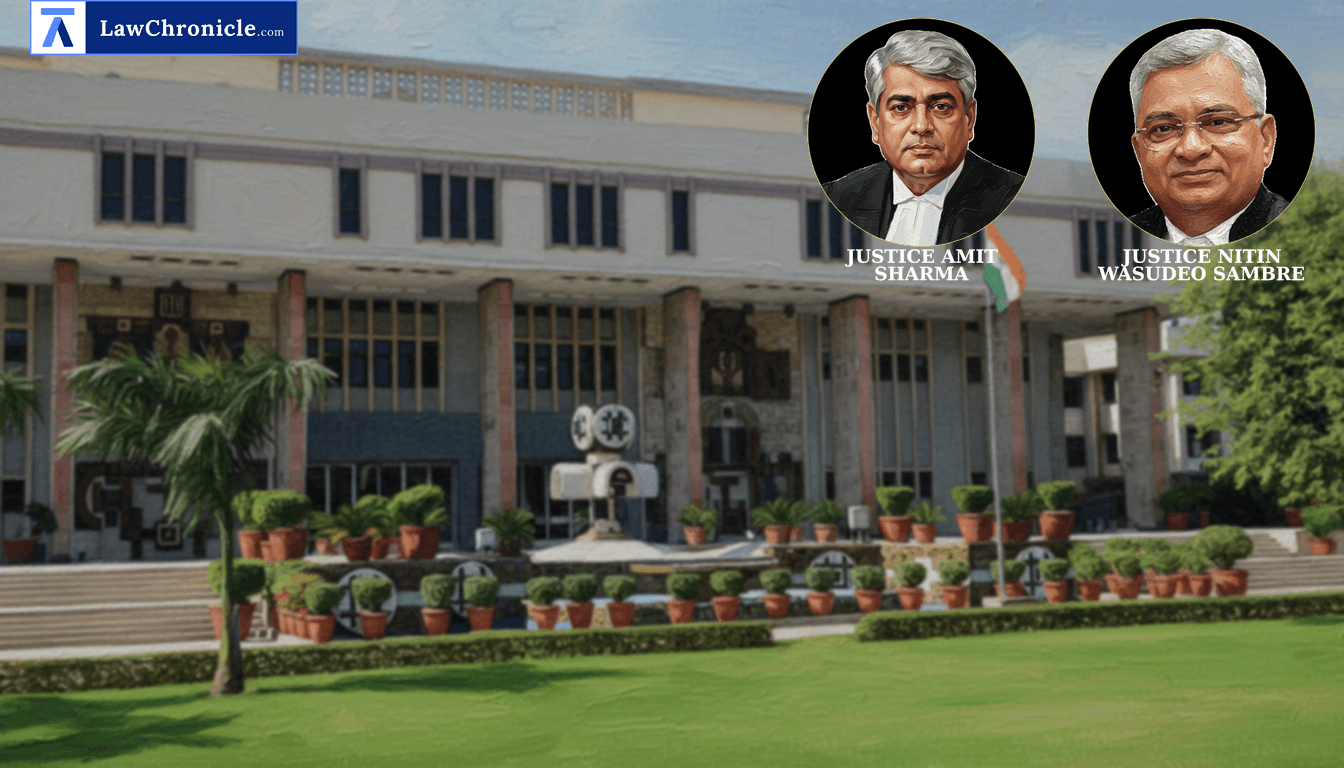
The Delhi High Court has fortified the disciplinary standards for armed forces, ruling that personnel cannot evade major penalties for intoxication and insubordination by raising unsubstantiated claims of mental illness as an afterthought. This judgment clarifies that the shield provided under disability laws requires cogent medical evidence meeting statutory criteria and does not offer blanket immunity for repeated misconduct that shocks the institutional fabric of a disciplined force.
A division bench comprising Justice Nitin Wasudeo Sambre and Justice Amit Sharma heard the challenge against a removal order involving multiple counts of gross indiscipline. The Court emphasized that in matters of judicial review concerning disciplinary proceedings, the focus remains on the legality of the decision-making process rather than the merits of the conclusion reached by the authorities.
Key Takeaways
Strict Burden of Proof for Disability Claims
A mere assertion of mental stress or depression is insufficient to trigger protections under the Rights of Persons with Disabilities Act, 2016; specific medical diagnosis meeting Section 2(s) criteria is mandatory.
Judicial Review Bound by Procedural Legality
Courts will not act as appellate bodies to reappreciate evidence in departmental inquiries unless the findings are perverse or violate the principles of natural justice as per B.C. Chaturvedi v. Union of India and Others ( "(1995) 6 SCC 749": 1995 CaseBase(SC) 611).
Hearsay Evidence Permissibility
Technical rules of the Evidence Act do not strictly apply to departmental proceedings, and findings based on some evidence even if not direct are sustainable if they are not irrational.
Disciplinary Autonomy of Armed Forces
Authorities in disciplined forces like the CISF have exclusive power to determine proportionality of punishment to maintain institutional order.
High Court Upholds Penalty for Repeated Misconduct
The Court scrutinized the findings where the petitioner was found guilty of six charges, including assaulting a police officer, reporting for duty intoxicated, and threatening to shoot a colleague. The bench observed that the petitioner failed to demonstrate any procedural illegality that would warrant interference under the Constitution of India, 1950. The Court highlighted that the petitioner had a history of punishments, which justified the disciplinary authority's decision.
The Court has the following directions:
"Accordingly, the writ petition stands dismissed. There shall be no order as to costs."
Regarding the legal principles applied, the Court, in its reasoning, observed: "Judicial review is not an appeal from a decision but a review of the manner in which the decision is made. Power of judicial review is meant to ensure that the individual receives fair treatment and not to ensure that the conclusion which the authority reaches is necessarily correct in the eye of the court... The Court/Tribunal in its power of judicial review does not act as appellate authority to re-appreciate the evidence and to arrive at its own independent findings on the evidence."
Ratio
The validity of disciplinary proceedings against a person claiming mental disability must be determined against the provisions of the Rights of Persons with Disabilities Act, 2016, provided the individual meets the definitional criteria under Section 2(s). However, in the absence of cogent medical records substantiating a disability during the period of misconduct, a delinquent employee cannot claim immunity from punishment for gross indiscipline, especially within a disciplined force where high standards of conduct are mandatory.
Background
The petitioner, a Constable in the Central Industrial Security Force (CISF), was removed from service following a departmental enquiry under Rule 36 of the Central Industrial Security Force Rules, 2001. The allegations involved multiple instances of drunken behavior, including a scuffle with Delhi Police and threatening to snatch a weapon from a fellow guard while on duty. The petitioner contended that his actions were a result of alcohol dependency and depression caused by family issues, specifically his wife's infertility. He relied on the Supreme Court's ruling in Ravinder Kumar Dhariwal & Anr. Vs. Union of India & Ors. to argue that his mental health should have been a mitigating factor.
The respondents argued that the petitioner's medical records (SHAPE-1 and later A-2 categories) only indicated physical orthopedic injuries and contained no mention of mental illness. They asserted that the plea of mental health was an afterthought to escape the consequences of his habitual misconduct. The Court agreed with the respondents, noting that the petitioner participated in the enquiry without raising these specific medical concerns at the initial stage and failed to provide treatment records for the alleged alcohol dependency.
Case Details:
Case No.: W.P.(C)16988/2022
CNR No. DLHC010467702022
Case Title: AMIT KUMAR v. UNION OF INDIA & ORS.
Appearances:
For the Petitioner(s): Mr. P Sureshan, Adv.
For the Respondent(s): Mr. Jagdish Chandra, CGSC along with Mr. Lakshay Kumar, Ms. Maanya Saxena, Advocates and Mr. Kiran Ji Pandit (Asst. Commandant)
Source: 2026 CaseBase(DEL) 7535
Similar Articles
 Breaking News


