


Dishonour Due To Mismatched Signatures Attracts Section 138 NI Act: Kerala HC
 Copy Link
 Share
 Save
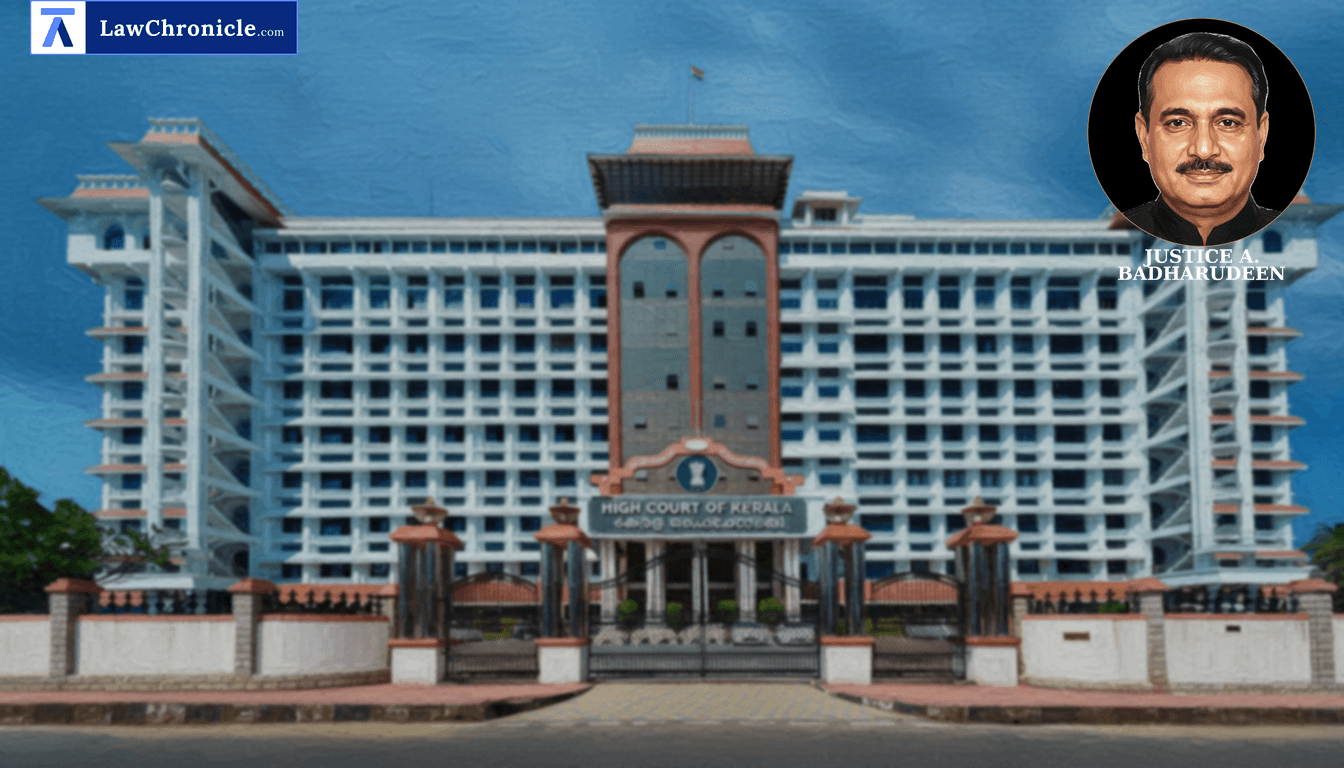
In a decisive clarification on negotiable instruments law, the Kerala High Court has ruled that a cheque's dishonour due to a signature mismatch does not insulate the drawer from criminal liability under Section 138 of the Negotiable Instruments Act, 1881, provided there are insufficient funds to cover the amount. The Court overturned an acquittal, holding that advancing subsequent loans to relatives despite subsisting liabilities is not an 'improbable' transaction that warrants disbelieving a complainant's case.
A Single Judge Bench of Justice A. Badharudeen presided over the appeal challenging a 2014 acquittal order passed by the Judicial First Class Magistrate Court-III, Mavelikkara. The case centered on a dispute where the complainant alleged the accused issued a typewritten cheque for Rs. 4,75,000 to discharge a debt, which was subsequently returned by the bank with the endorsement "Drawer's signature differs."
Signature Mismatch and Statutory Presumptions
The High Court addressed the technical ground of dishonour, emphasizing that the primary objective of the law is to maintain the credibility of banking transactions. The Court, in its reasoning, observed: "It is now well settled that the dishonour of a cheque on the ground of 'Drawer's signature differs' also attracts an offence of Section 138 of the NI Act, when there was no sufficient fund in the account of the drawer to honour the same, provided the other statutory requirements are satisfied."
The Bench further noted that since the transaction and execution were established through oral and documentary evidence, the trial court erred in failing to invoke the mandatory presumptions under Section 118 and Section 139 of the Negotiable Instruments Act, 1881.
Typewritten Cheques and Transactions Between Relatives
One of the primary reasons the trial court had acquitted the accused was the 'improbability' of the complainant advancing a second loan of Rs. 3,00,000 while an earlier loan of Rs. 1,75,000 remained unpaid. The High Court rejected this logic, noting that the parties were relatives and the interval between transactions was a mere five months. On the issue of the cheque being typewritten, the Court clarified: "...issuance of a typewritten cheque though not common, is not prohibited by law. Thus, in the case of a cheque issued as typewritten, when the complainant succeeds in establishing the transaction and execution of the cheque, merely because the cheque was a typewritten one, shall not be a reason to disbelieve the case of the complainant."
Directions Issued to the Accused
The Court has the following directions:
"The 2nd respondent/accused is sentenced to undergo simple imprisonment for a day till rising of the court and to pay a fine of Rs.4,75,000/- (Rupees Four Lakh Seventy-five Thousand Only). The fine amount, if paid or realised shall be given as compensation to PW1 under Section 357(1)(b) of the Cr.P.C. In default of payment of fine, the 2nd respondent/accused shall undergo default imprisonment for a period of six months. The 2nd respondent/accused is directed to appear before the Judicial First Class Magistrate Court - III, Mavelikkara within a period of two weeks from today to undergo the sentence."
Key Takeaways:
Broadened Scope of Liability
Dishonour due to 'signature mismatch' is equivalent to 'insufficient funds' if the account lacks the requisite balance at the time of presentation.
Validity of Typewritten Instruments
The legal validity of a cheque is not diminished by it being typewritten, provided the execution is proved.
Standard of Probability for Relatives
Courts must not apply a hyper-technical standard of 'financial prudence' to transactions between relatives that may be driven by personal trust rather than commercial logic.
Ratio Decidendi:
A dishonour endorsement of "Drawer's signature differs" constitutes an offence under Section 138 of the Negotiable Instruments Act, 1881 if it is coupled with a lack of sufficient funds. Once the initial burden of proving the transaction is discharged by the complainant, the statutory presumptions of a legally enforceable debt must be drawn in their favour, and the mere fact that a cheque is typewritten or that a loan was advanced during a subsisting debt does not inherently render the complainant’s case improbable.
Background:
The appellant filed a complaint after a cheque for Rs. 4,75,000 was dishonoured. The accused argued that the transaction was improbable and that she had only borrowed a smaller sum in 2010, alleging the cheque was a misused blank instrument. The Trial Court acquitted the accused, finding the complainant's story of advancing two separate loans without the first being repaid to be doubtful. However, the High Court analyzed the bank statements (Ext.X1 and Ext.X2) which proved the complainant's financial capacity and the accused's lack of funds, leading to the reversal of the acquittal and the conviction of the accused under Section 138 of the Negotiable Instruments Act, 1881 read with the Code of Criminal Procedure, 1973.
Case Details:
Case No.: CRL.A NO. 705 OF 2015
NeutralCitation: 2026:KER:52634
Case Title: Shiny S.Nair V. State Of Kerala & Anr.
Appearances:
For the Petitioner(s): Sri.Arun Thomas, Sri.Jennis Stephen, Shri.Santhosh Mathew (Sr.)
For the Respondent(s): Sri.M.A.Shihab (Public Prosecutor), Smt.Asha Elizabeth Mathew (Advocate)
Source: 2026 CaseBase(KER) 419
Similar Articles
 Breaking News


