


District Court Jurisdiction Under Trade Marks Act vs Commercial Courts Act: SC Refers Matter To Larger Bench
 Copy Link
 Share
 Save
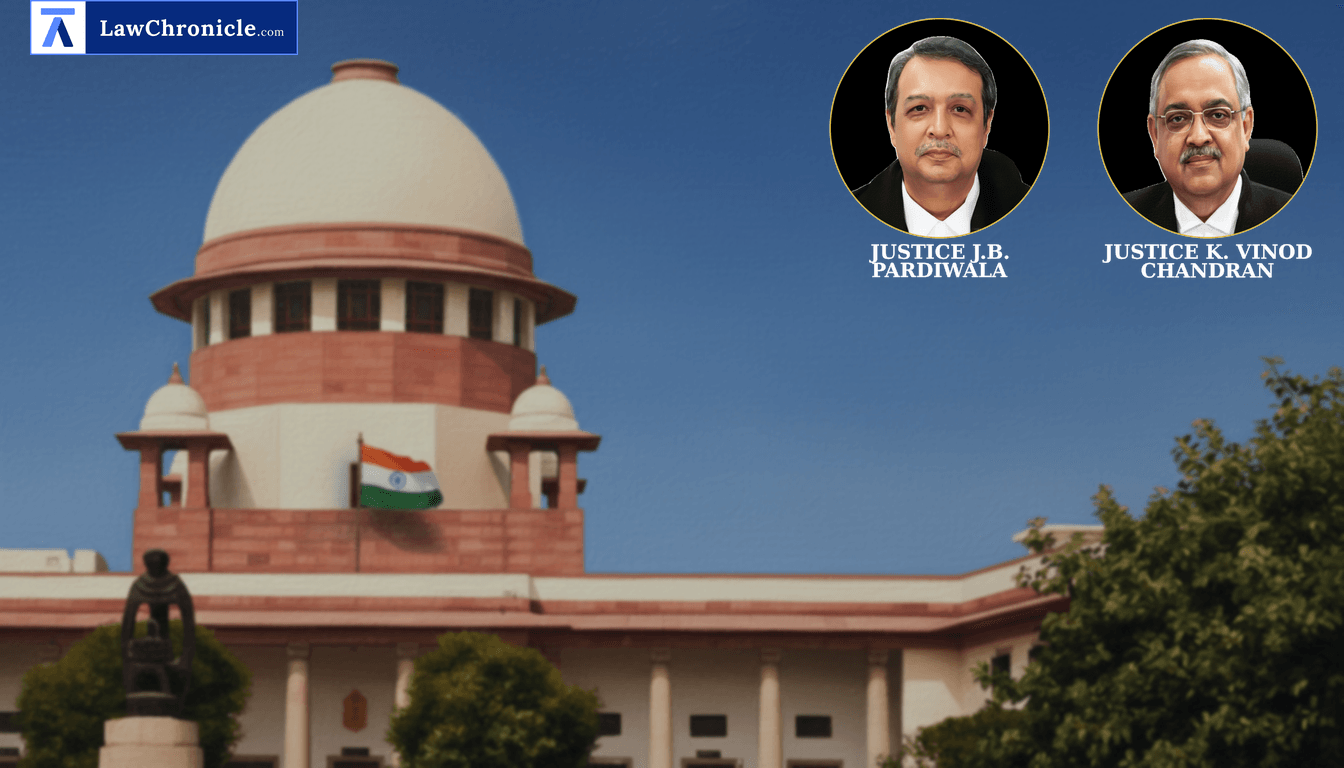
The Supreme Court has referred the clash between Section 134 of the Trade Marks Act, 1999 and state notifications under the Commercial Courts Act, 2015 to a larger Bench to establish uniform judicial practice nationwide.
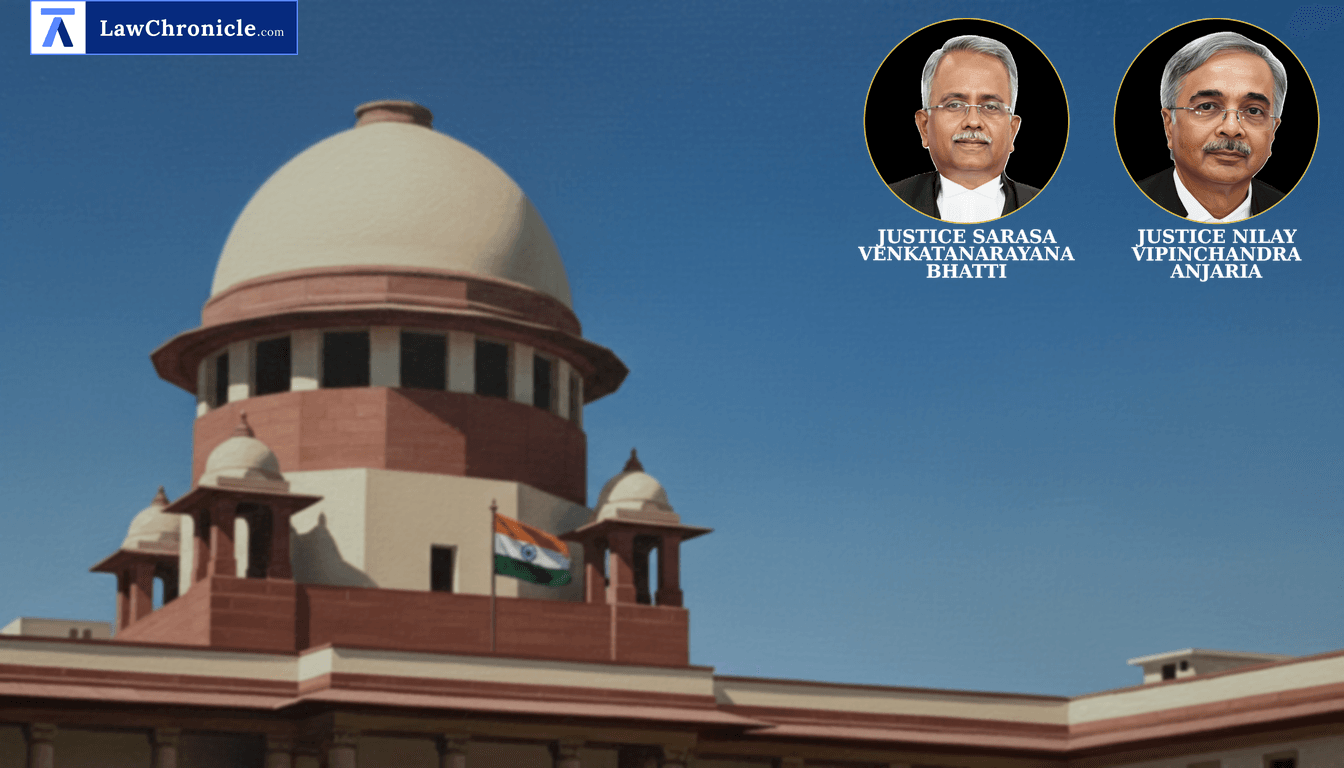
A Bench of Justice J.B. Pardiwala and Justice K. Vinod Chandran halted proceedings in an ongoing intellectual property suit while flagging the direct conflict between two past Supreme Court decisions regarding the interplay between special legislations and overriding provisions.
Key Takeaways
- Uniformity in IP Litigation: Prevents state-by-state jurisdictional disparities where suits under the Trade Marks Act, 1999 are channeled to lower judicial tiers.
- Higher Legal Scrutiny Retained: Preserves the statutory mandate requiring trademark disputes to be tried by District Judges rather than Civil Judges.
- Conflict Resolution: Sets the stage for the Supreme Court to clarify the hierarchy between the Commercial Courts Act, 2015 and other special statutes.
- Impact on Pending Suits: Commercial trademark suits before Civil Judges (Senior Division) in states like Jharkhand face jurisdictional uncertainty pending larger Bench determination.
The Supreme Court highlighted the procedural conflict where Section 134 of the Trade Marks Act, 1999 explicitly restricts trademark infringement actions from being instituted before any court inferior to a District Court, whereas state notifications under the Commercial Courts Act, 2015 delegate commercial disputes to Civil Judges (Senior Division).
The Apex Court, in its reasoning, observed that "In our humble view too, the Commercial Courts Act deals with the genus of commercial disputes as delineated in clauses (i) to (xxii) of section 2(c) while arbitration is an alternate dispute resolution process, itself a special legislation regulating the procedure. Likewise, intellectual property rights including that of trade marks is only a species [2(c)(xvii)] of the larger genus of commercial disputes... The apparent conflict in the two decisions, according to us, needs to be looked into by a larger bench."
Ratio
When a special enactment mandates dispute resolution exclusively by a court of the level of a District Judge, notifications issued under a subsequent enactment delegating commercial jurisdiction to lower judicial tiers must be examined to ensure legislative intent and appellate remedies are not rendered otiose.
Background
The appeal arose from a commercial suit pending before the Civil Judge (Senior Division) at Jamshedpur in the State of Jharkhand. The appellants argued that Section 134 of the Trade Marks Act, 1999 intentionally mandated that trademark infringement matters be adjudicated by a District Court. They urged that lowering the original court level to a Civil Judge (Senior Division) severely prejudices litigants by denying them a direct statutory appeal to the High Court, limiting challenges under Constitution of India or revisional jurisdiction where re-appreciation of evidence is precluded.
The respondents contended that Section 2(1)(c)(xvii) of the Commercial Courts Act, 2015 specifically covers intellectual property rights and, being a subsequent special statute with a non-obstante clause under Section 21, overrides earlier enactments. The Supreme Court analyzed conflicting precedents including Kandla Export Corporation and Anr. v. OCI Corporation and Anr. ( "(2018) 14 SCC 715": 2018 CaseBase(SC) 173), which held that a self-contained code like the Arbitration and Conciliation Act, 1996 prevails as a special law over the general provisions of the Commercial Courts Act, 2015, and Jaycee Housing Private Limited and Ors. v. Registrar (General), Orissa High Court and Ors. (referencing similar principles cited in Fun N. Fud v. GLK Associates), which held that the Commercial Courts Act, 2015 overrides Section 2(1)(e) of the Arbitration and Conciliation Act, 1996. Noting these divergent interpretations and existing anomalies across different states including Jharkhand and Kerala, the Division Bench stayed the suit and referred the matter to the Chief Justice of India for reference to a larger Bench.
Case Details:
Case No.: Civil Appeal No. of 2026 (@Special Leave Petition (C) No.6793 of 2026)
Source: 2026 CaseBase(SC) 7023
Similar Articles
 Breaking News


